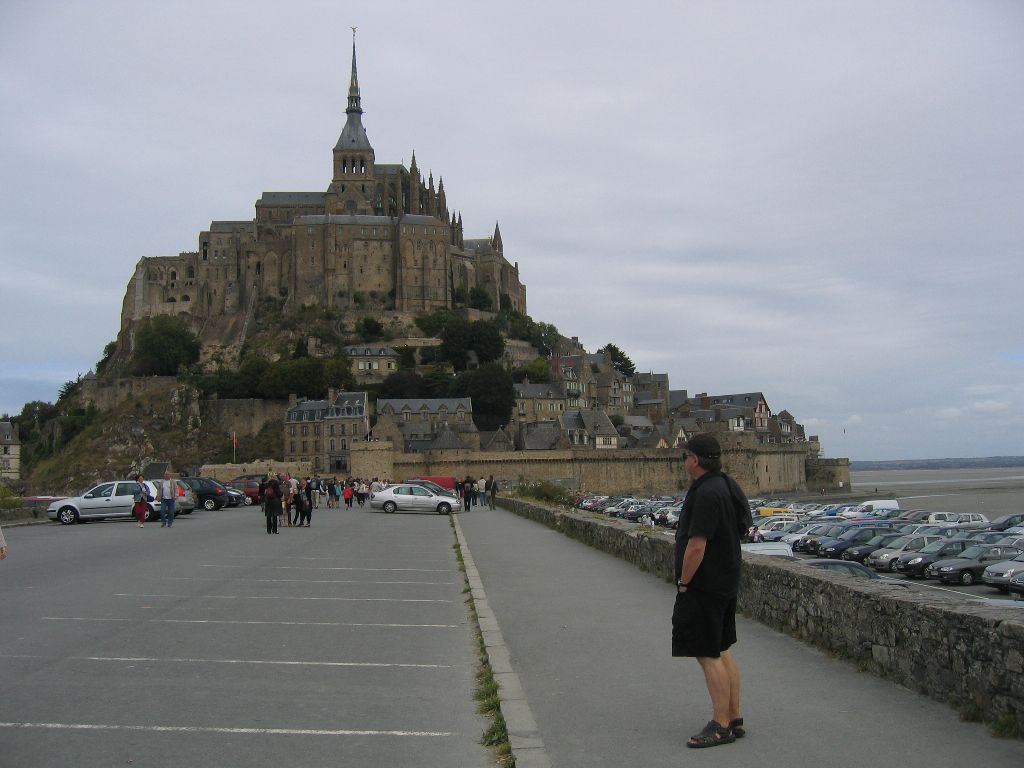
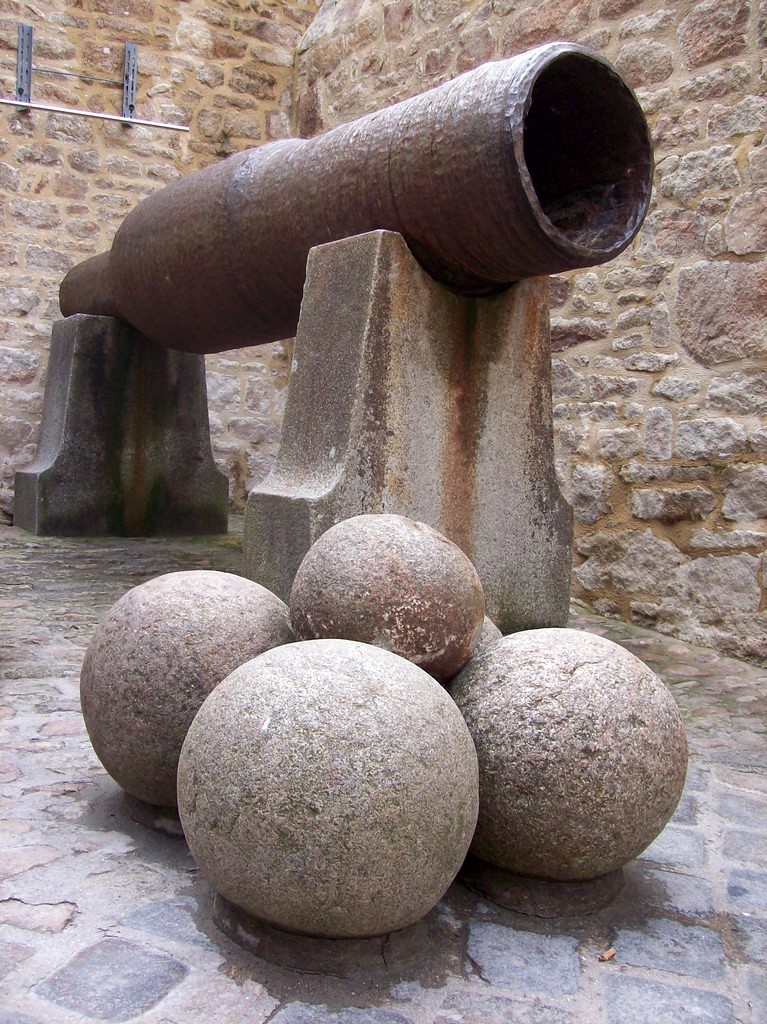
Le Mont-Saint-Michel is a rocky tidal island in Normandy. In 708 St Michael the archangel appeared to St Aubert, the bishop of Avranches, and instructed him to build a church on the islet. Aubert repeatedly ignored the angel’s instruction, until St Michael burned a hole in the bishop’s head with his finger (apparently.) A shrine was built in the 8th century, and the first church was completed in 1144. By the 13th century, hundreds of Benedictine monks lived there. During the Hundred Years’ War (1337 – 1453) the English made repeated assaults on the island but were unable to seize it, partly because of the abbey’s improved fortifications. Les Michelettes, two wrought-iron bombards left by the English in their failed 1423–24 siege of Mont-Saint-Michel, are still displayed near the outer defense wall. (With thanks to wikipedia for the info.)
It was amazing to me to see something so old, until I reflected that parts of the abbey were a great deal older! The mount and it’s bay were declared a UNESCO world heritage site in 1979.
I’m going to quote more of wikipedia here because it’s so interesting:
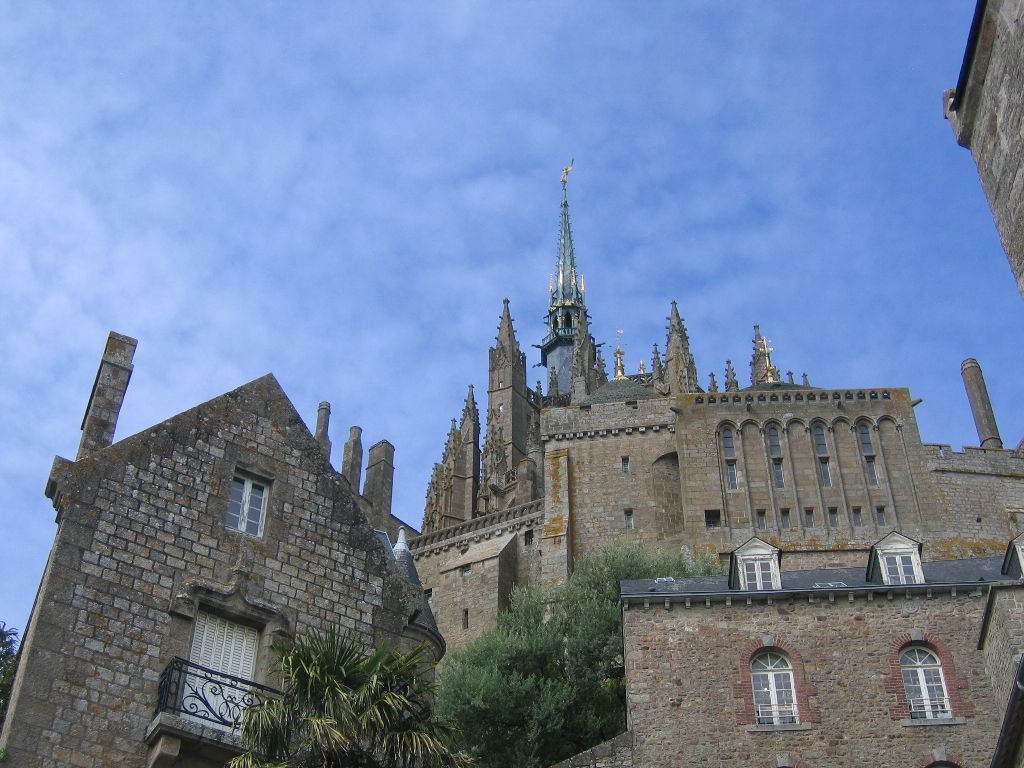
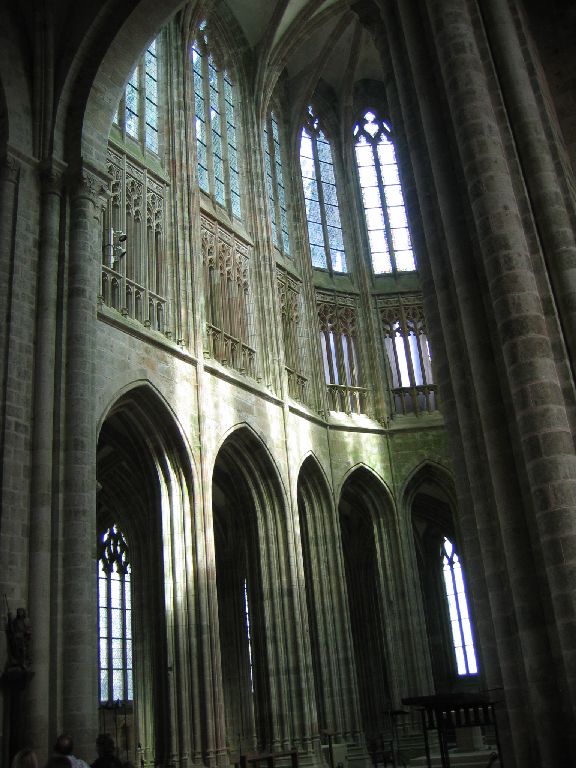
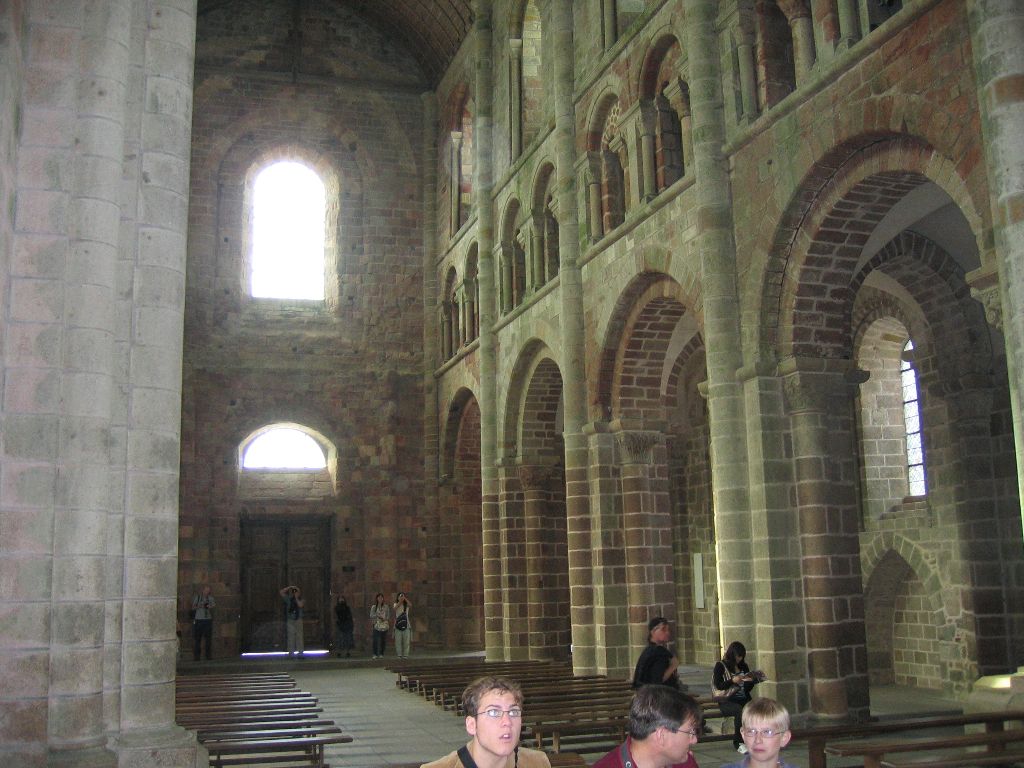
Design: William de Volpiano, the Italian architect who had built the Abbey of Fécamp in Normandy, was chosen as building contractor by Richard II of Normandy in the 11th century. He designed the Romanesque church of the abbey, daringly placing the transept crossing at the top of the mount. Many underground crypts and chapels had to be built to compensate for this weight; these formed the basis for the supportive upward structure that can be seen today. Today Mont-Saint-Michel is seen as a Gothic-style church.
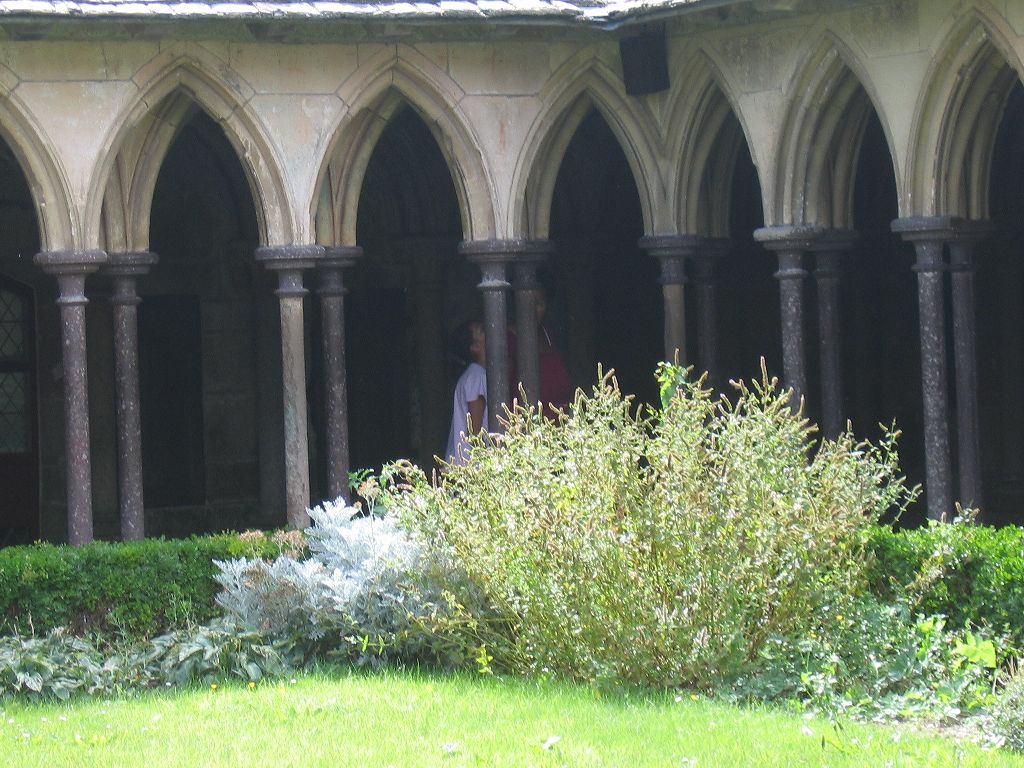
Robert de Thorigny, a great supporter of Henry II of England (who was also Duke of Normandy), reinforced the structure of the buildings and built the main façade of the church in the 12th century. In 1204 the Breton Guy de Thouars, allied to the King of France, undertook the siege of the Mount. After having set fire to the village and having massacred the population, he was obliged to beat a retreat under the powerful walls of the Abbey. Unfortunately, the fire which he himself lit extended to the buildings, and the roofs fell prey to the flames. Horrified by the cruelty and the exactions of his Breton ally, Philip Augustus offered Abbot Jourdain a grant for the construction of a new Gothic-style architectural set which included the addition of the refectory and cloister.
Charles VI is credited with adding major fortifications to the abbey-mount, building towers, successive courtyards and strengthening the ramparts.
(End of wikipedia’s contribution)
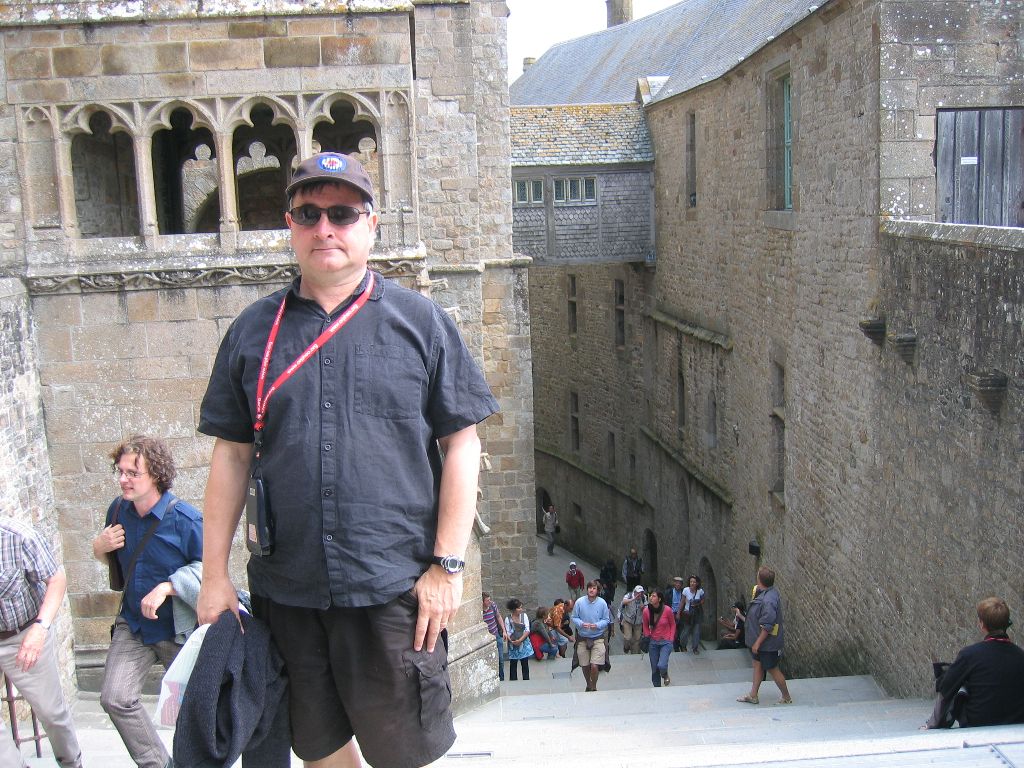
We arrived along the causeway to the island about 11 in the morning and were ushered into an enormous car park, parts of which are submerged when the tide comes in so you have to watch the time! The tides apparently can run as fast as a horse, and the islet is also surrounded by quicksand in places, so you have to be careful where you walk. Anyway, we walked to the portal in the outer wall, and entered the town, which has a very narrow street spiraling upwards towards the abbey, surrounded by tourist shops and restaurants and crowded with tourists.
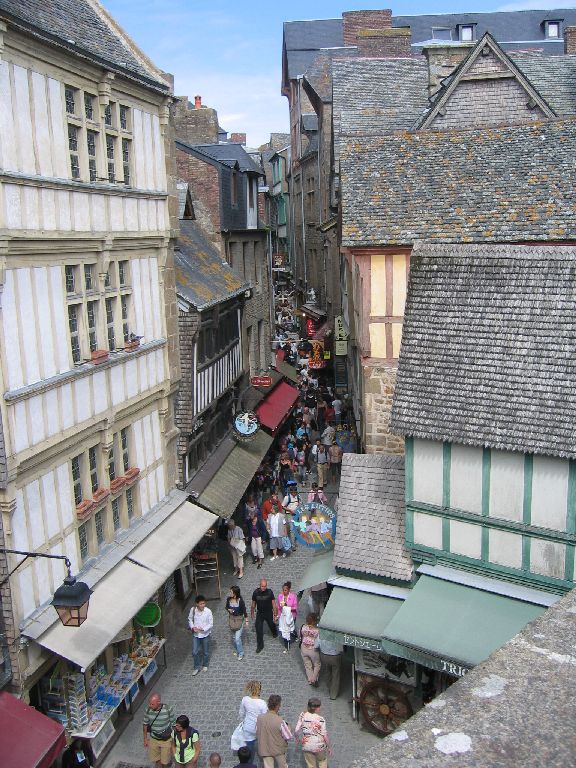
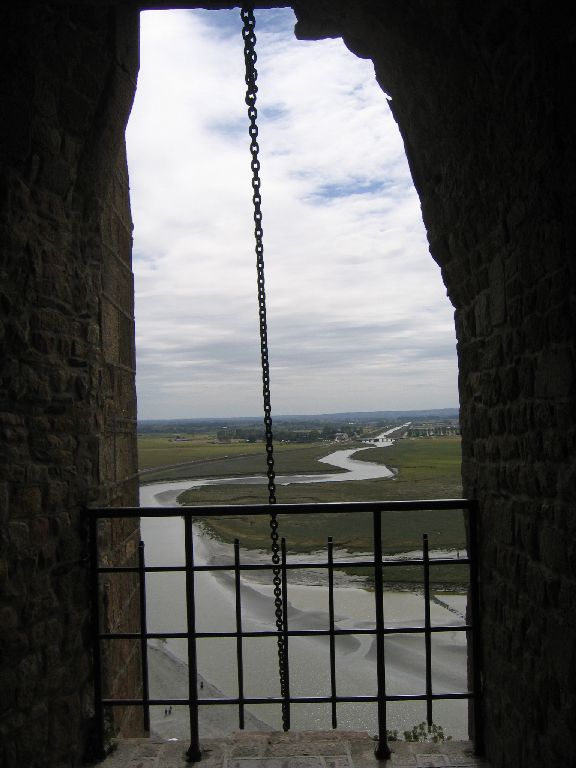
It’s quite good fun though and the buildings themselves are charming. There is a little church halfway up with a cemetary. Apart from the monks in the abby, there are about 50 people living in the town itself. We gradually made our way up the spiral, stopping to look at postcards etc, and to have a sandwich sitting on the steps near the town church. Then we entered the abbey itself, hiring english language electronic guides. The views from the top were most impressive, although Normandy is very flat as you can see from one of the pictures. Inside the construction consists mainly of romanesque arches on top of massive pillars and characteristically thick walls, presumably why the structure has lasted such a long time. It was interesting to see the places where monks have lived and slept and cooked and prayed for over 1000 years. It is an exceptional place to visit.
There were certainly a lot of tourists. The monks are all away at the moment, and I can’t blame them. Apparently 3 million people visit the place every year! Presumably it calms down a bit in the winter. Here are some photographs:

 Lepod's Blog
Leave a reply to David Aguila Cancel reply