Monday we got up early and took the metro to the port of Pireaus and after some trouble finding the magic ferries terminal got the 10am ferry to the island of Hydra.
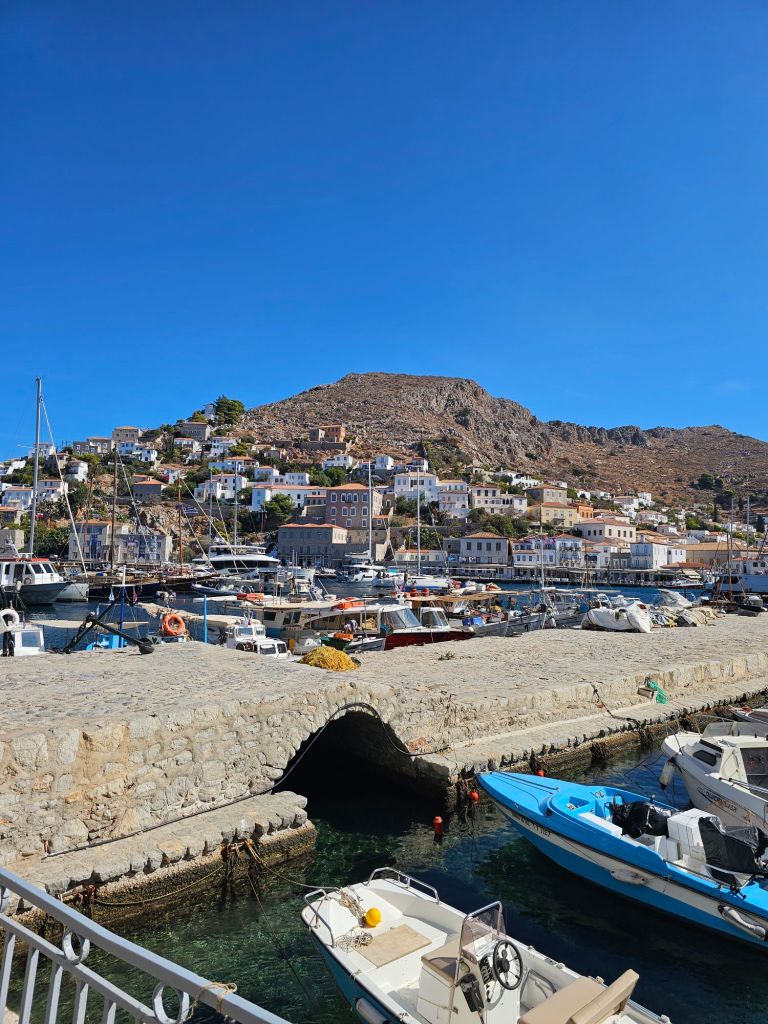
The views on the way were very pleasant. Arriving at the port.The view from our hotel room.
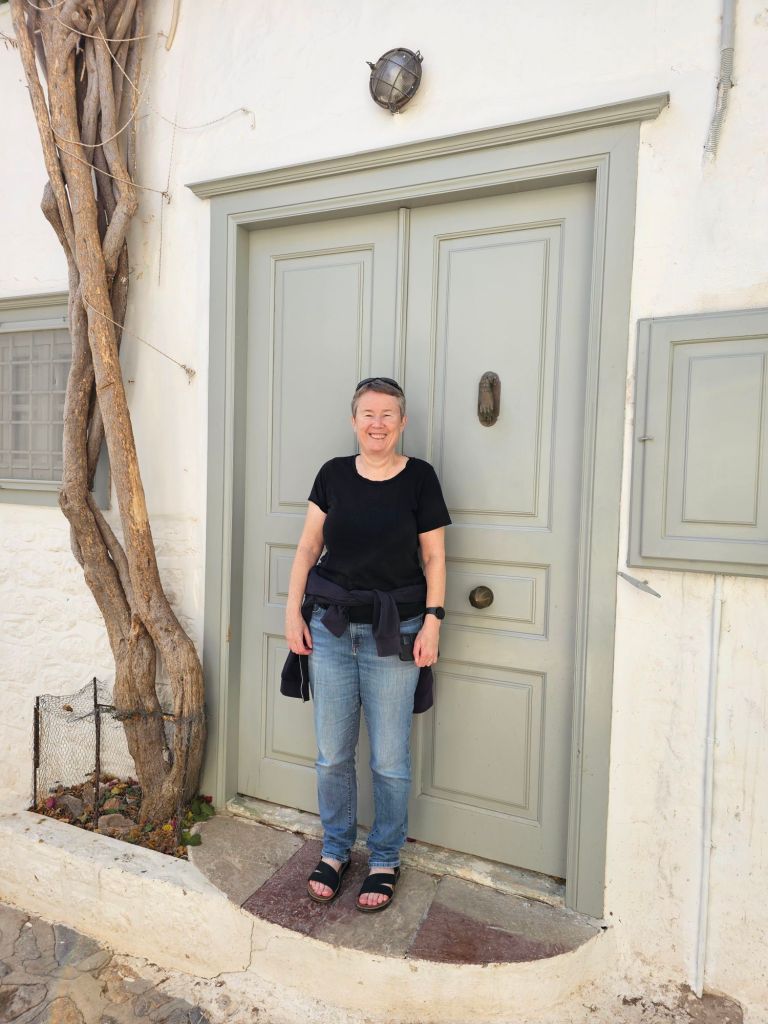
Leonard Cohen lived on Hydra for seven years in the ’60s. We are both big fans although perhaps Pauline more than me.
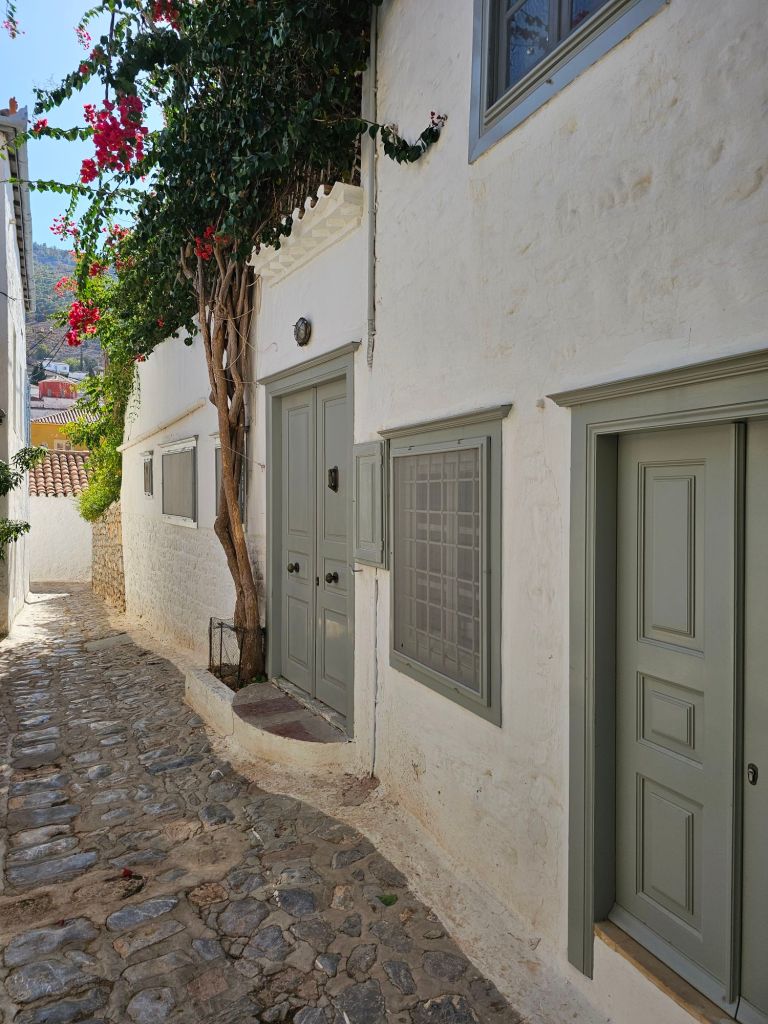
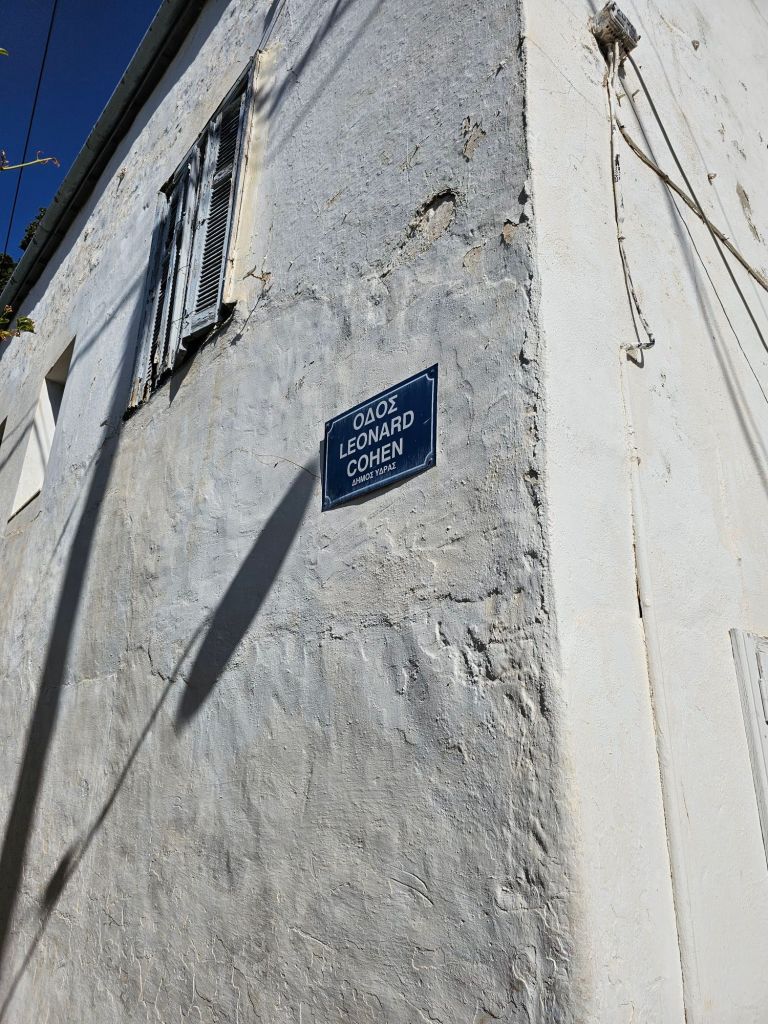
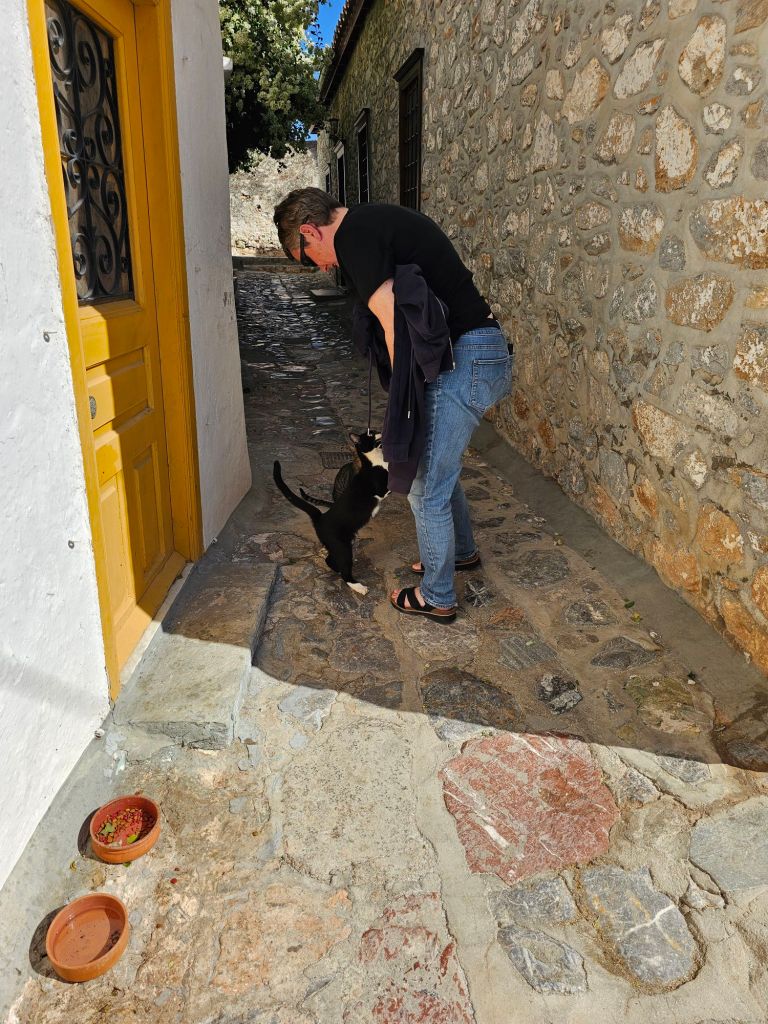
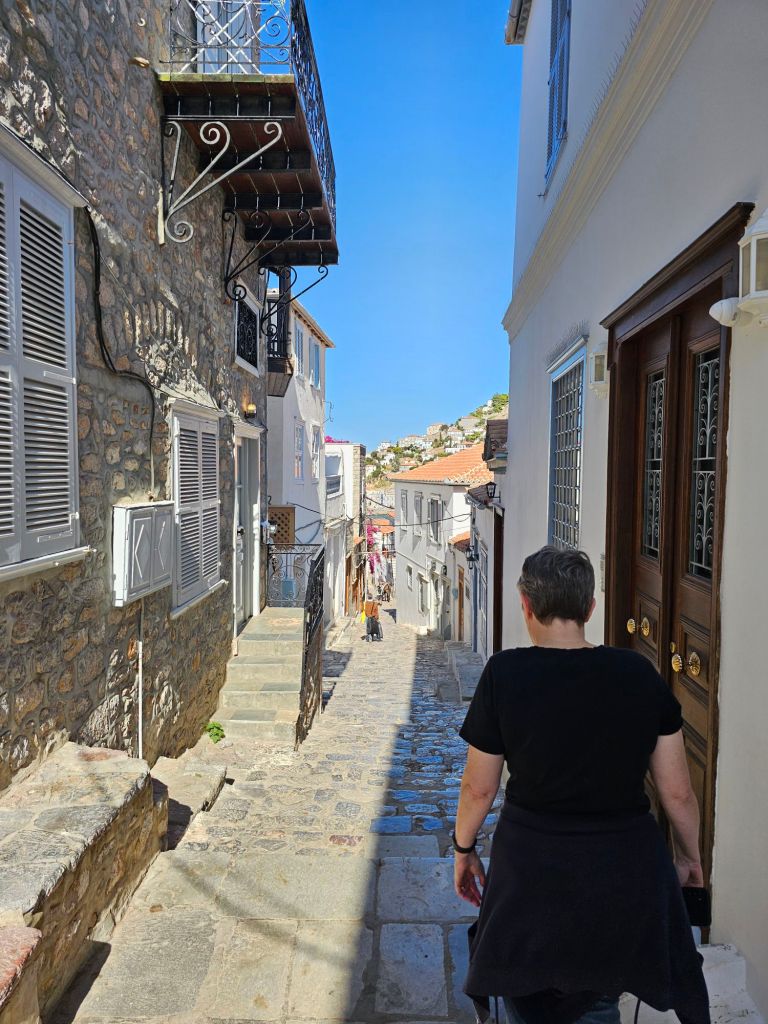
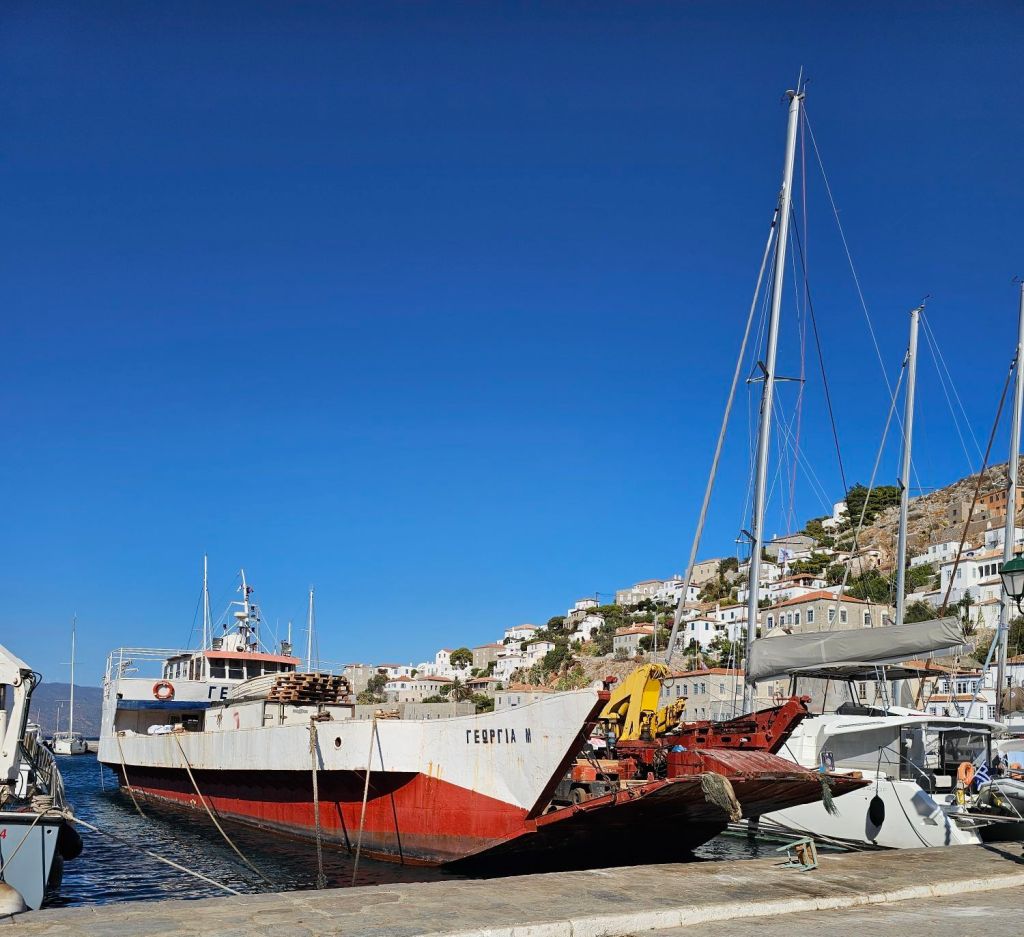
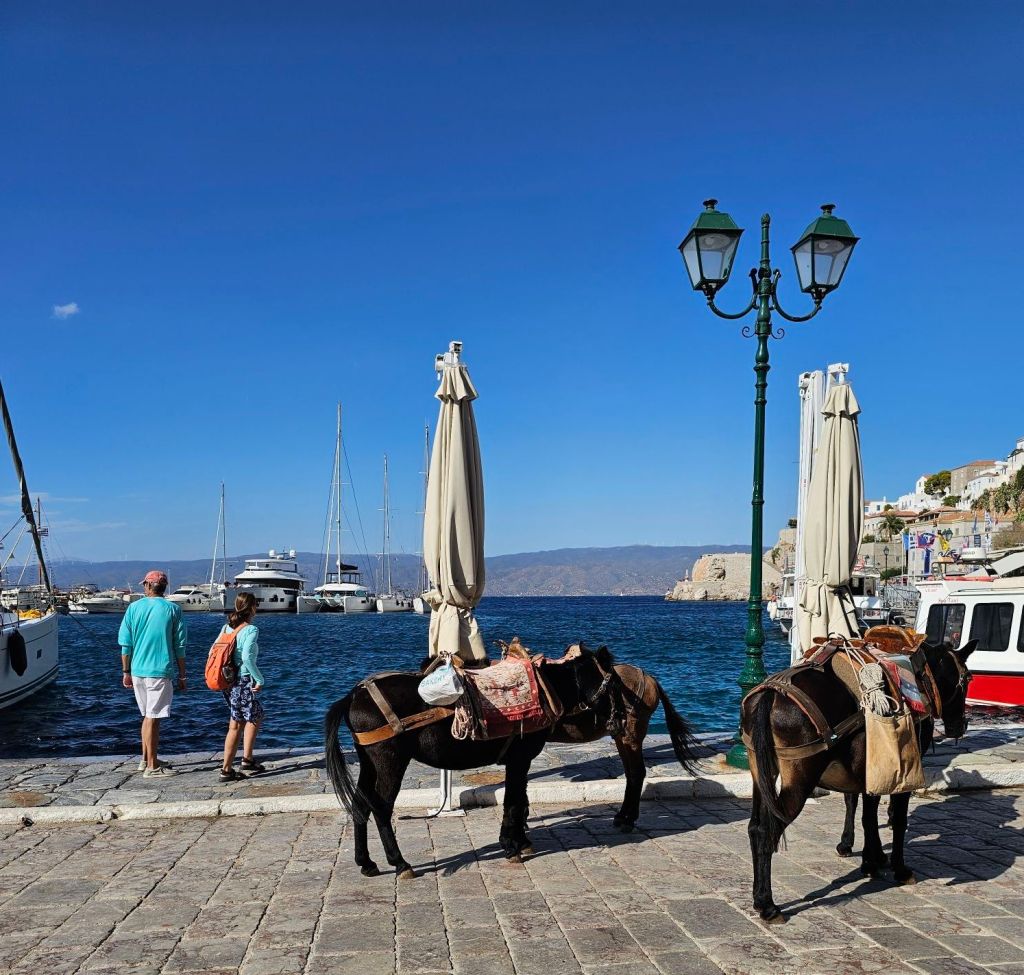
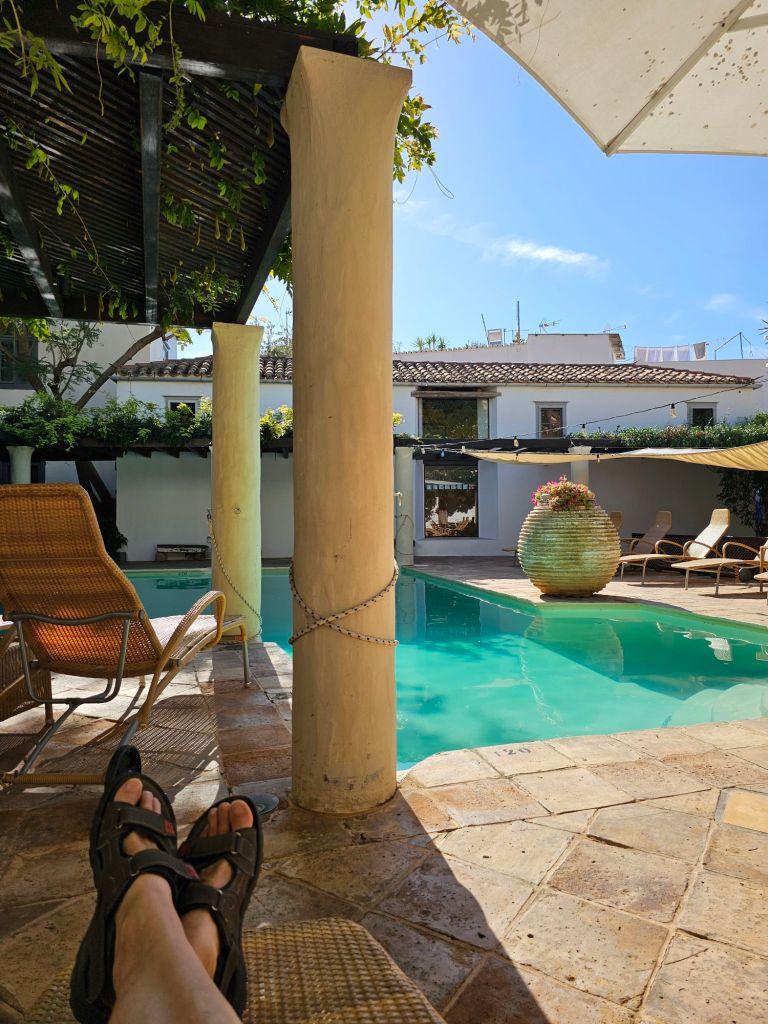
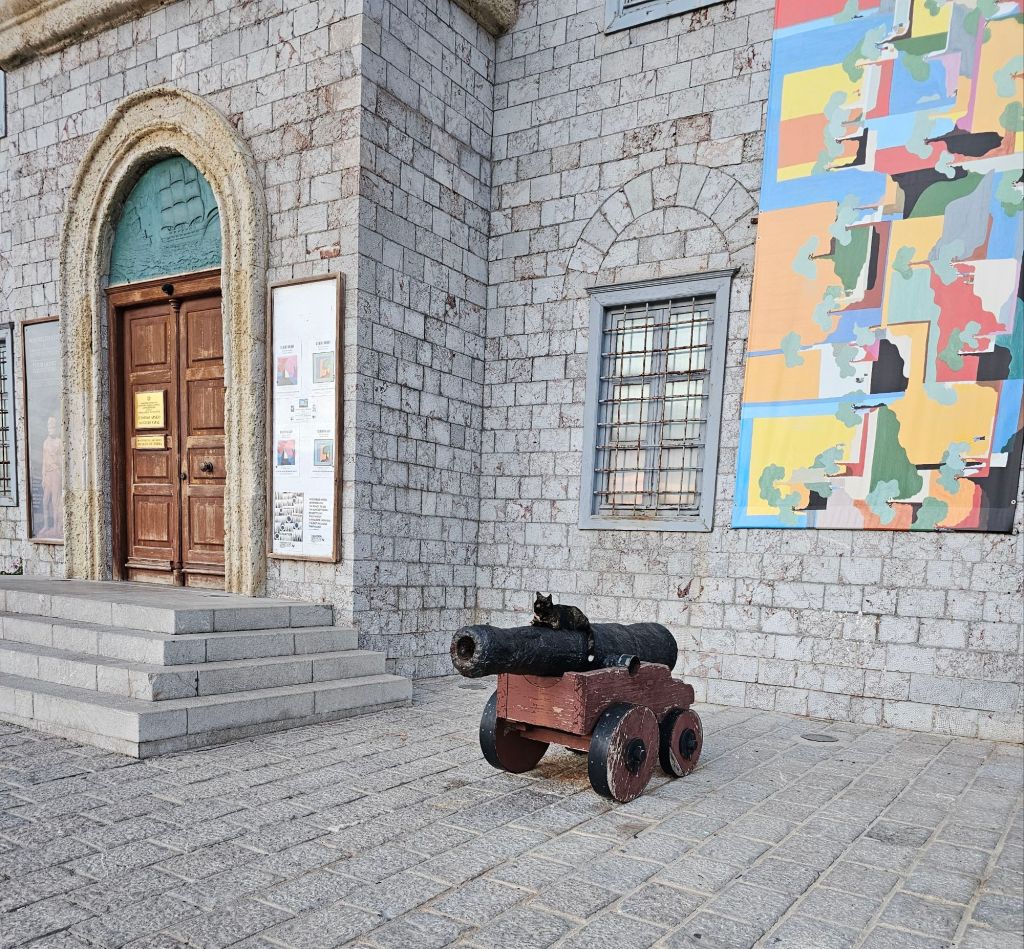
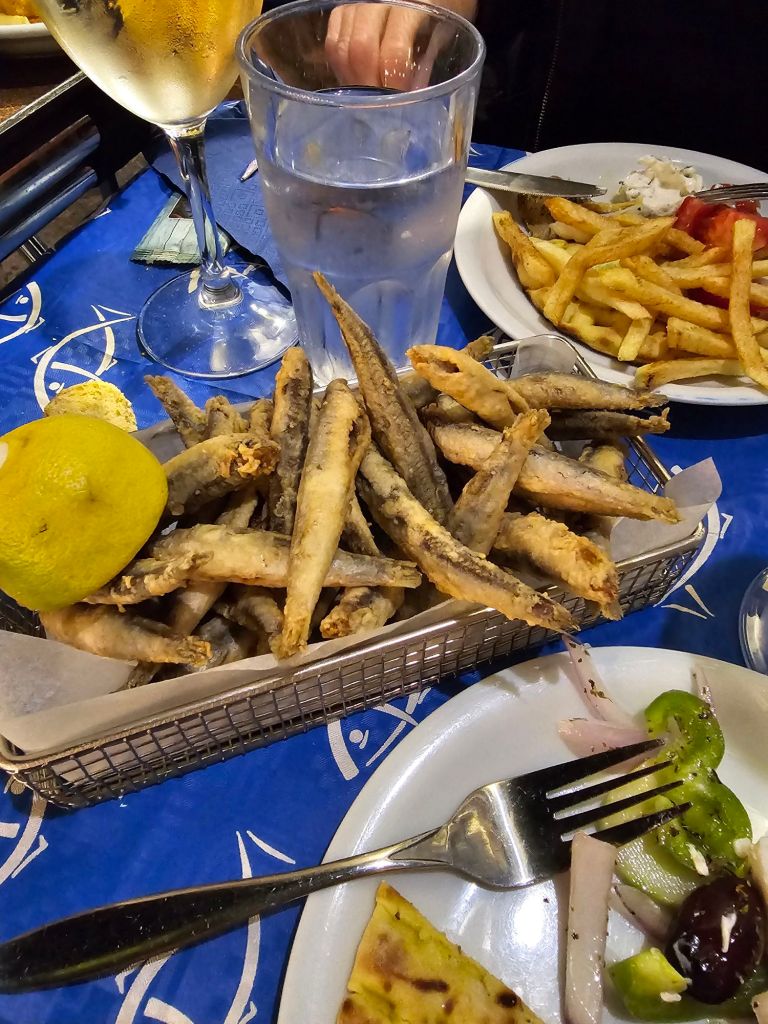
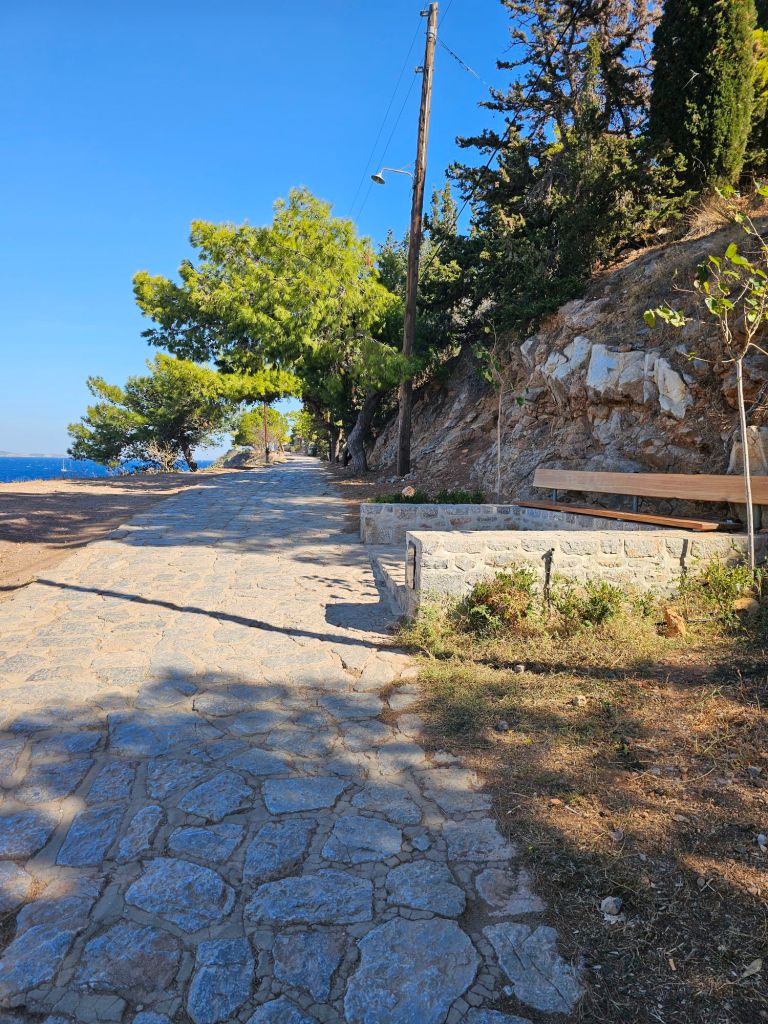
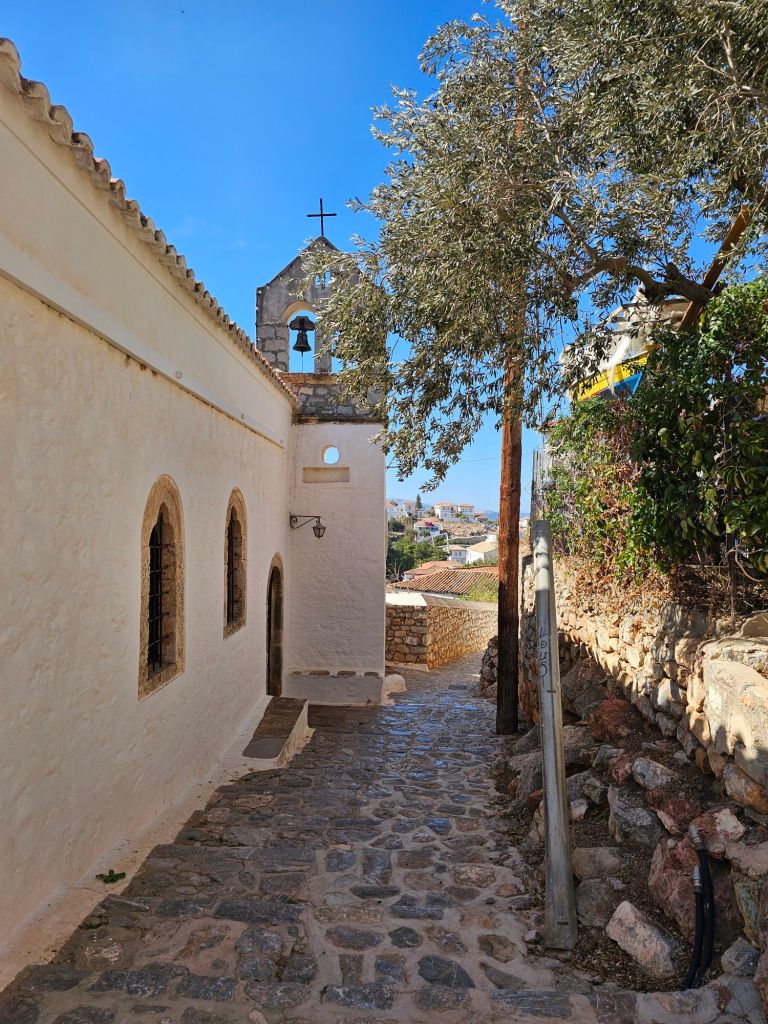
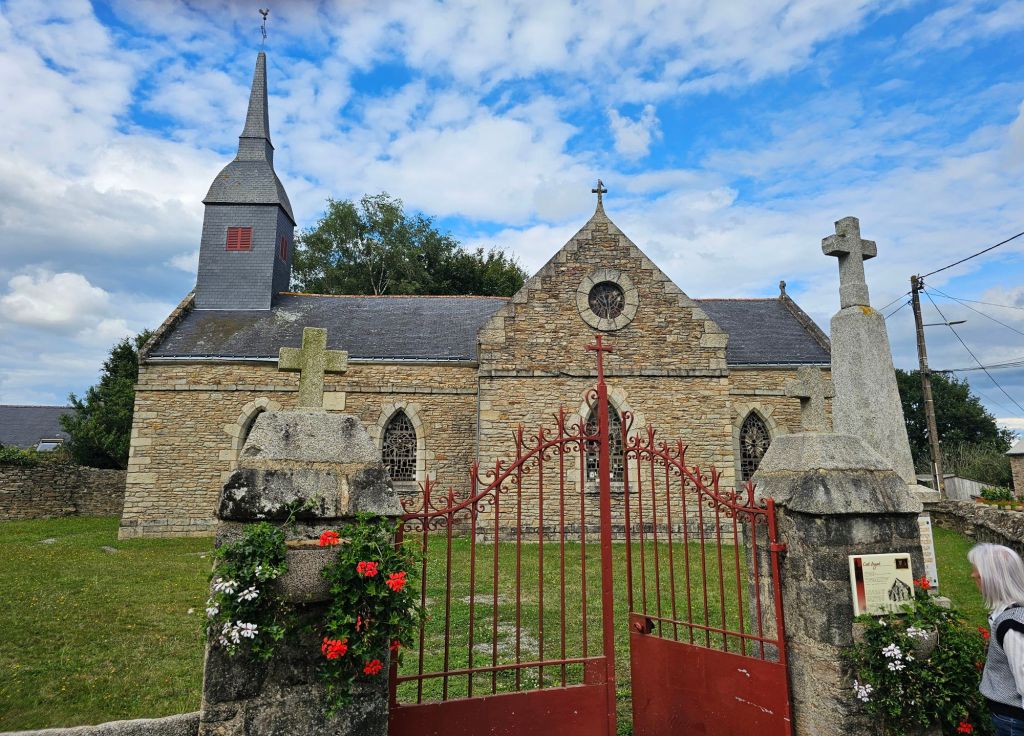
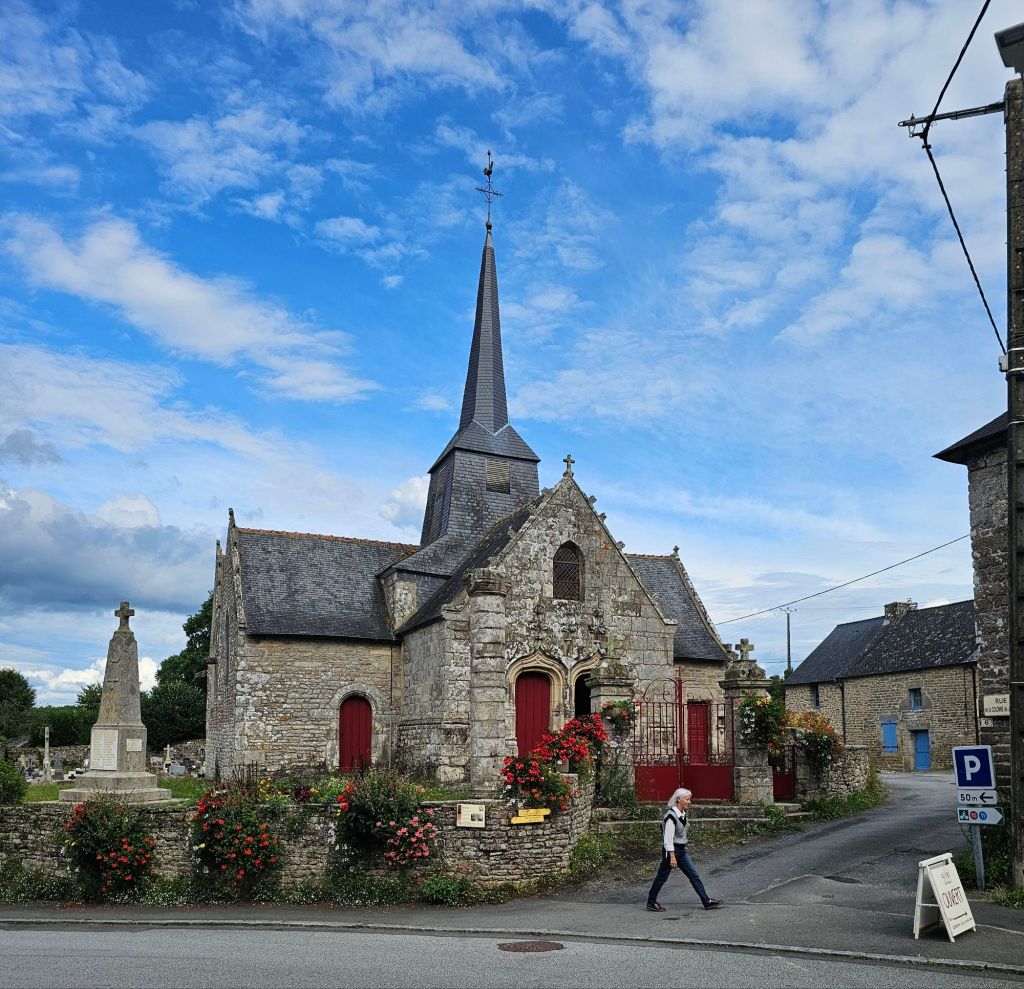
Pauline outside Leonard Cohen’s house.Leonard actually bought the house in the ’60s and it is still owned by his family.The house is in “Street Leonard Cohen.”There was a very friendly cat just nearby.We kept on walking up to the top of a hill, this was the view.Walking back down to the port.There’s some proper working boats in the port as well as the fancy yachts. No cars or even bicycles are allowed on the island, they still use donkeys and horses to move everything. Pauline was very keen that we would have a pool so we do. Very nice too.We went for a walk before dinner, there are cats everywhere. They do mostly seem very well looked after but I can’t help thinking an active desexing program would be a good idea.The port at sunset.Sunset.We went to a local Café for dinner and ordered far too much food but it was delicious. I liked these fried fish but we could have fed about 4 people just with these. The local cats did benefit though. The food here is excellent. We are both quite garlicy today after the tzatziki though!Too much!The port this morning. This was a clever name for this shop, based on a Leonard Cohen song. Notice the cats.We went for a walk along the island to this memorial seat for Leonard. This is the view along the path.The view from the seat. We bought some food from the bakery in town and had our lunch here.We looped inland to make our way back via this little church.
It’s a charming island Hydra, the Greeks all think it’s freezing because it’s only 22° but I’m definitely not complaining!
Pauline has never been to Greece or Rome and we figured now it’s a bit cooler in Josselin it would be a good time to go. Wednesday we took the bus to Rennes and the train to Paris Montparnasse, staying the night in Paris.
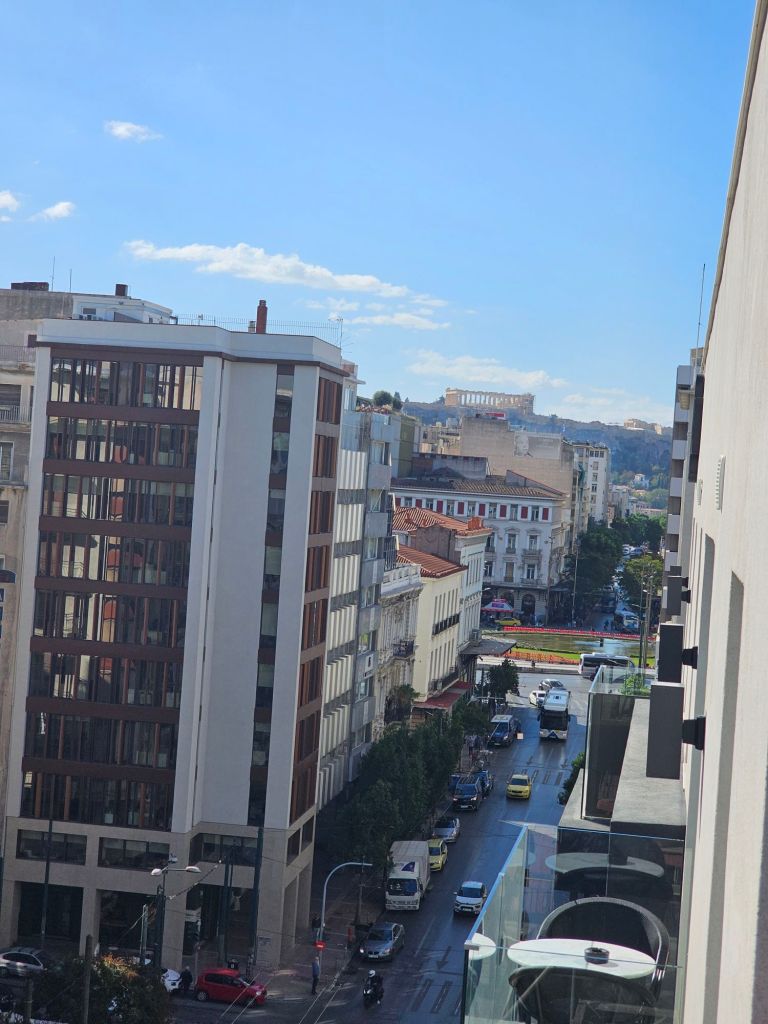
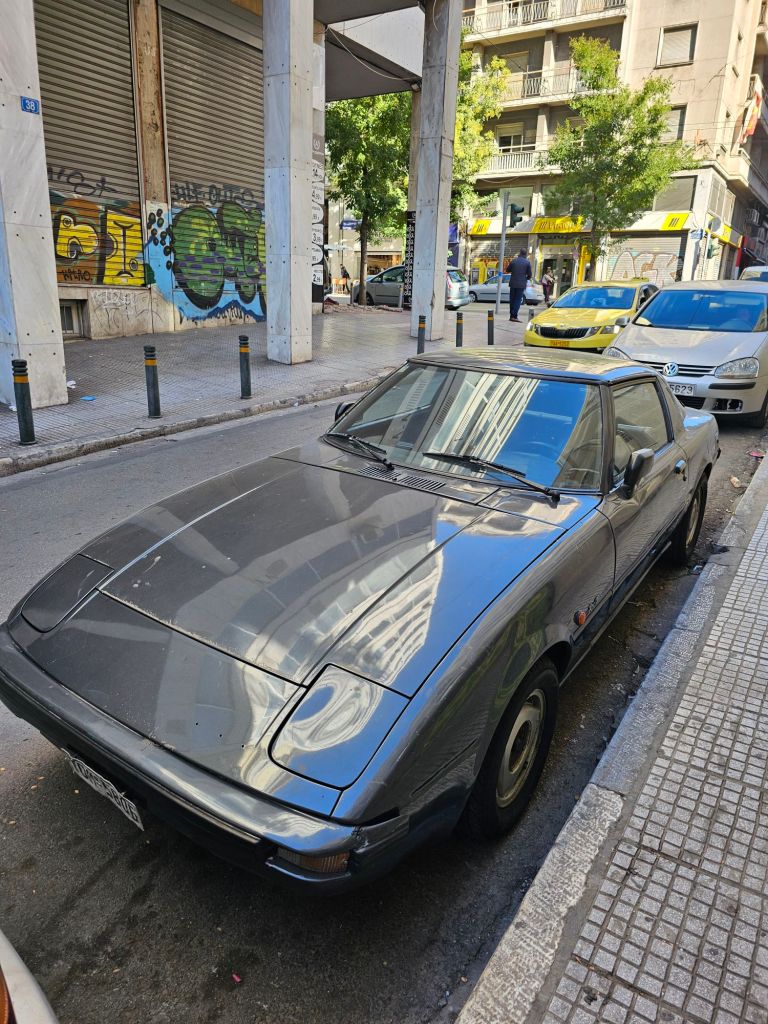
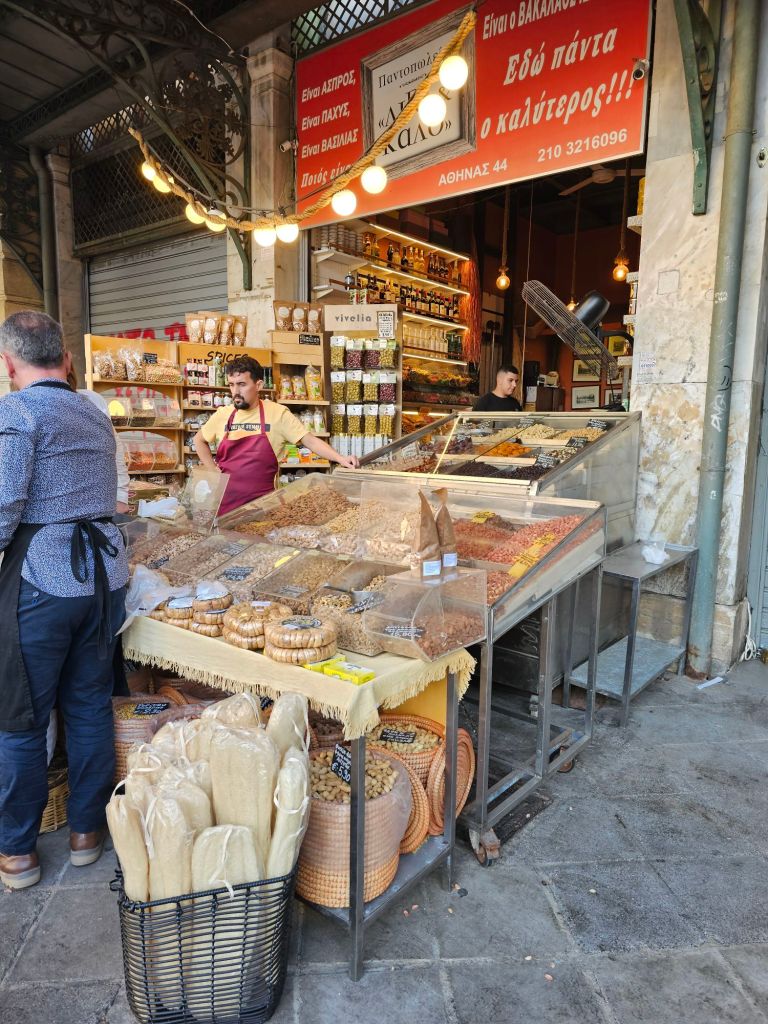
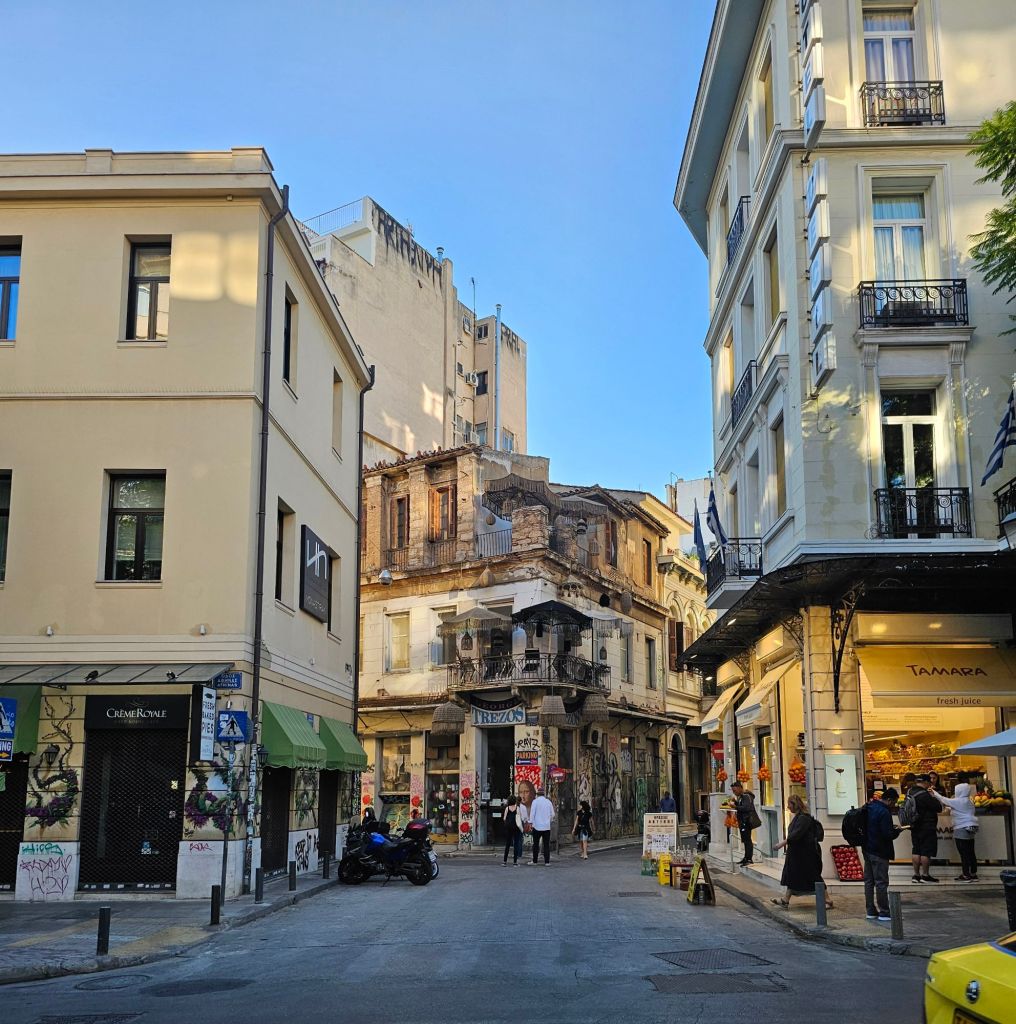
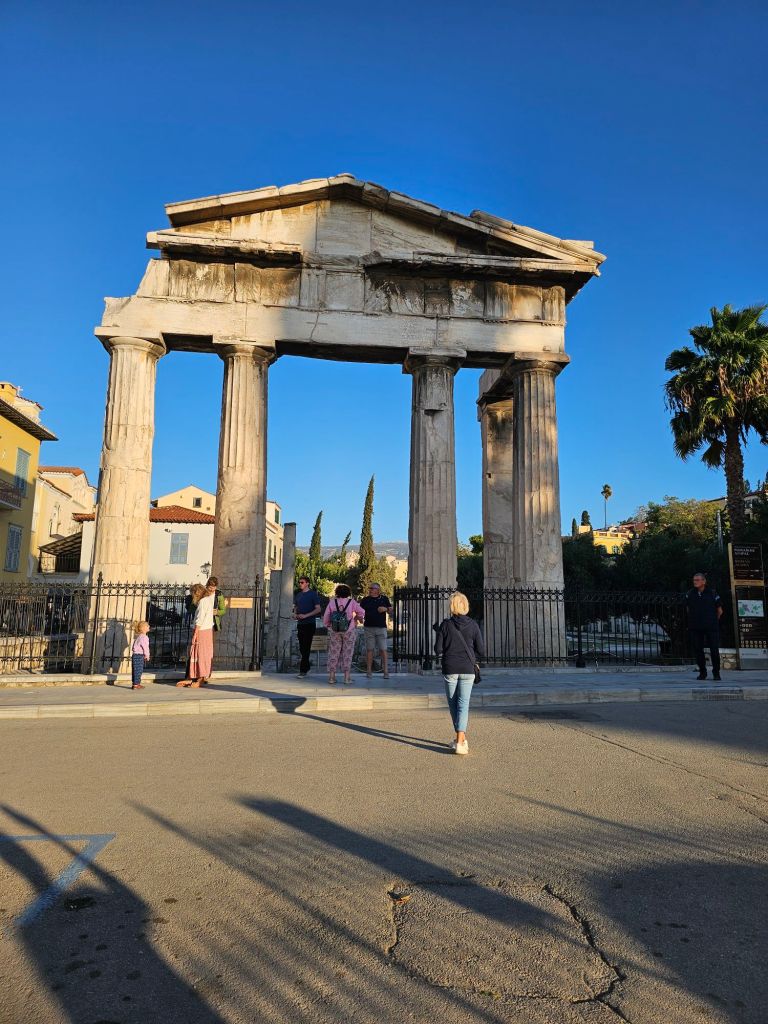
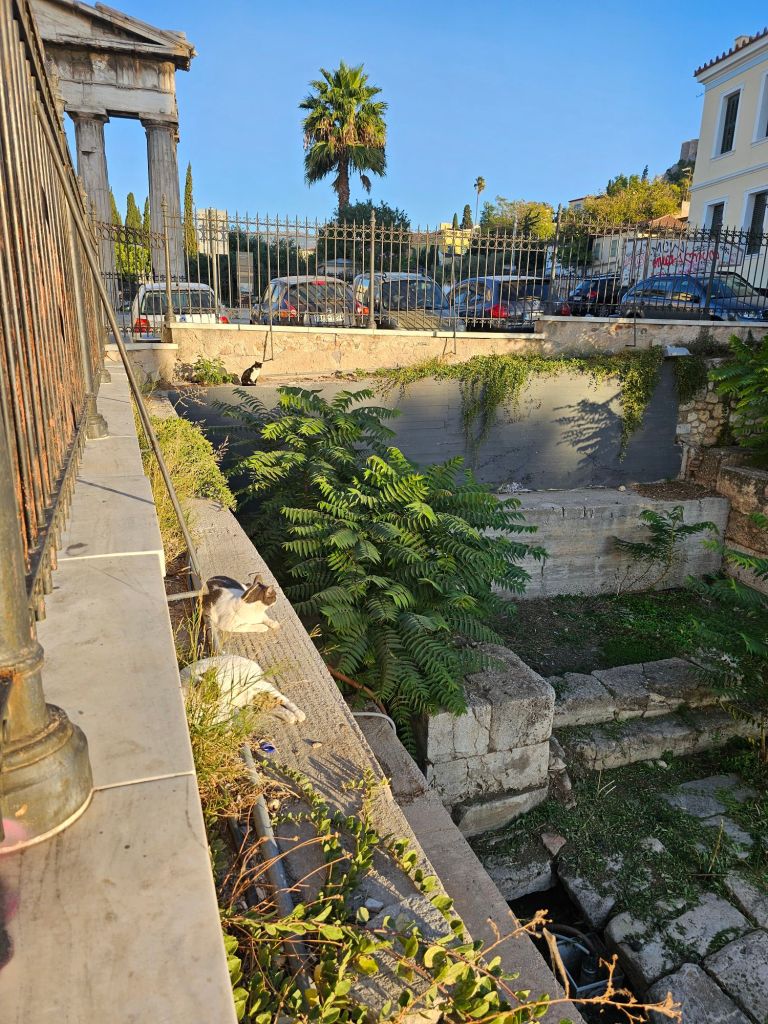
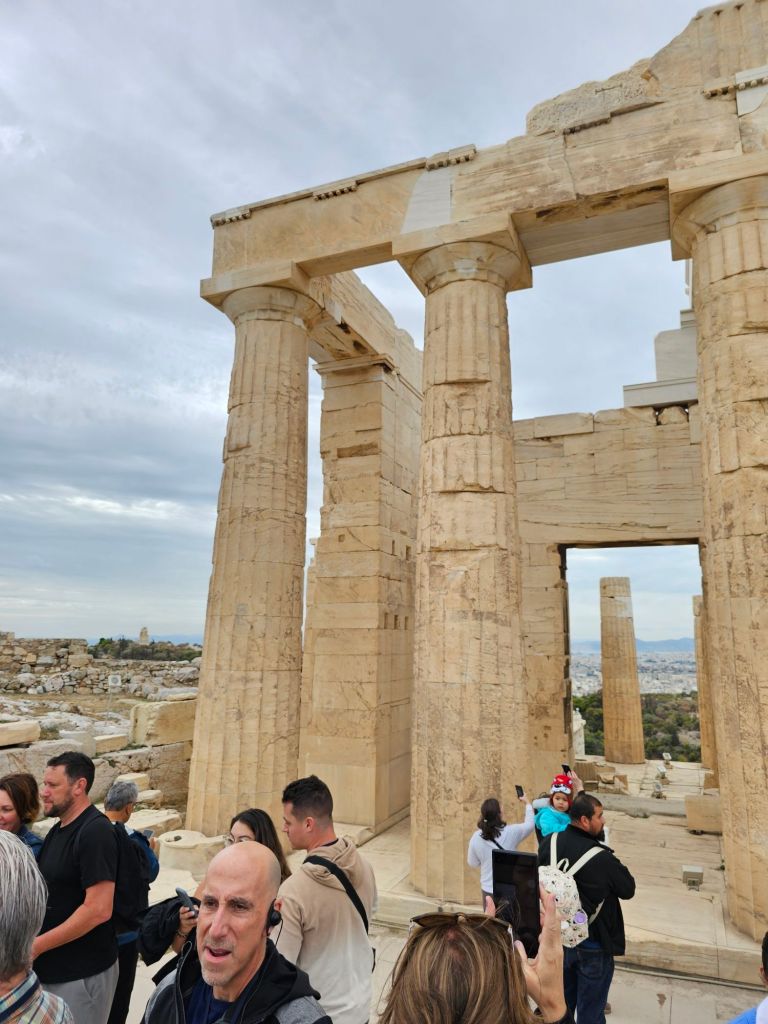
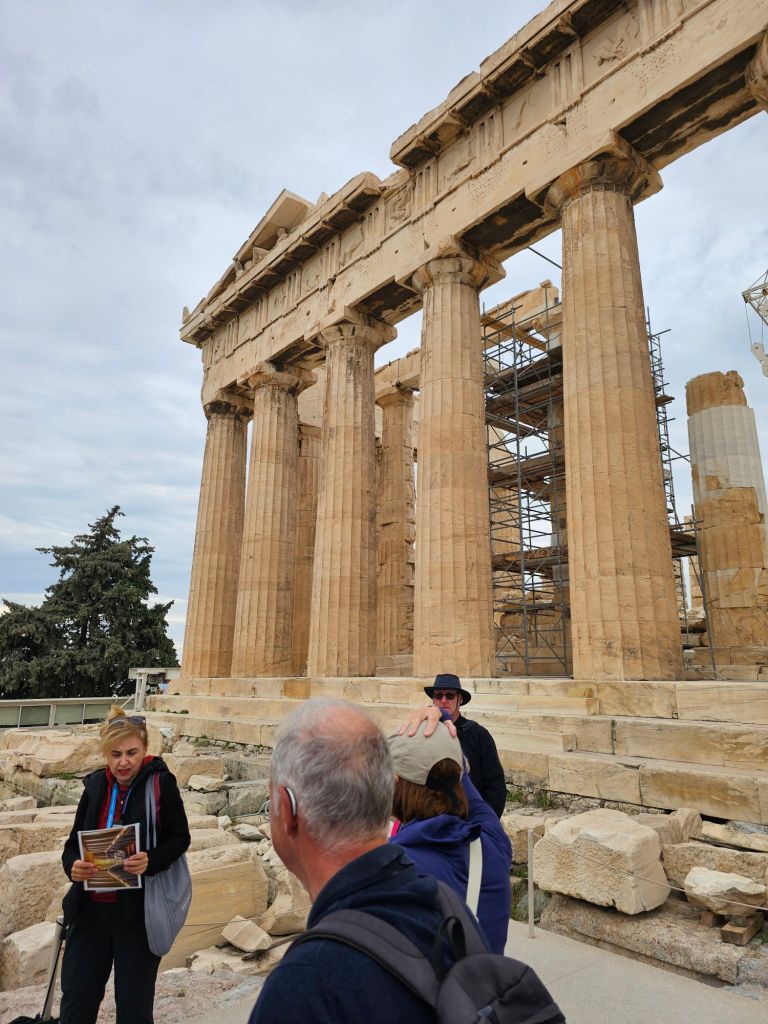
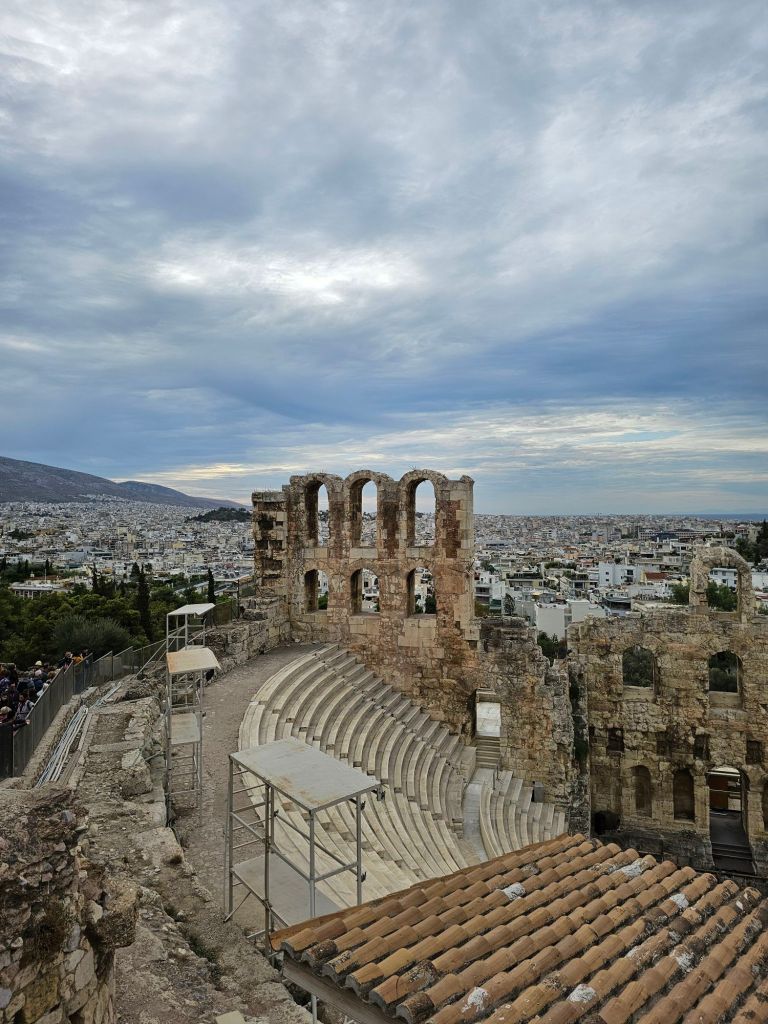
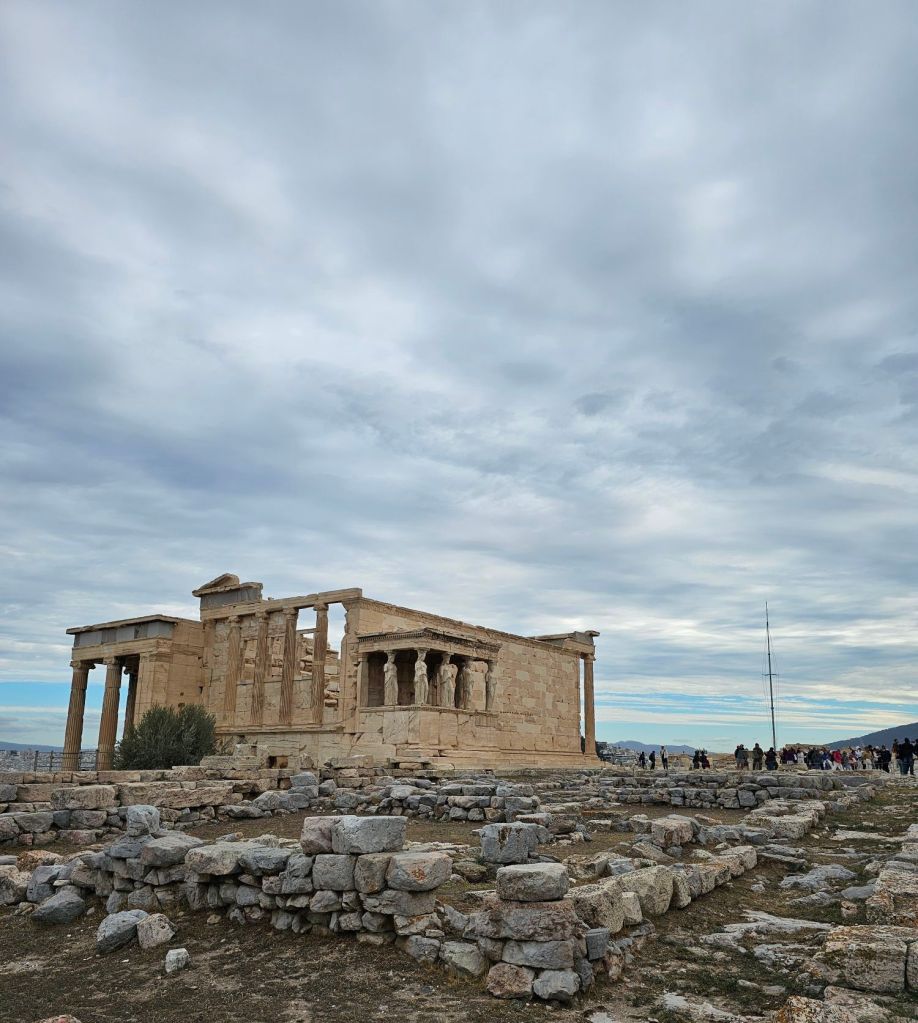
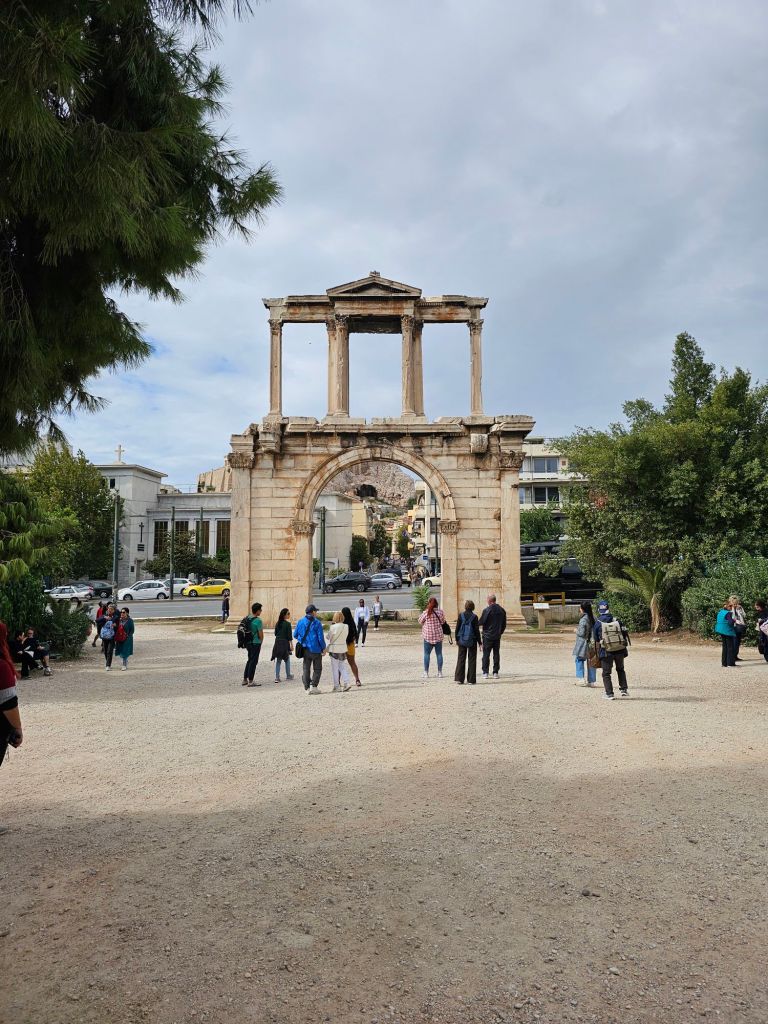
Staying in the 19th arrondissement we did have a view of Montmartre from the hotel but it was miles away. Nice hotel though.Next morning we took the RER to Paris Charles de Gaulle. I liked this warning sign on the doors. We didn’t intend to fly within Europe but getting to Athens via a train is quite a mission so we bit the bullet. As it turns out flying is also a bit of a mission these days. But the flight itself on Aegean Airlines was pleasant enough, then we took the subway to our hotel, which took about an hour or so.The hotel room we had booked had a faulty boiler so they moved us next door to an apartment on the 7th floor which has a view of the Acropolis so that was nice although stressful when we got there as they were full and the apartment wasn’t ready until the next day. All sorted now though.The apartment came with this welcome basket, not complaining!I did like this RX7 just around the corner. You don’t see many of these left in NZ, not as daily drivers.We did a bit of exploring the next day once we’d moved into the apartment. The local shops were quite something. We bought some figs and pistachio nuts here.Athens reminds us of Havana in that there’s a lot of beautiful but crumbling architecture everywhere you look. Its also fairly chaotic and dirty but definitely alive. I like it.This is the entrance to Hadrians library.There are cats everywhere, they seem quite well looked after but semi wild. They’re certainly well treated, we had one in the restaurant we ate at. Everyone was giving it leftovers and pats.This morning we took the metro to the Acropolis and had a guided tour. On the way up the hill we ran into this young Japanese guy who was clearly smitten by this handsome cat. It was very cute.Even though it’s not in season there were a lot of people at the Acropolis.Our guide Maria on the left there. We all had ear pieces which made it far easier to hear her. This concert theatre (Odean of Herodes Atticus) is still in use even though it’s over 2 millennia old. I wish they’d give us some advice on how to build a hospital that lasts more than forty years!View of Athens from the top.One of the temples. I kept feeling like I was in a Star Trek episode.I think this is the same temple from the other side.Back down again, this is Hadrians gate. The same Hadrian who built the wall in the UK.We went to a local cafe, Zen Athens Tradional House just across the road from us and got takeaways. The owner was a lovely lady who didn’t speak a word of English but she took a shine to us. The food was excellent. A very good day all in all.
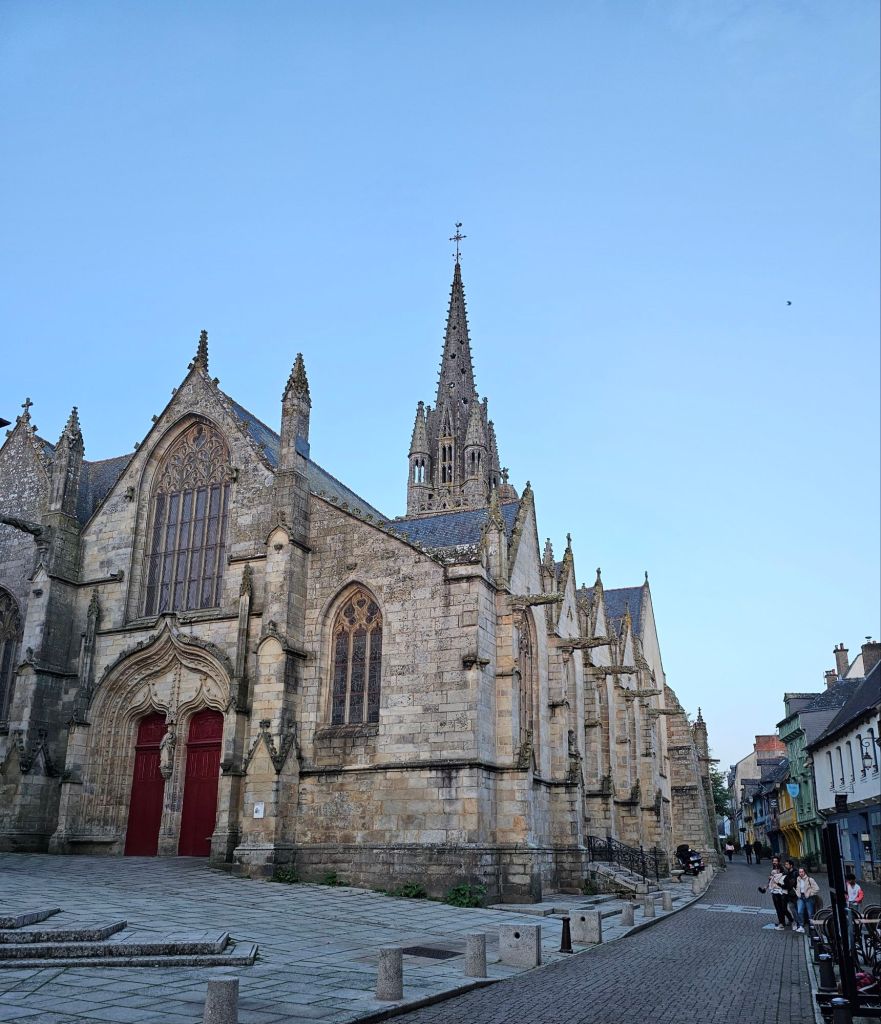
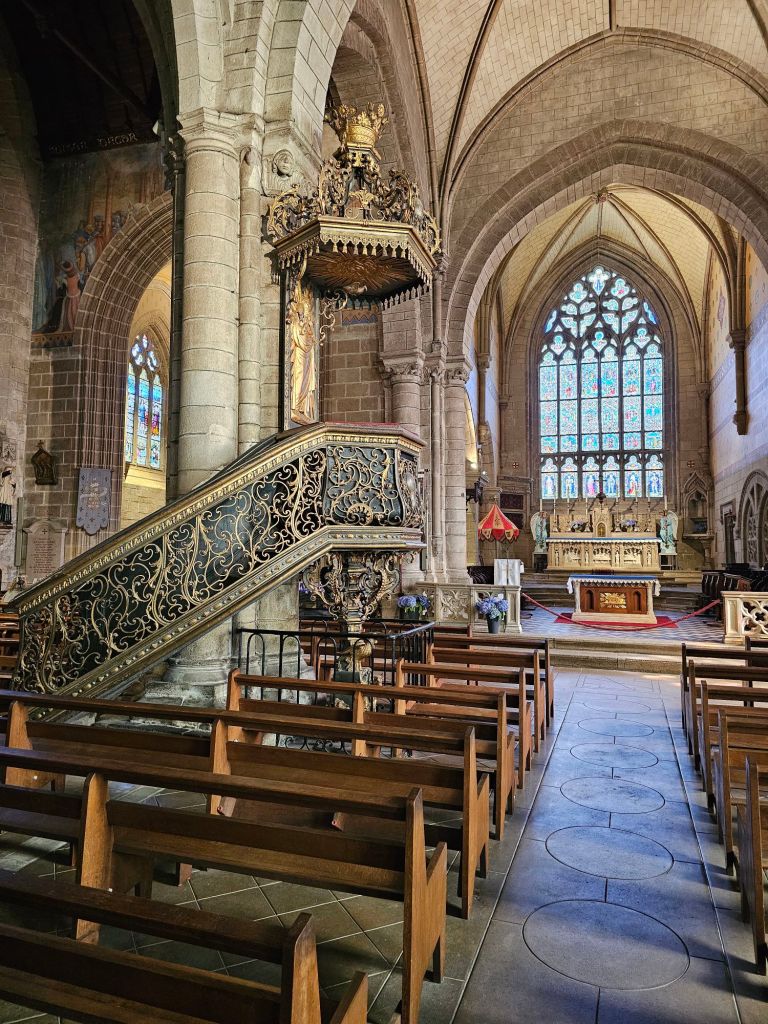
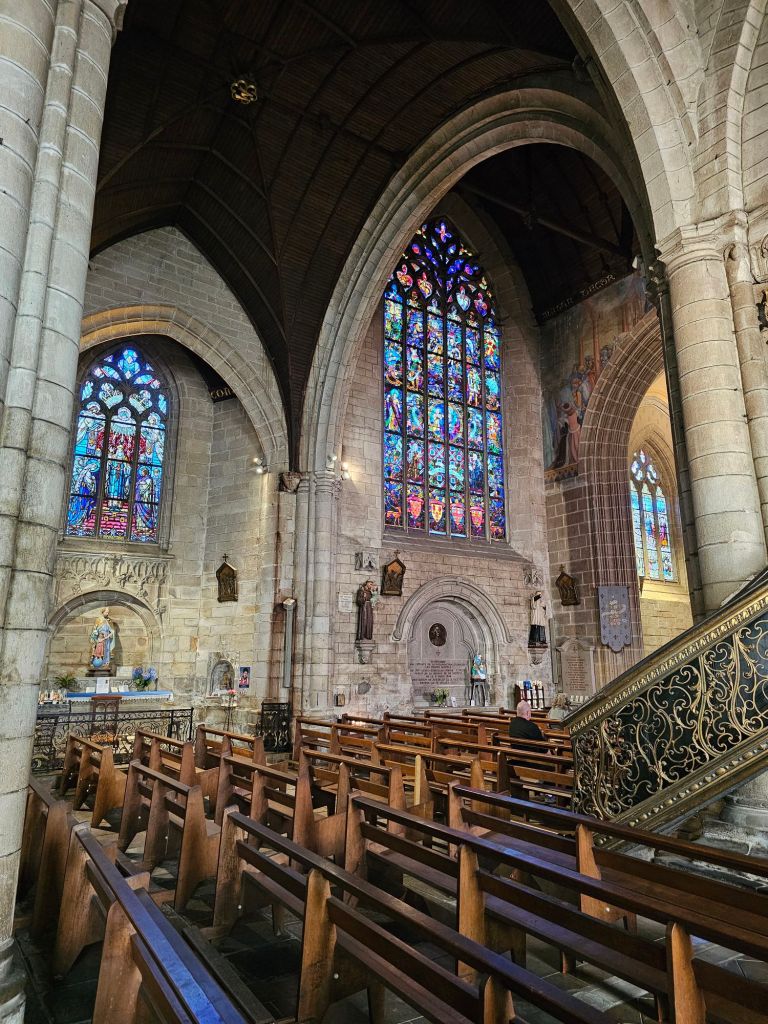
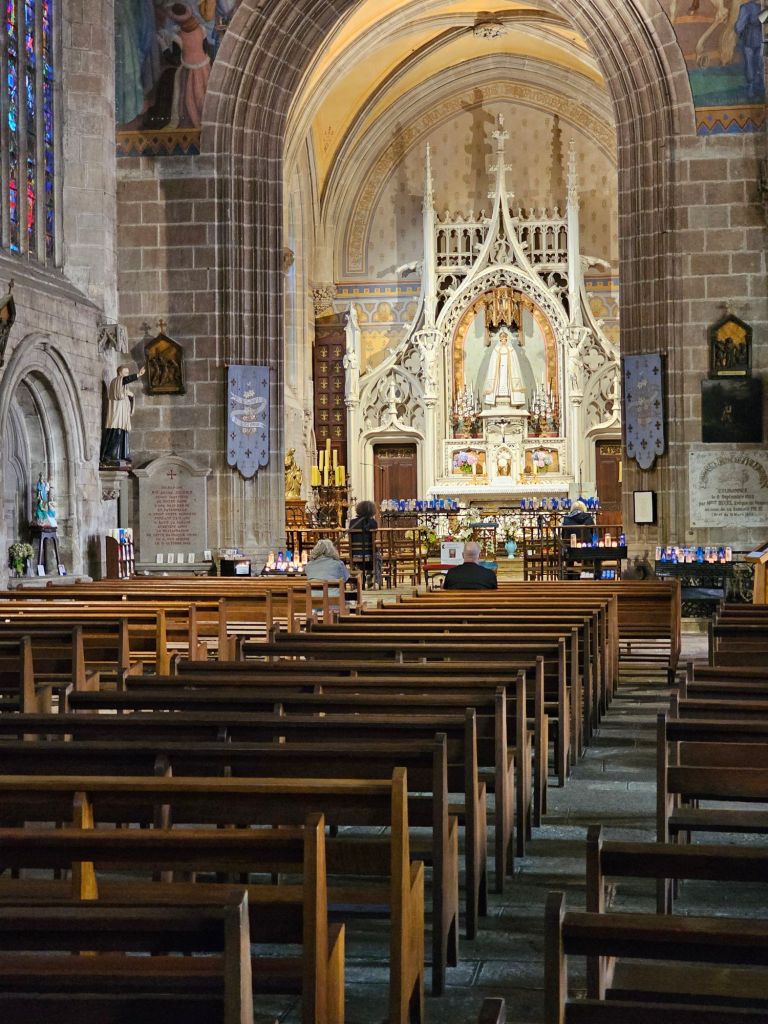
I’ve covered quite a few of the churches we have visited but it occurred to me I should write a post about the one in Josselin. It has an interesting history.
“In 808, the town of Josselin, in Bro Sant Maloù, did not yet exist. A ploughman was cultivating his land, at the place where the church of Notre-Dame du Roncier is currently located. Suddenly he saw, in a bramble bush, a statue of the Virgin Mary. A very Christian man, he took it and carried it home. But the next morning the statue had disappeared, and it was found in the bramble bush, where it had been the day before. Very surprised, the farmer took the statue back and brought it home again, but the next morning it had disappeared again. It was found again in the bramble bush, hence the name Notre-Dame du Roncier that was soon given to it. And this happened again for several days. The farmer then gathered his family for fervent prayer. And his daughter, blind from birth, was healed. The peasant then decided to build a small chapel where the statue wanted to remain. Obviously, all this became known very quickly, and other people ran to pray. The bishop of Saint-Malo, the local bishop, authorized the worship. Very quickly, many people came to settle near the Chapel. A monastery was built. The city of Josselin was born. Soon a Knight Guethenoc de Porhoët came to establish his castle not far from the chapel. He gave the name of his son, Josselin, to the nascent city. Immediate consequence: pilgrimages multiplied. Thanks to the construction of several monasteries and a Romanesque church which was later rebuilt in the Gothic style, the city of Josselin grew. The healings obtained, the preaching of Saint Vincent-Ferrier, the passage of pilgrims from Tro-Breiz and those from Santiago de Compostela broadened the influence of the sanctuary and the castle of Josselin.”
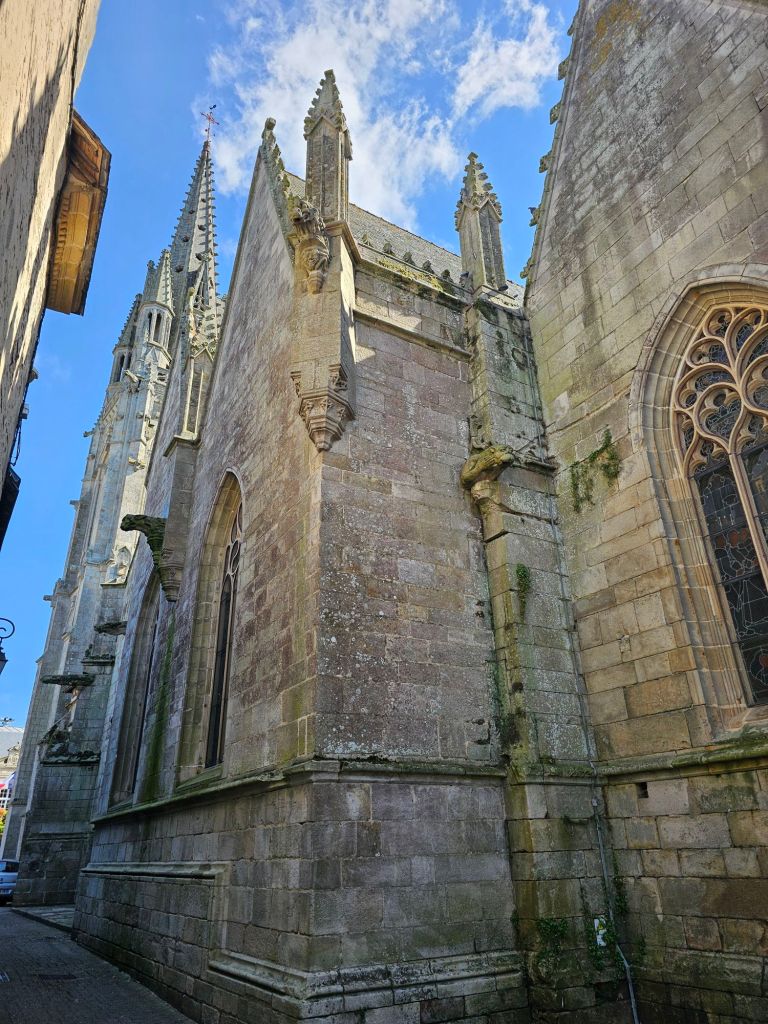
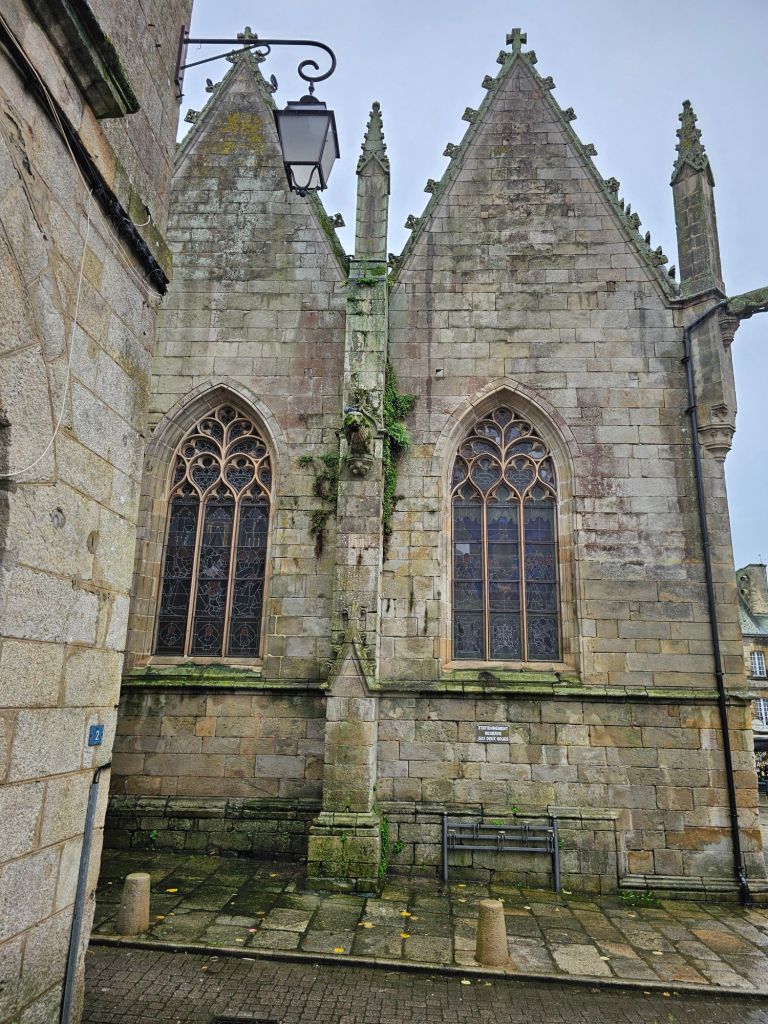
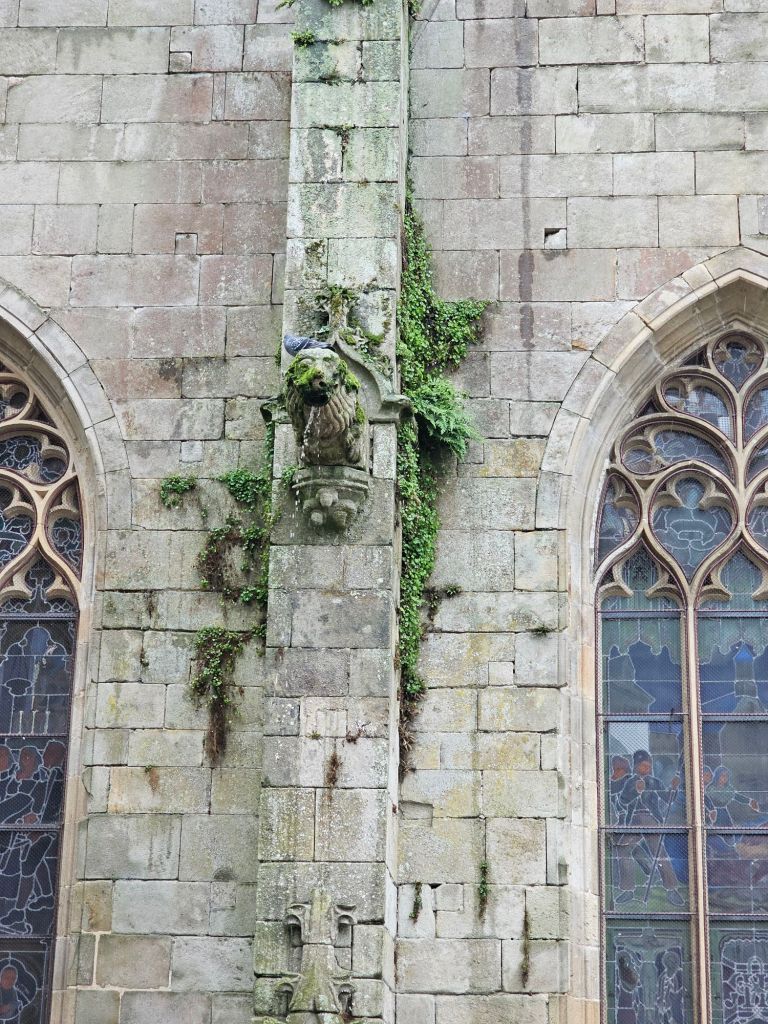
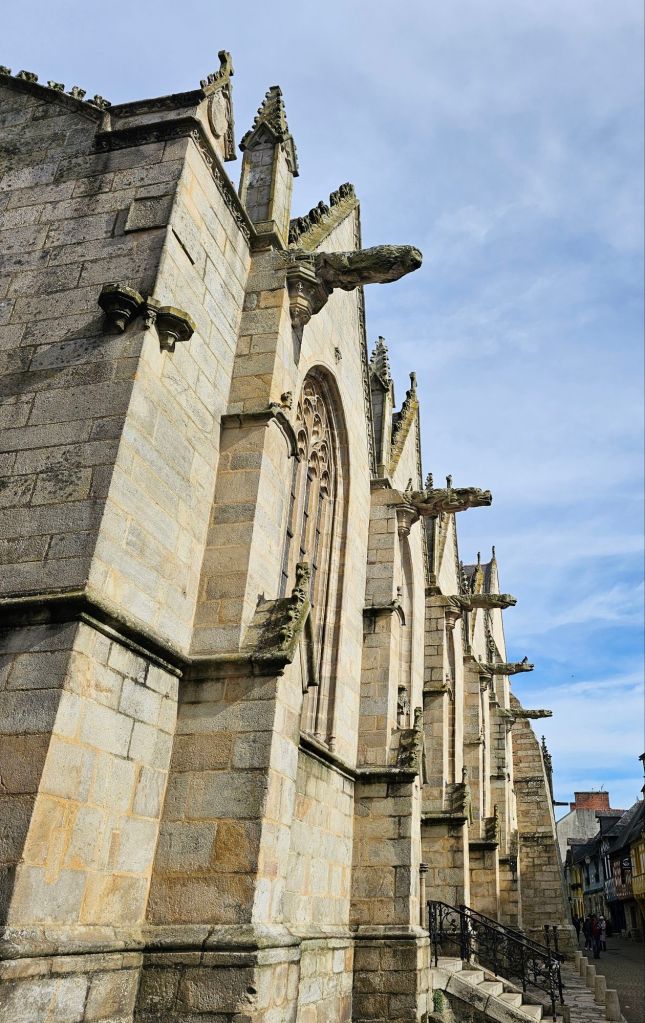
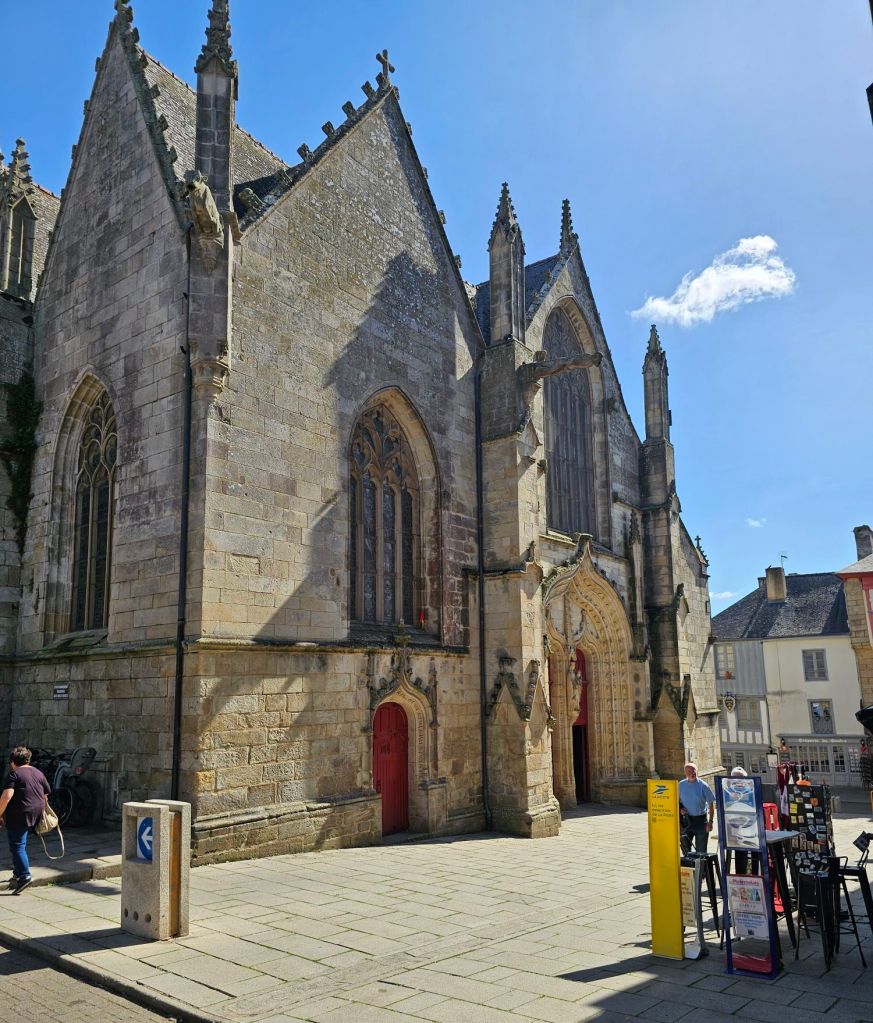
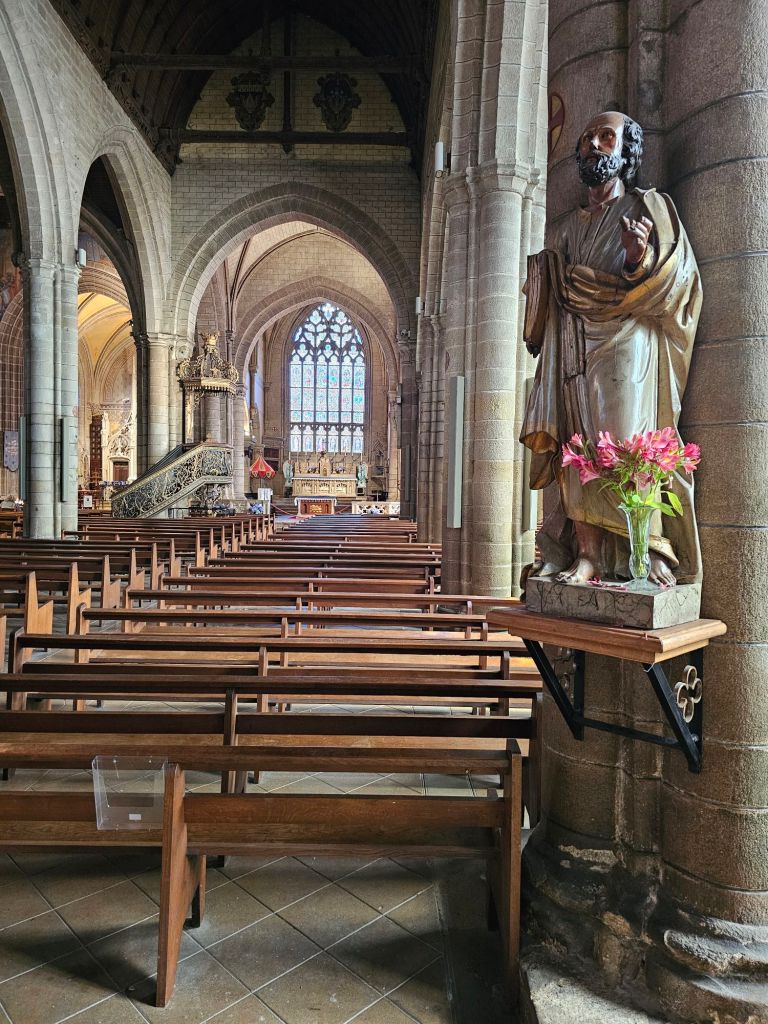
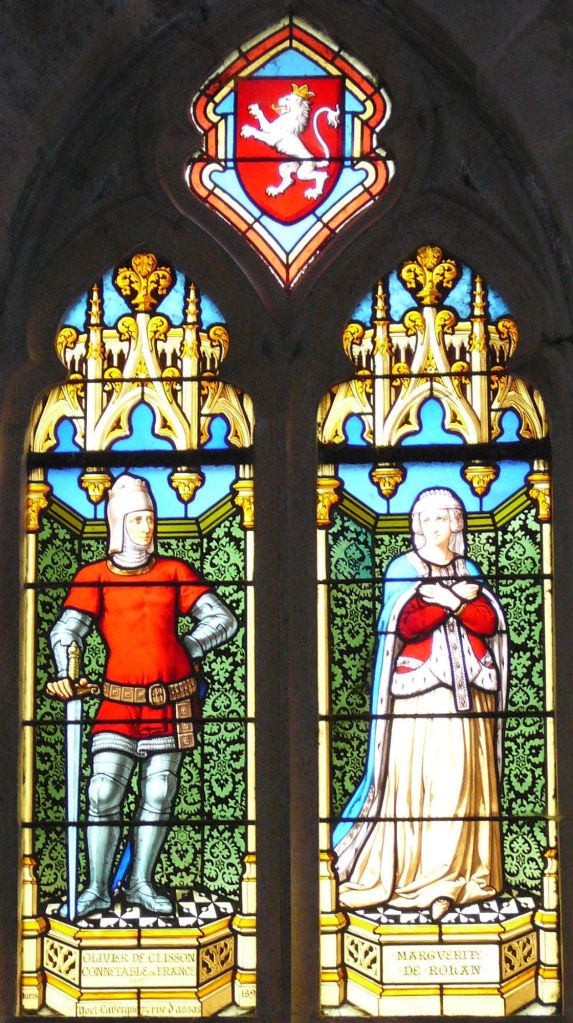
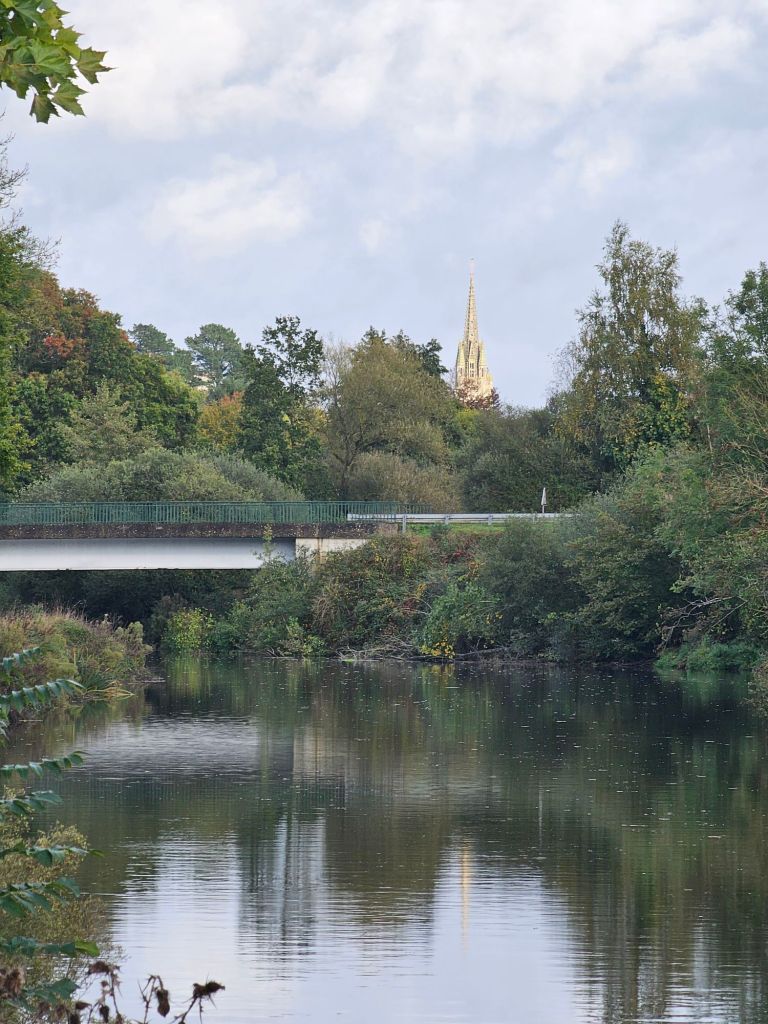
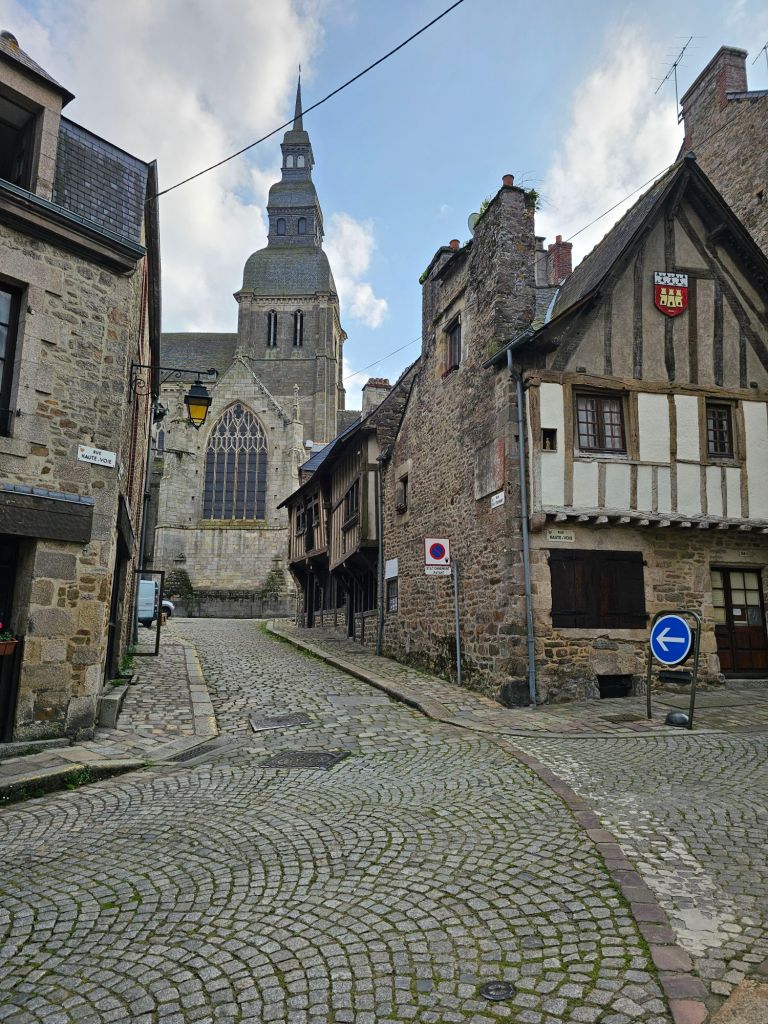
I do like the gargoylesGargoyle in action one recent rainy day.Beaucoup de gargouilles!The front door off to the right.It’s quite impressive inside. We came here for an organ recital many years ago by a man from Oxford, who was perhaps a little taken aback by his cool reception. I think he was too classical for the audiences taste. Not sure who the statue is. The pulpit is suitably flash but not too over the top as these things go.The stained glass has quite a lot of stories to tell. There are a lot of knights in armour on some of them. Olivier de Clisson and his wife are buried here among many other notables. De Clisson built the Château starting in 1370.Olivier de Clisson and his second wife. “Widowed, Olivier, in 1378, married his second wife Marguerite de Rohan (1330-1406), a daughter of Alain VII Rohan. Marguerite was the widow of Jean de Beaumanoir, a hero of the Breton nobility, who faced the English at the battle of Trent, she had three daughters. A sister of Clisson, Isabeau, is also united in 1338 to Jean Rieux. With these unions, Olivier V is linked to the largest noble families of Brittany.” (Quoted text and image from Wikipedia)Mary. They’re very keen on her here. She gets an outing once a year for the pardon.The steeple is quite tall and therefore one of the first things you see when approaching the town. You can climb up the inside, with quite a view from the top. Well worth doing if you’re ever in town.
Maria lives in Hong Kong but she was flying in to Nantes from Porto where she’d been to a wedding. We drove to Nantes to meet her planning a pleasant drive along the coast, hoping for a walk on a beach along the way. Unfortunately it poured down all the way. When we reached Nantes the cloud base was quite low and it was raining quite heavily. We watched her plane on flight radar clearly on hold and then coming in for an approach, and then aborting at about 1300 feet and heading off at a great rate of knots diverting to Bordeaux. D’oh! So we drove back to Josselin as it was getting quite late and Pauline had a meeting that night. Meanwhile Maria’s flight refueled and came back for another go, this time successfully. She ended up staying the night in Nantes and getting the train to Rennes the next day and then the bus to Josselin arriving a day late but bearing gifts from Porto.
Very nice too.
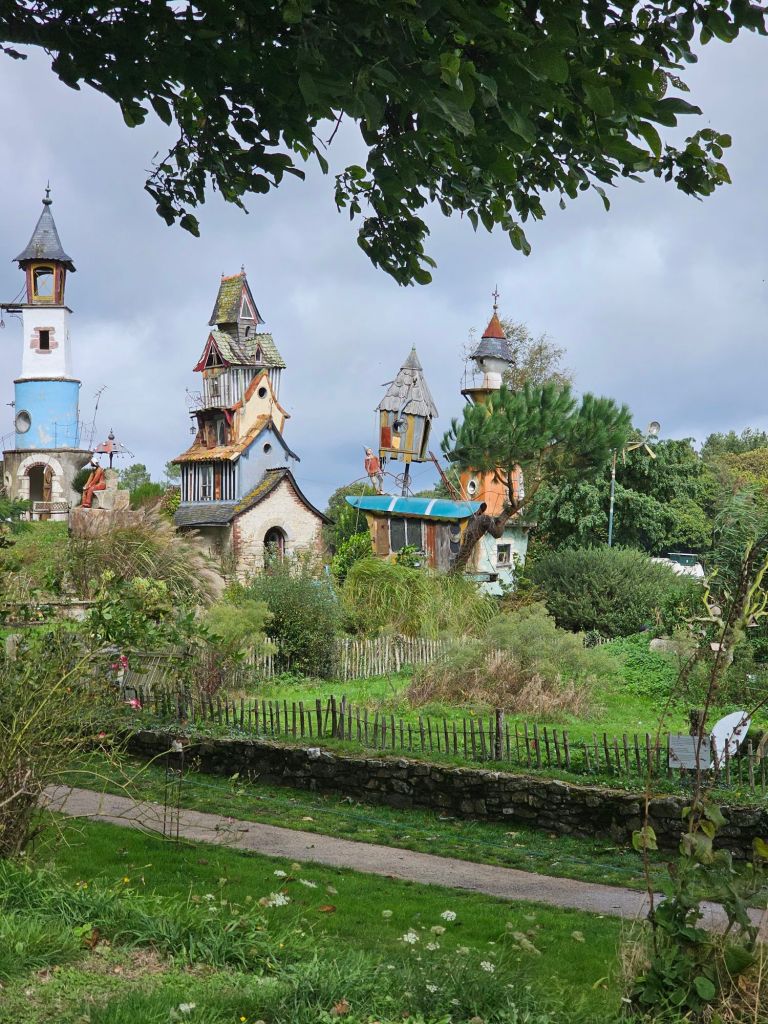
The next day was still a bit rainy so we set off to L’univers du Poète Ferrailleur, an indoor/outdoor museum of funky art not far from Josselin. It’s similar to the Lost Gypsy in Papatowai. Both are well worth a visit if you’re either in Morbihan or the Catlins.
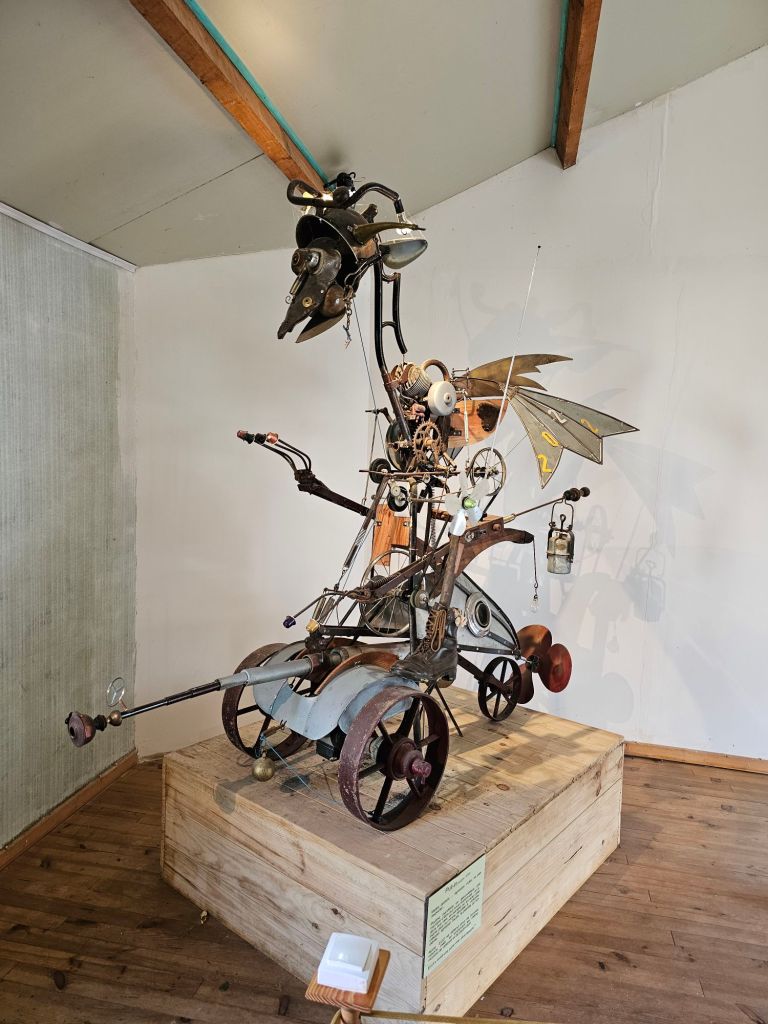
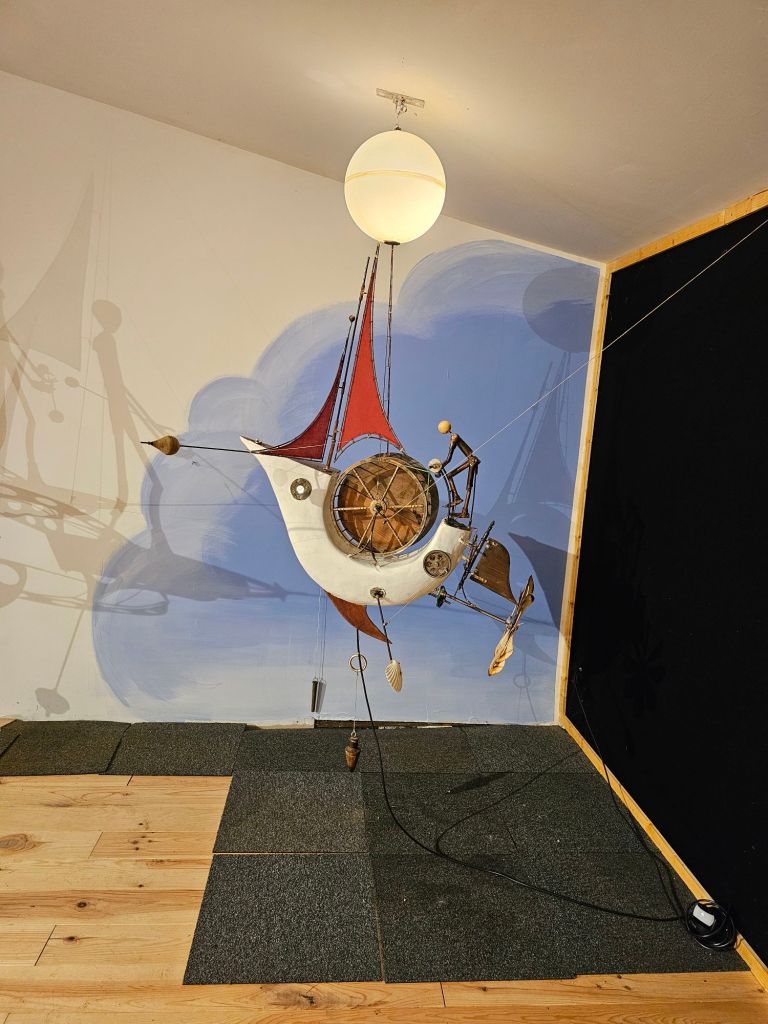
The outside parts of the museum.Pauline inside one of the wonky buildings.I particularly liked the 2cv of course.Inside there’s a collection of machines made from found things, mechanized so if you push a button they spring into action.
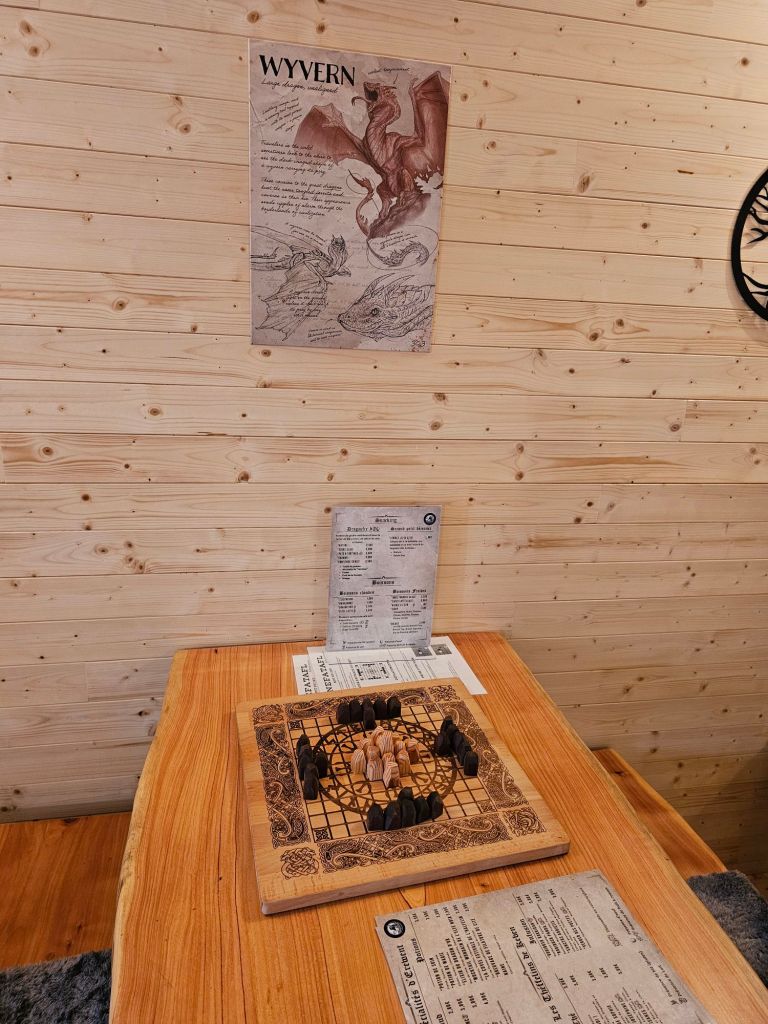
After the museum we stopped by at the café du dragon noir in Malestroit as it was still very much an indoors sort of day.
It was a café dedicated to games, when we walked in the proprietors were all busy playing and we were the only customers but they were very nice.Inside the café. Nice place, I’d definitely go back.
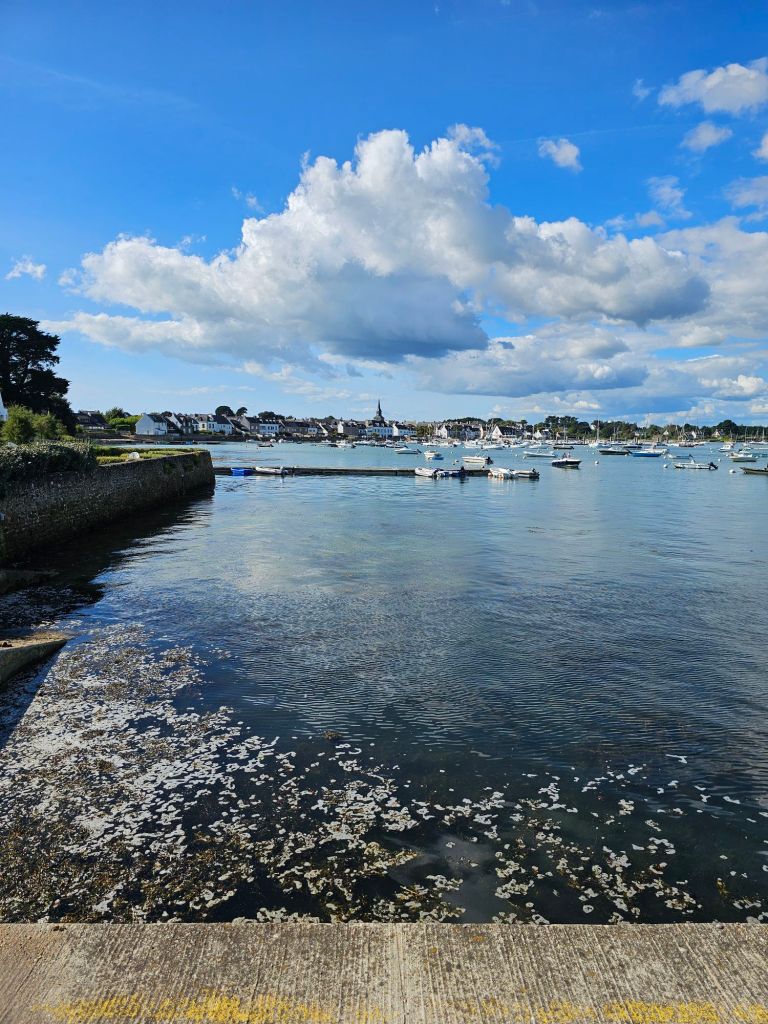
The next day was a lot sunnier so we drove to Locmariaquer which is a small coastal town in the Gulf of Morbihan and walked along the coast a bit. You can get a boat tour around the gulf, Pauline and I did it once, it was great. Very pretty part of the world.
Locmariaquer in the distance there.
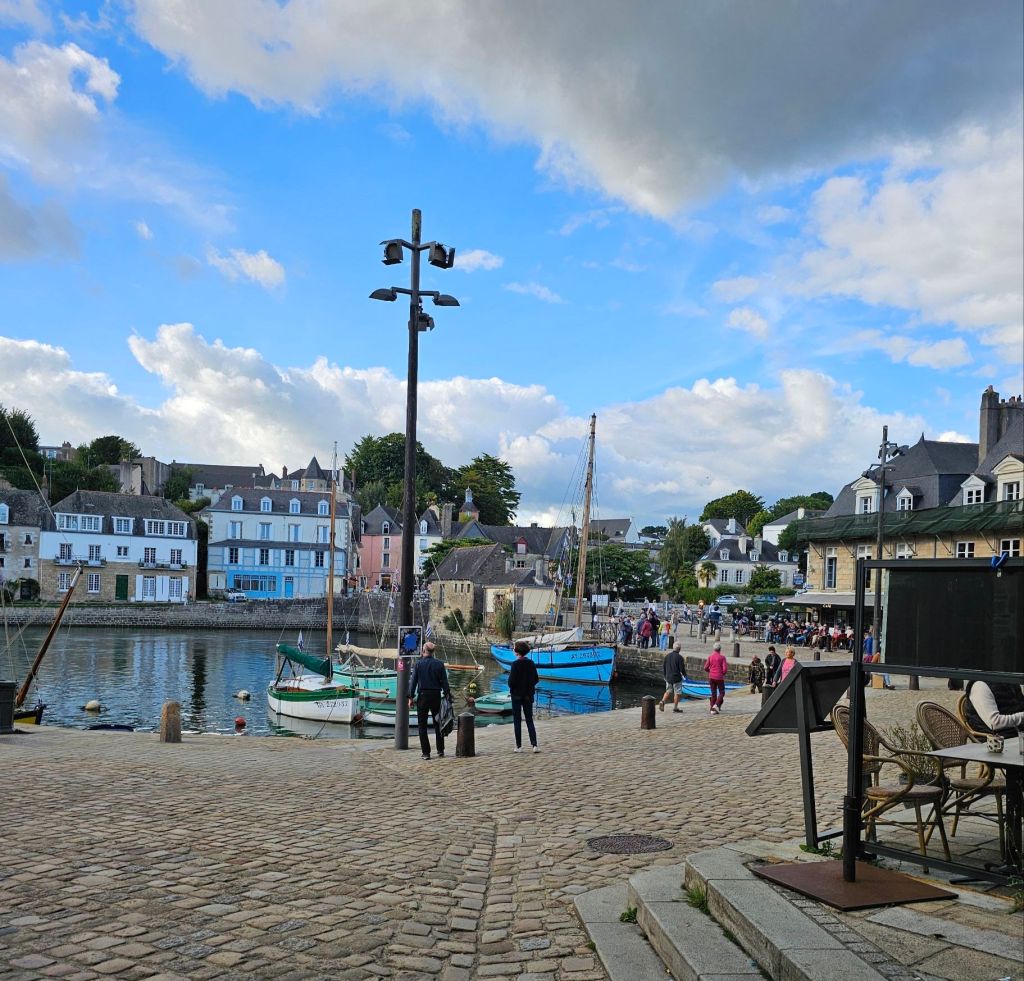
On the way back we stopped in Auray, one of our favourite little towns.
The port of Saint Goustan, Auray.Saint Goustan. Saint Goustan from the other side!
Pauline has known Maria since she was a baby, it was very nice for her (and me) to be able to spend some time together. Thanks very much for dropping by Maria, it was a very nice couple of days.
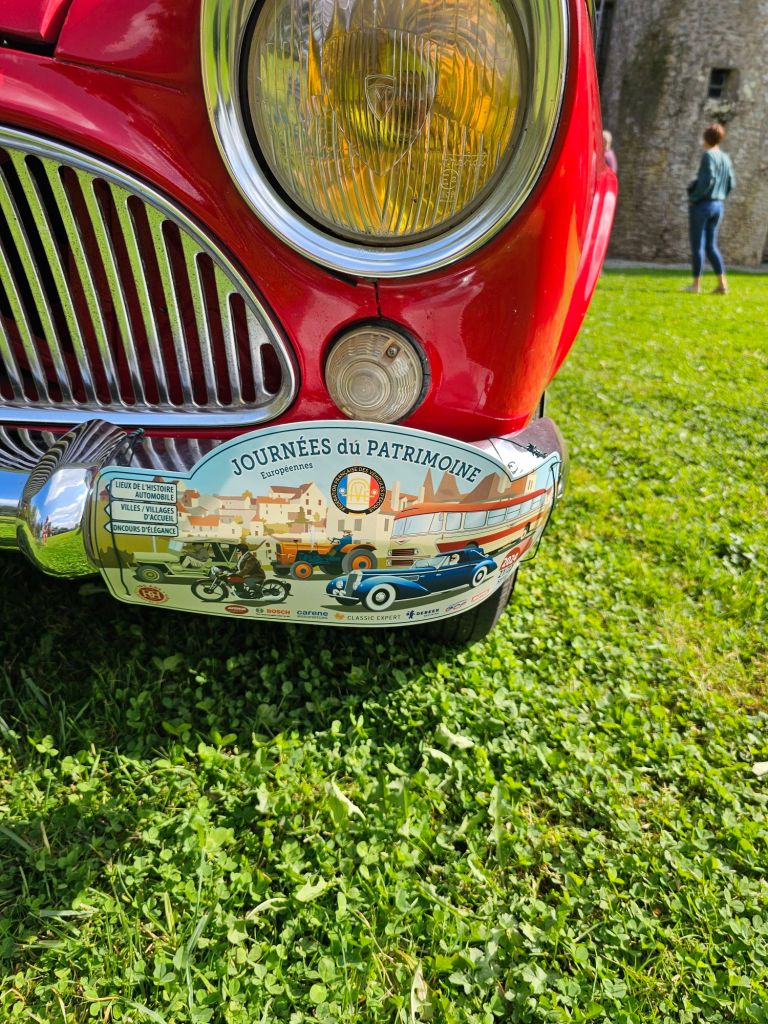
This is slightly out of order as it was before we had our visitors and before we went to St Malo. The 41st edition of the European Heritage Days took place on 21 and 22 September 2024. This year, it had two themes: “Heritage of routes, networks and connections” and “Maritime”
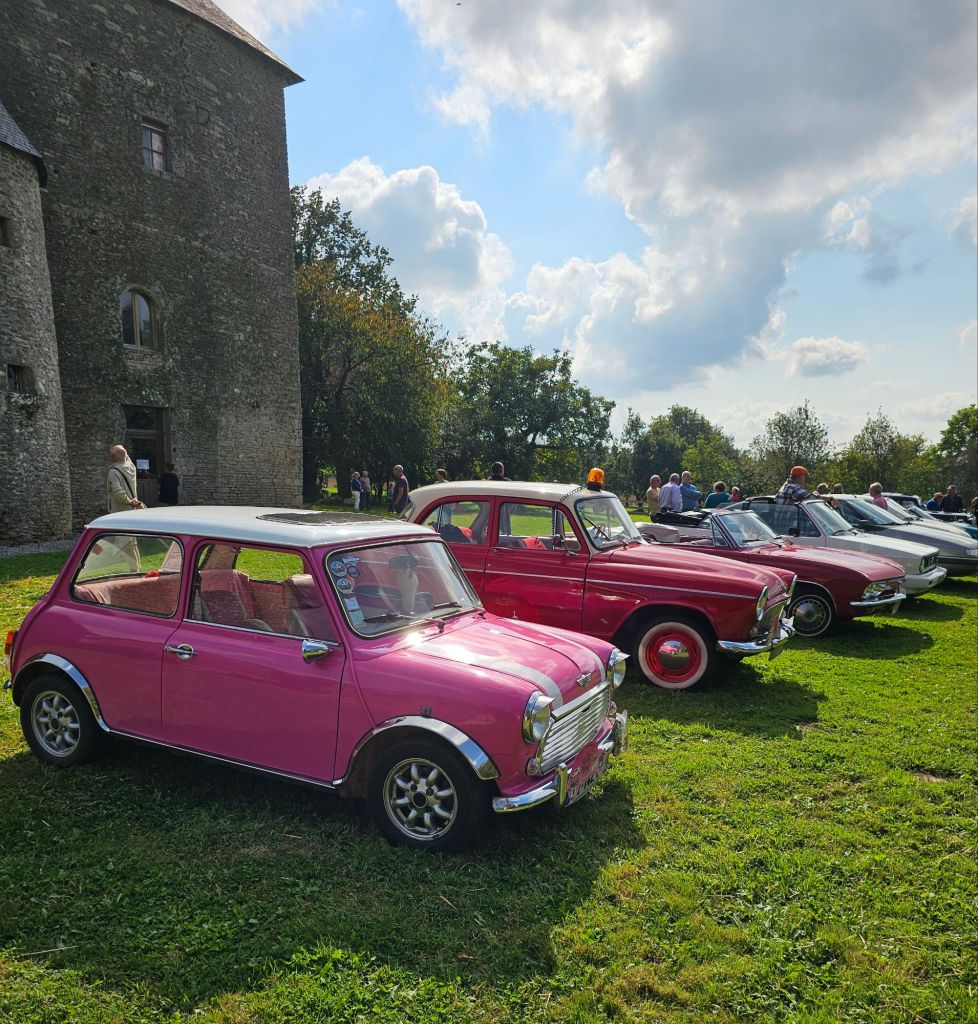
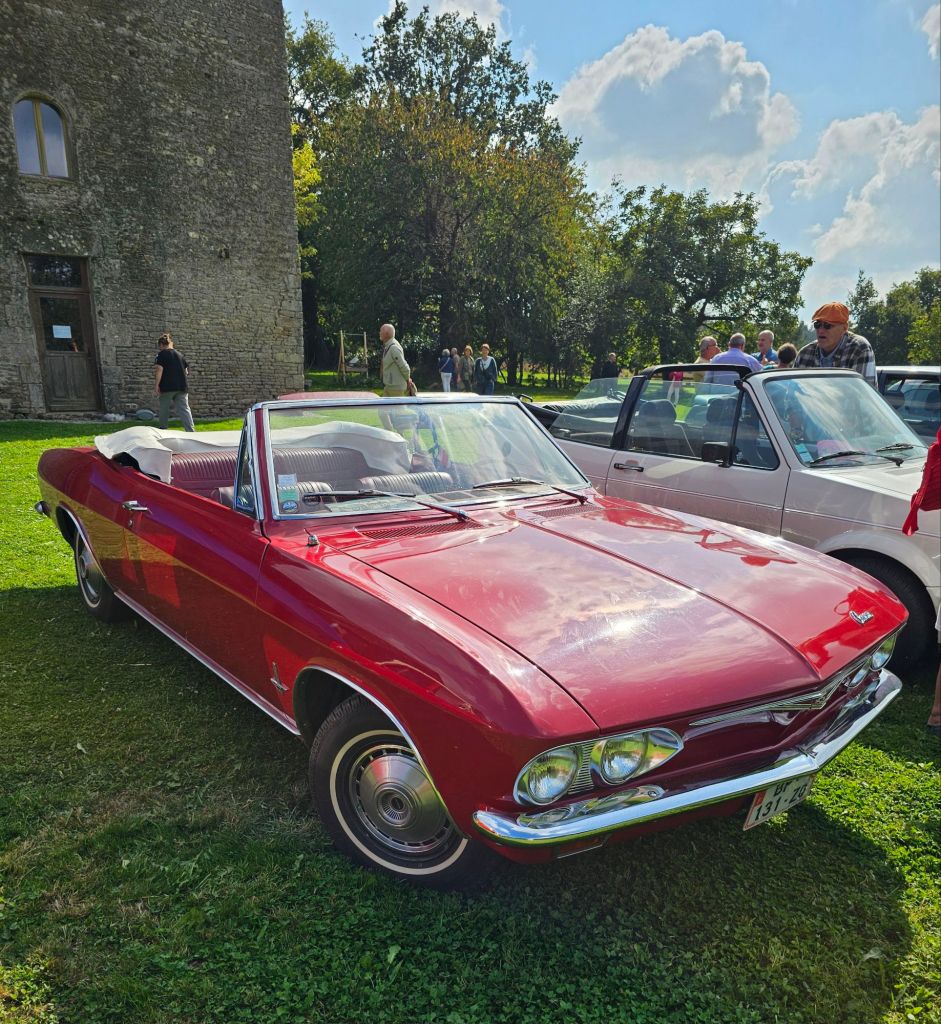
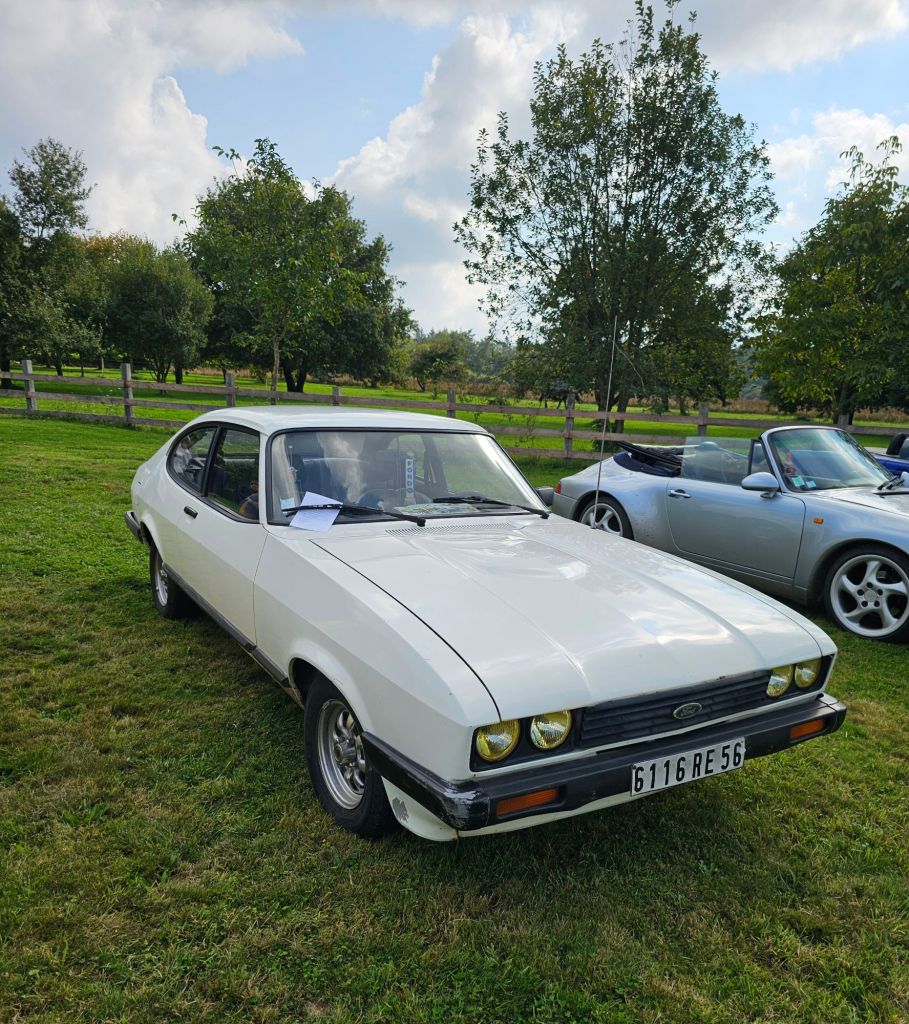
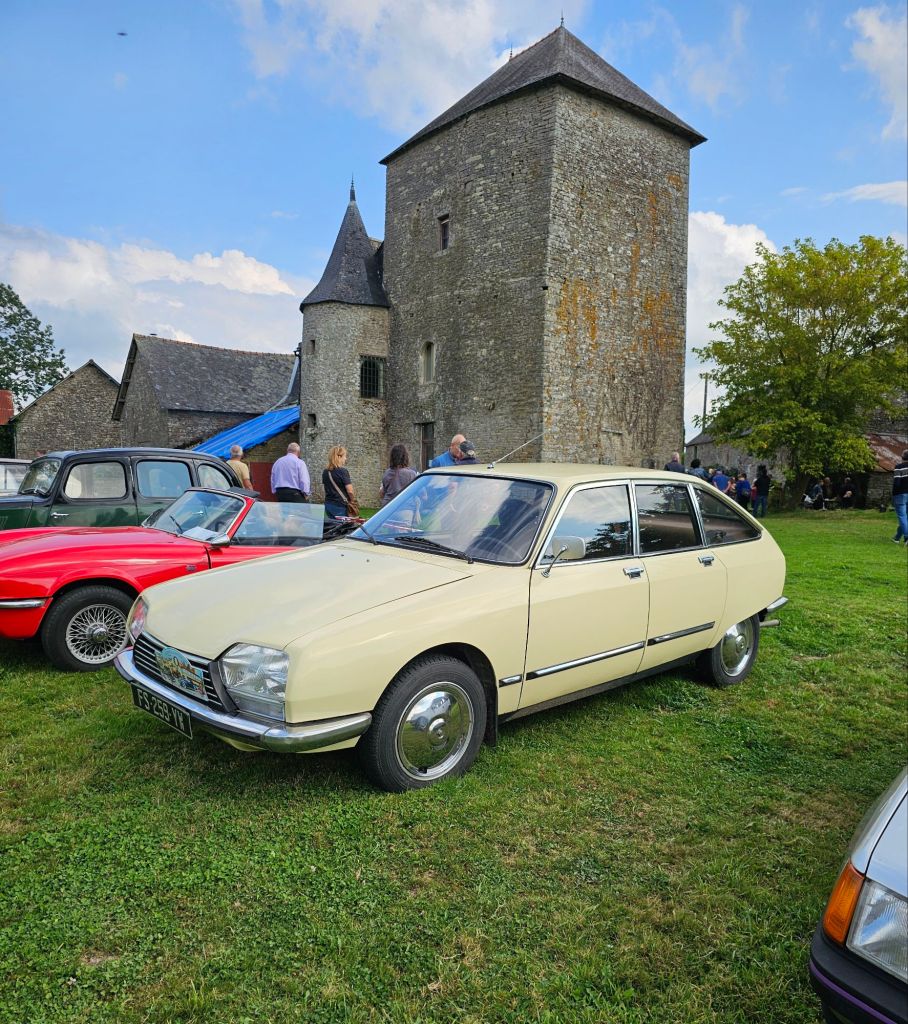
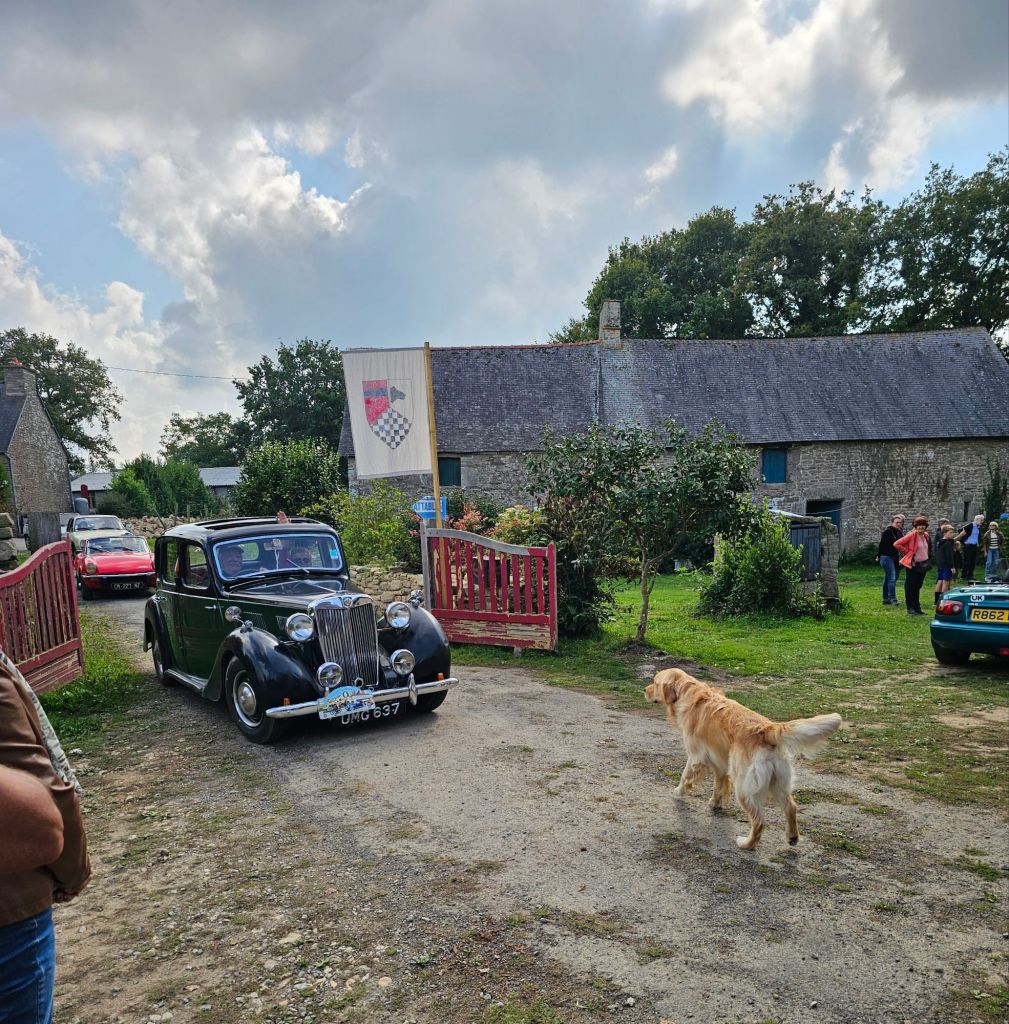
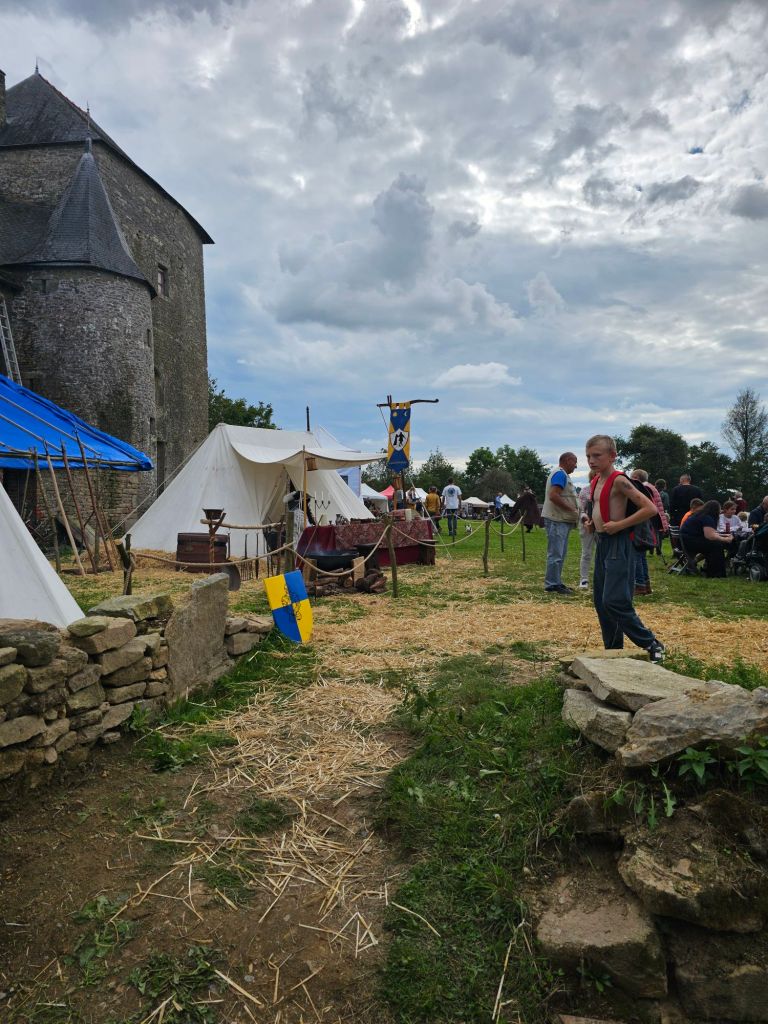
On these days a large number of châteaux, churches and other heritage sites held open days for the public. We chose to visit the Manoir d’Even which is not far from Josselin and where I had already been for a medieval festival and I thought Pauline would find it interesting. The Manoir has recently been bought by a young French couple and they have a huge task ahead of them. They showed us around the Manoir and grounds and explained some of the renovations required. Happily as the theme this year was “heritage of routes and connections” a local classic car club turned up with some fabulous cars. We had a thoroughly enjoyable afternoon here.
The Manoir.Pauline was rather taken by the 2cv Arcadiane. This Simca was rather nice.Minis are quite popular in France, Simca next to it. Chevrolet Corvair. Quite an interesting car for it’s time. Ralph Nader killed it off.I didn’t expect to see a Capri!This is a Matra Murena. Never seen one before.Nice Citroën GS.Nice old MG saloon.I did like this mini.The dog was joyfully greeting the cars as they drove in. We were a bit concerned but it survived.
This was a nice afternoon in the country, I have to say my French struggled a bit with the vocabulary around restoring ancient buildings!
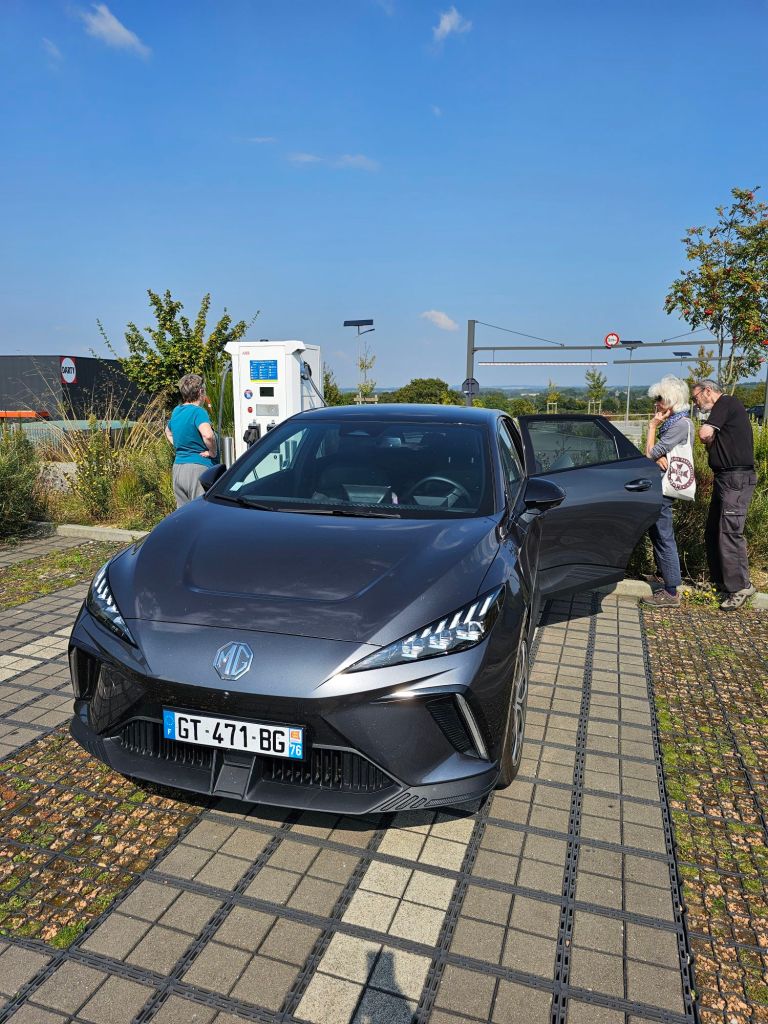
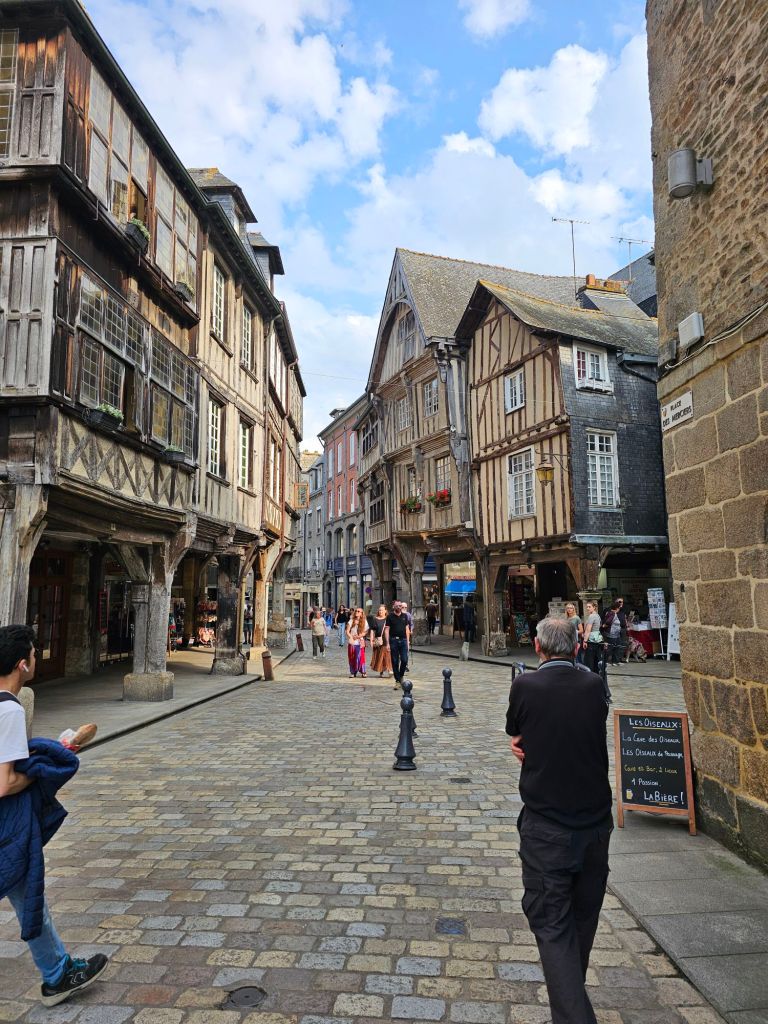
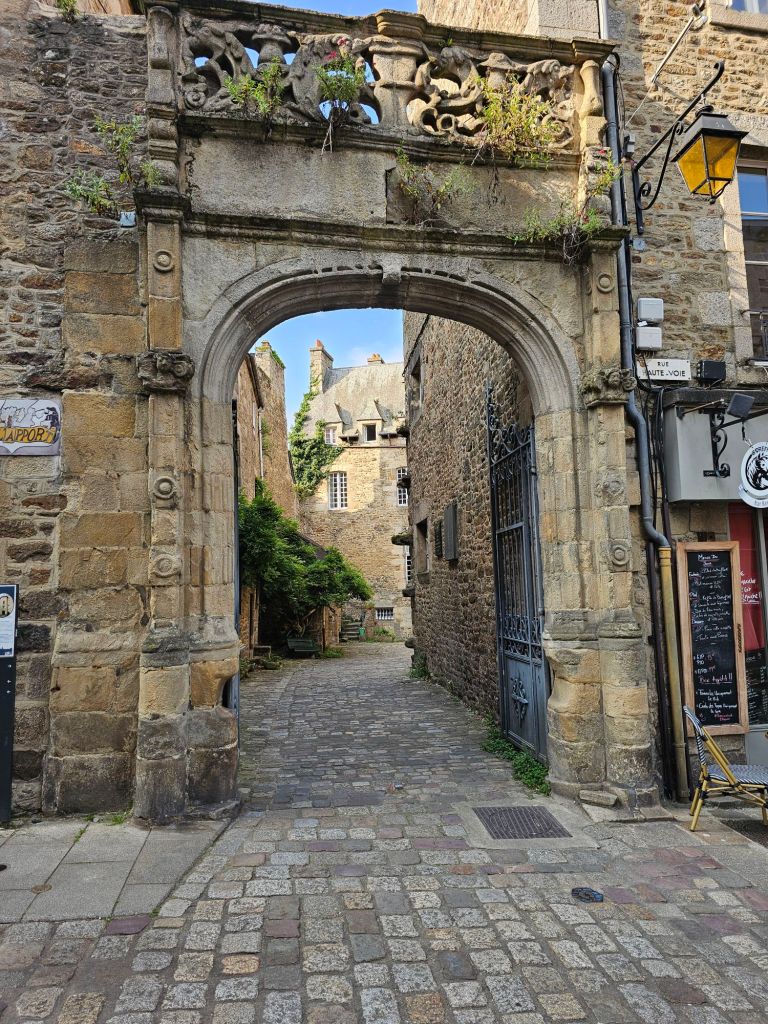
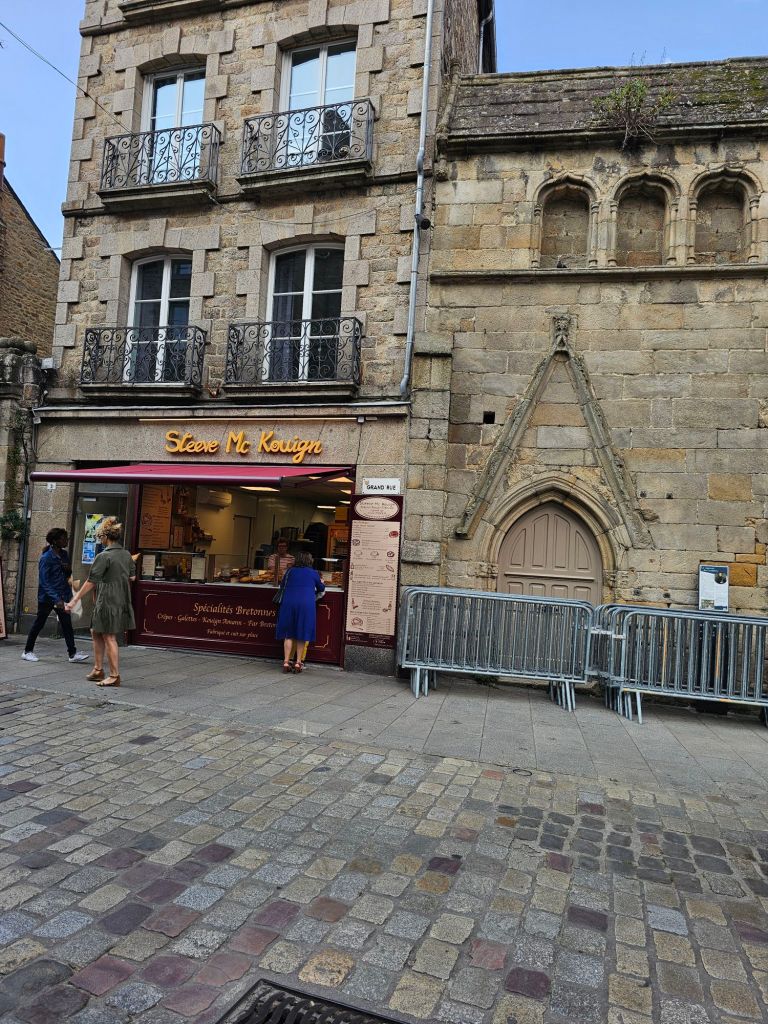
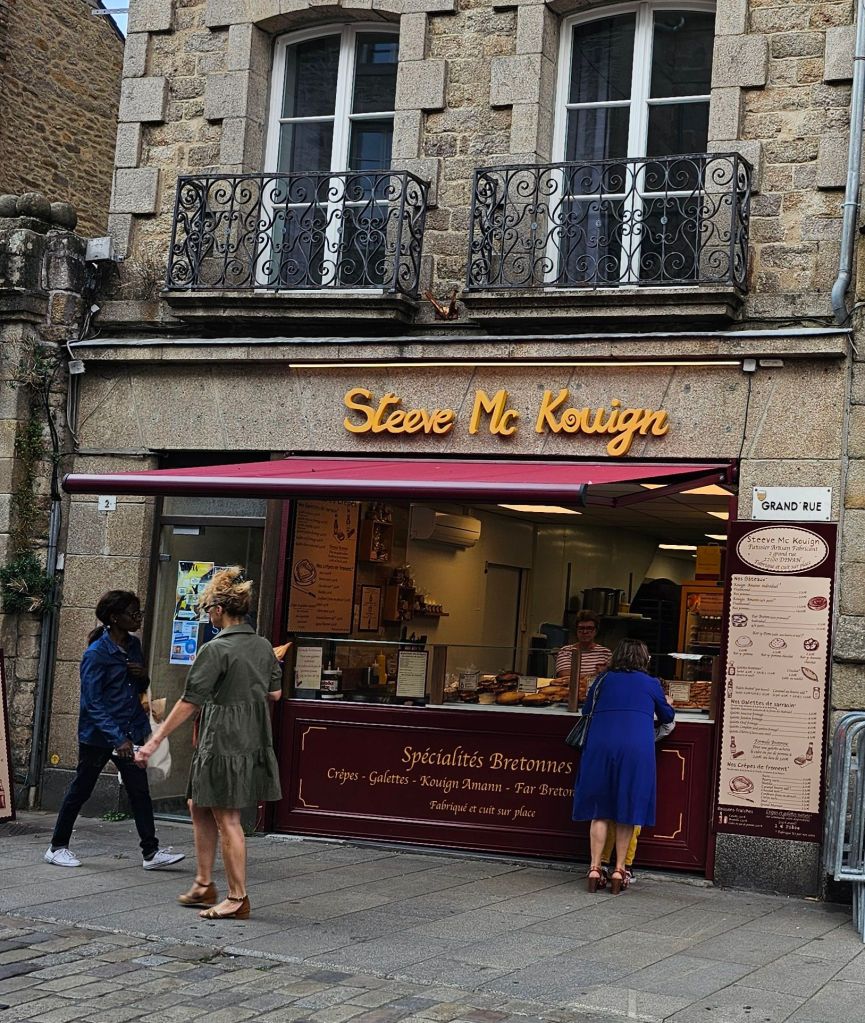
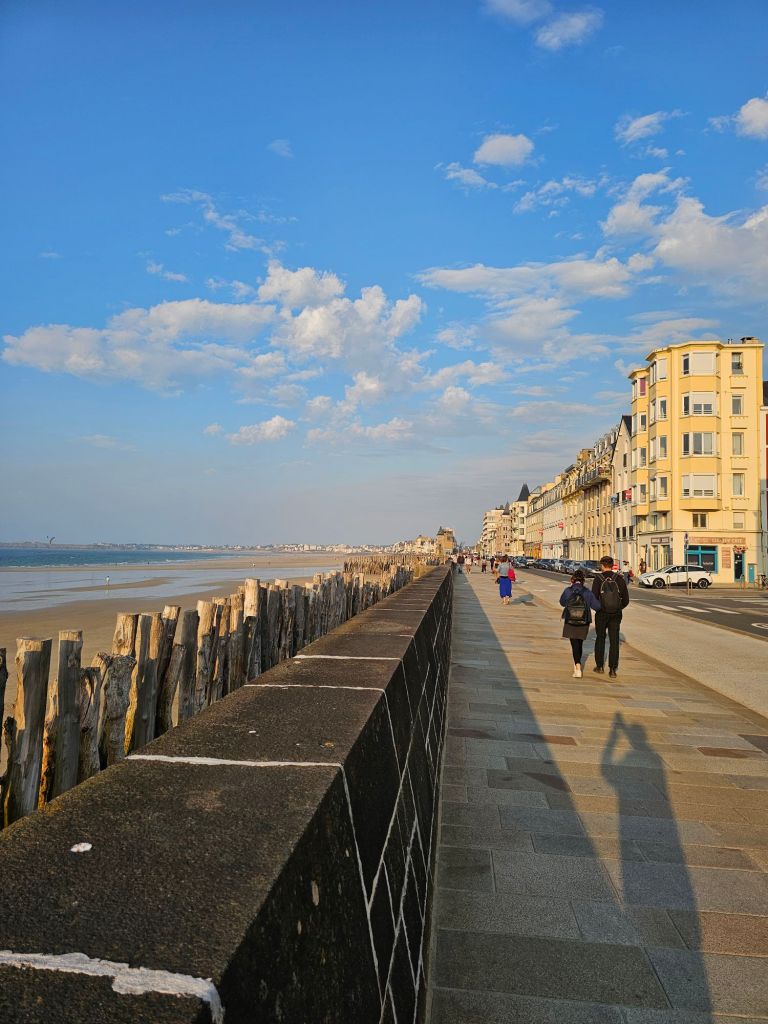
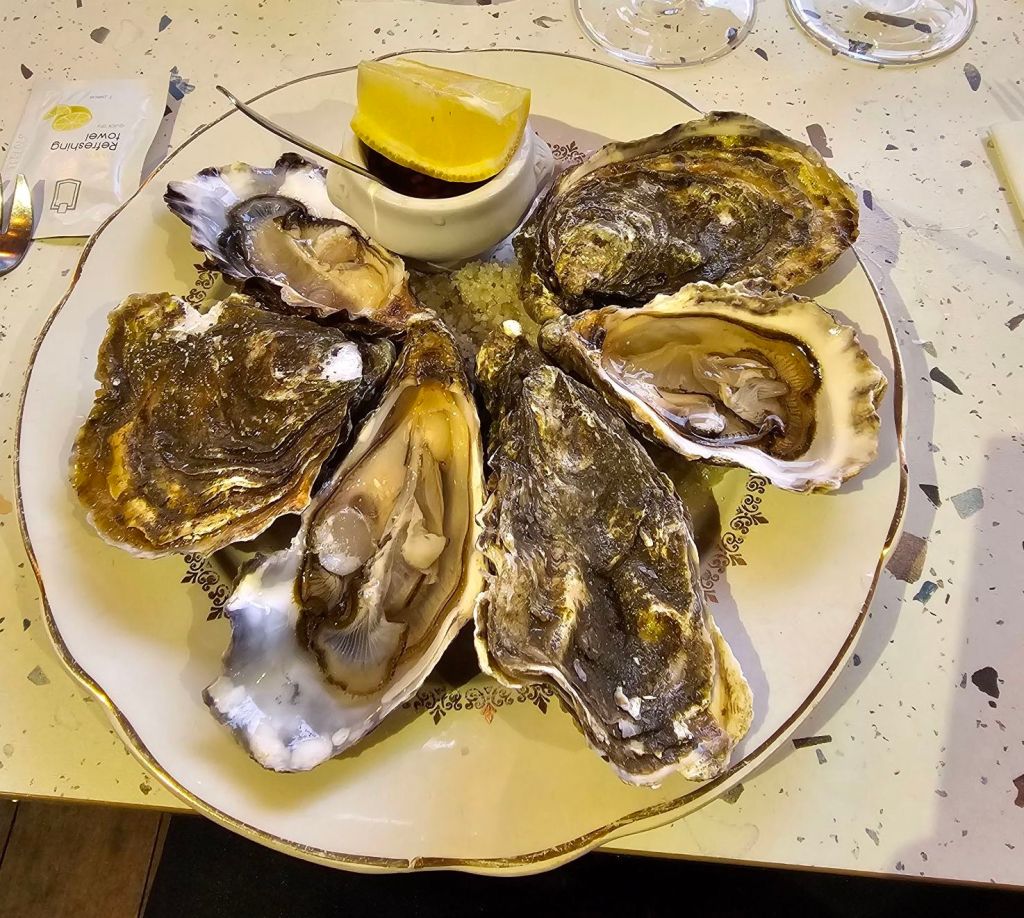
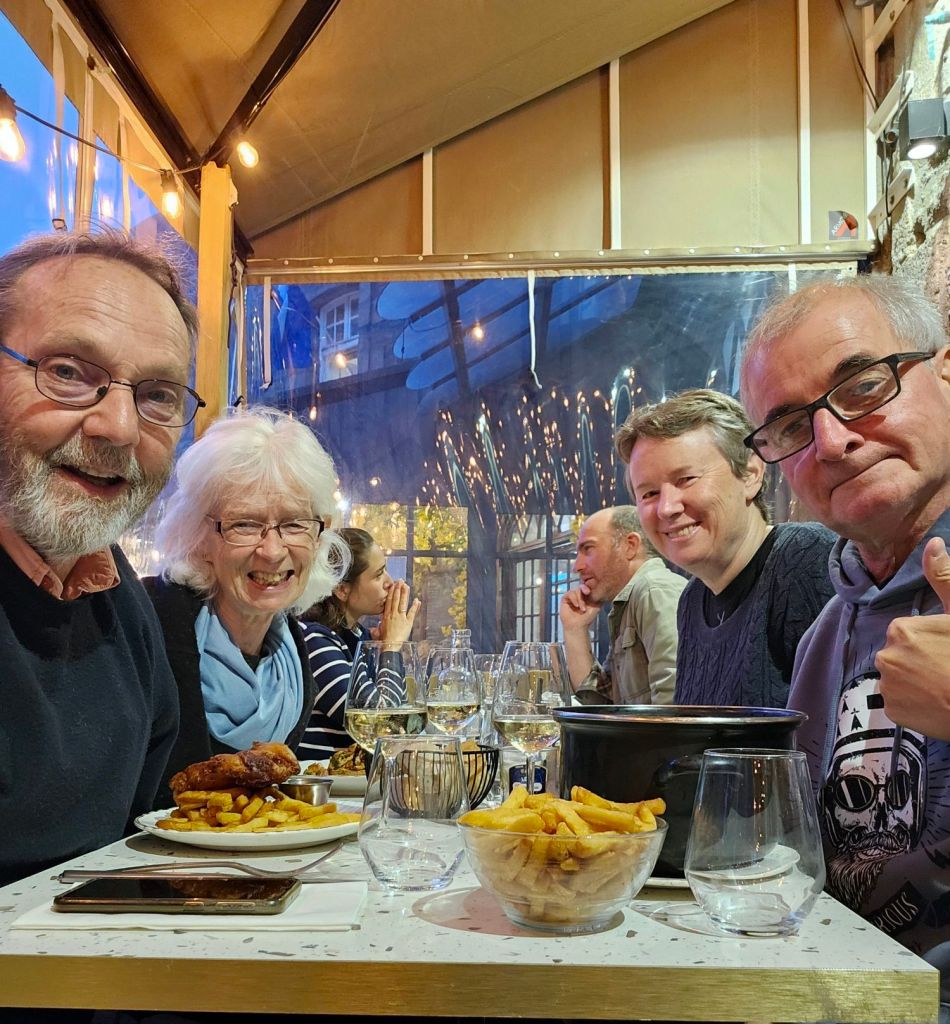
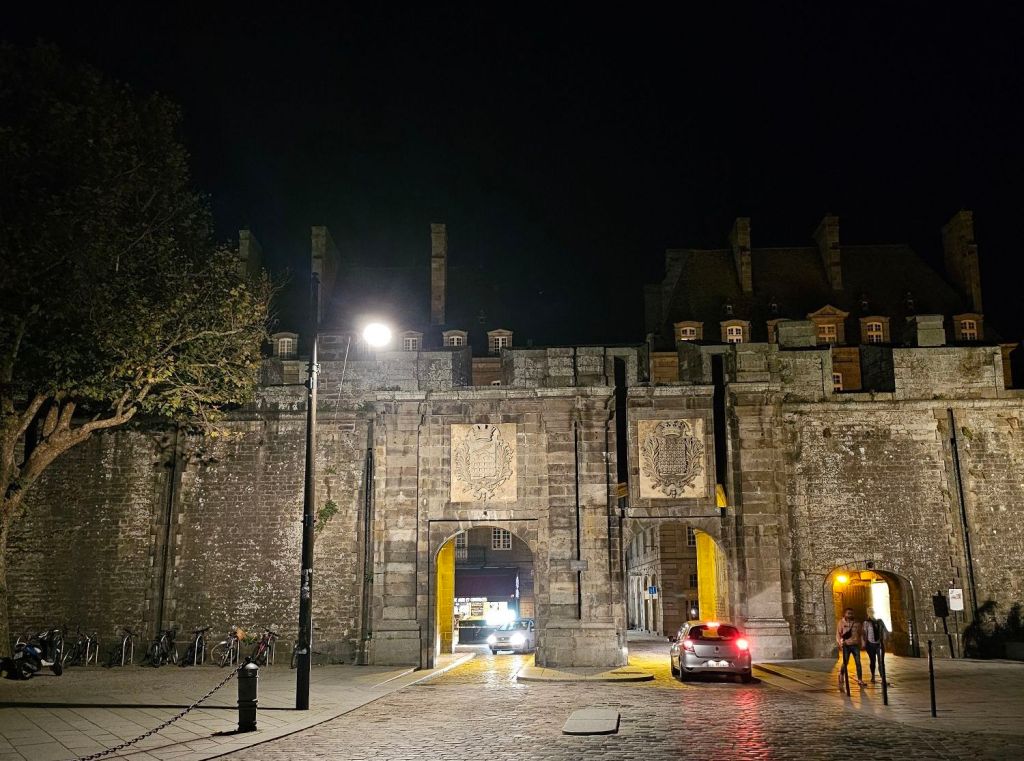
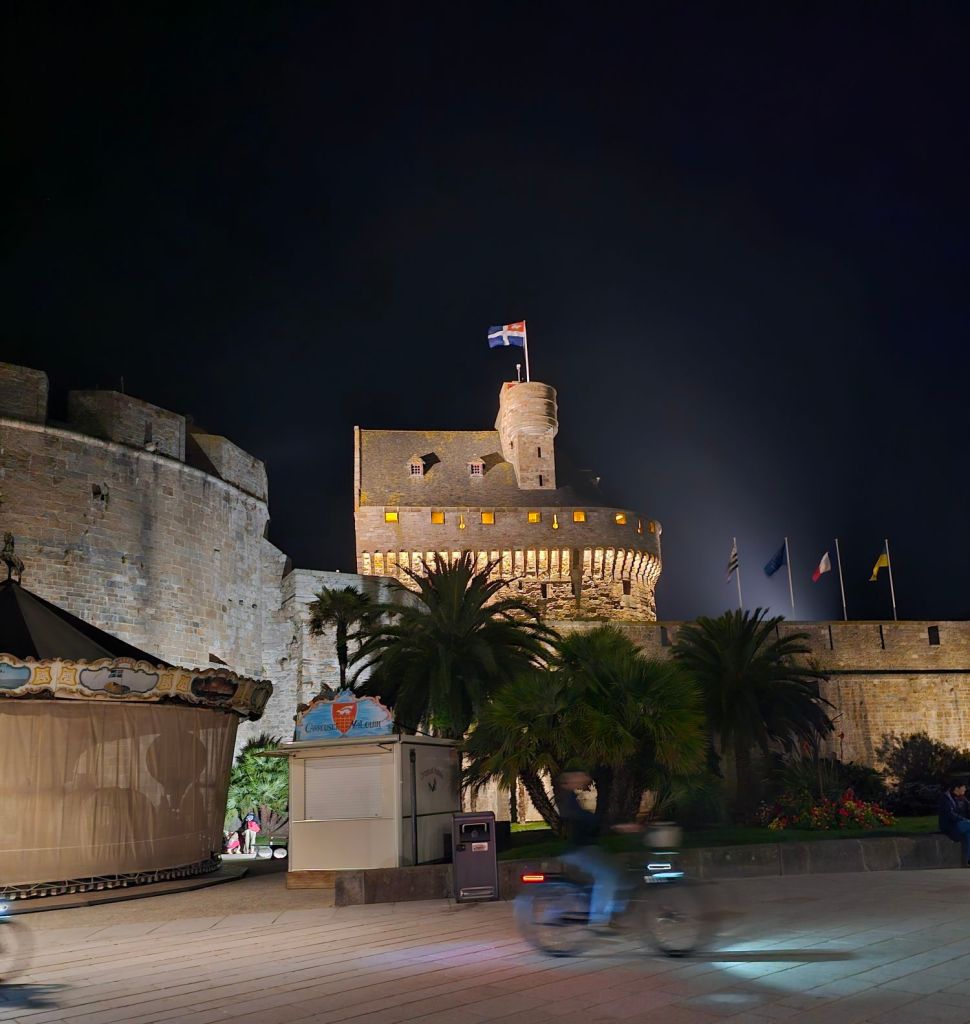
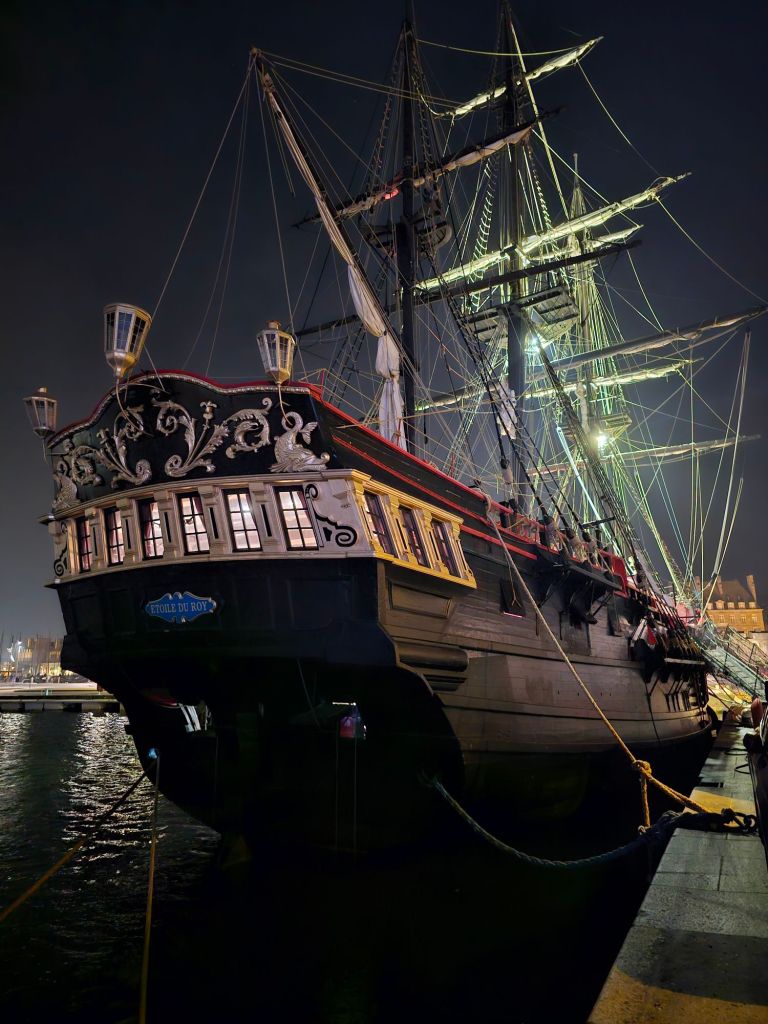
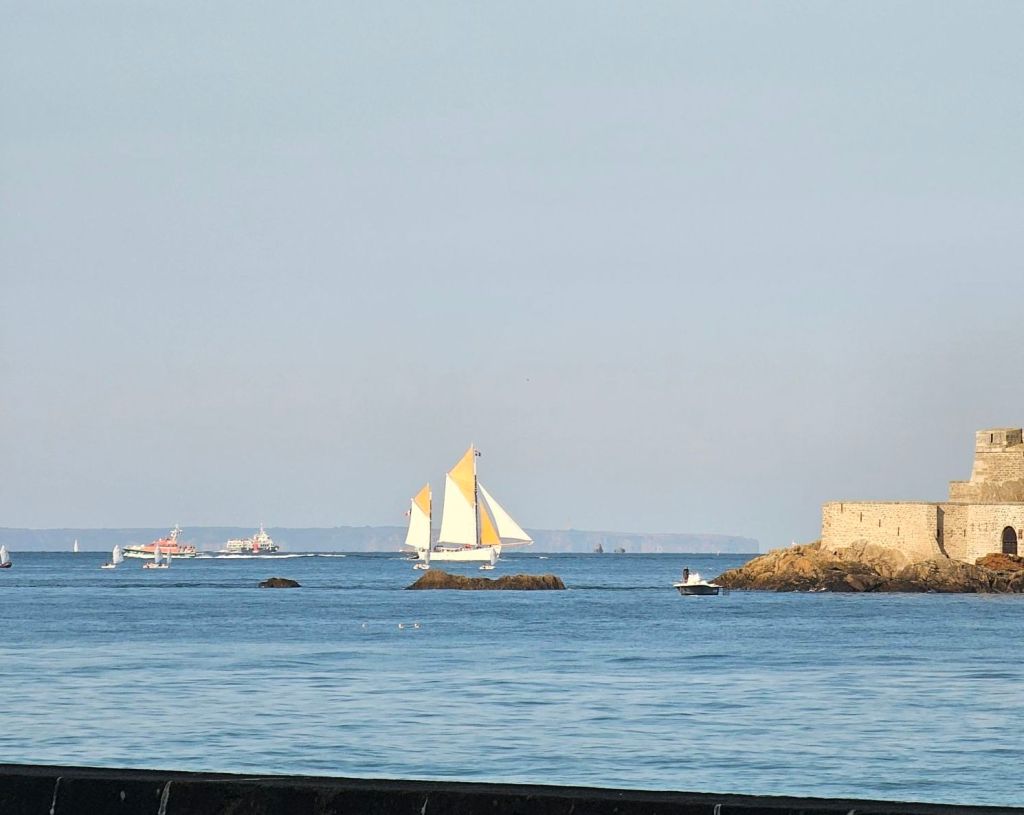
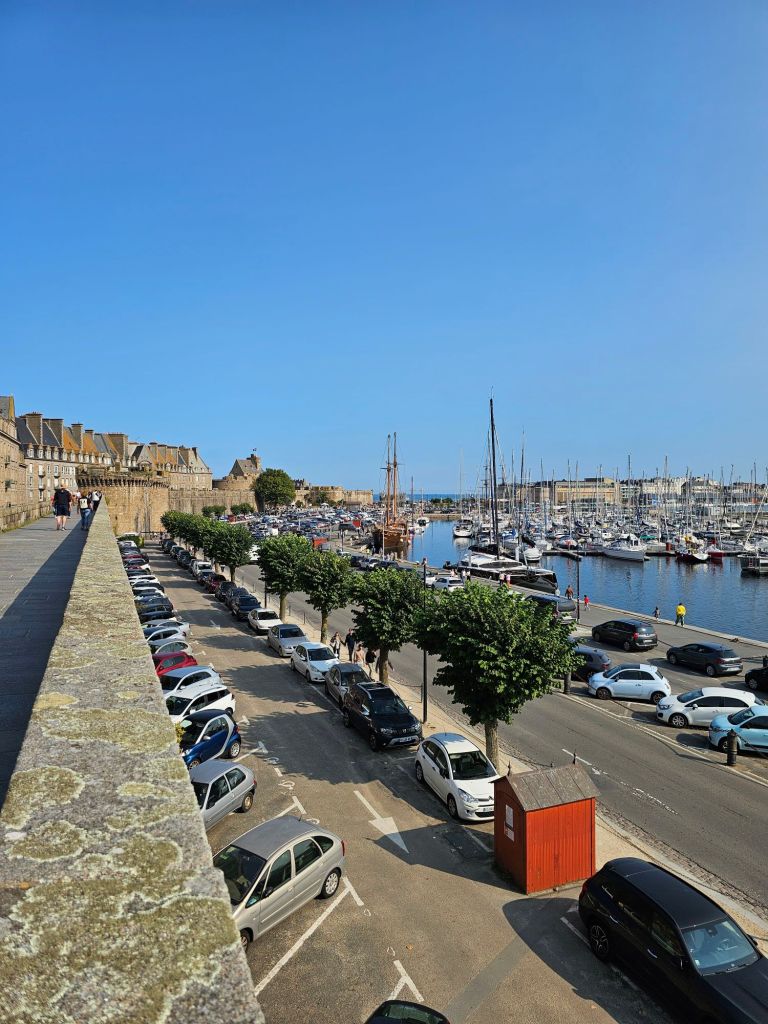
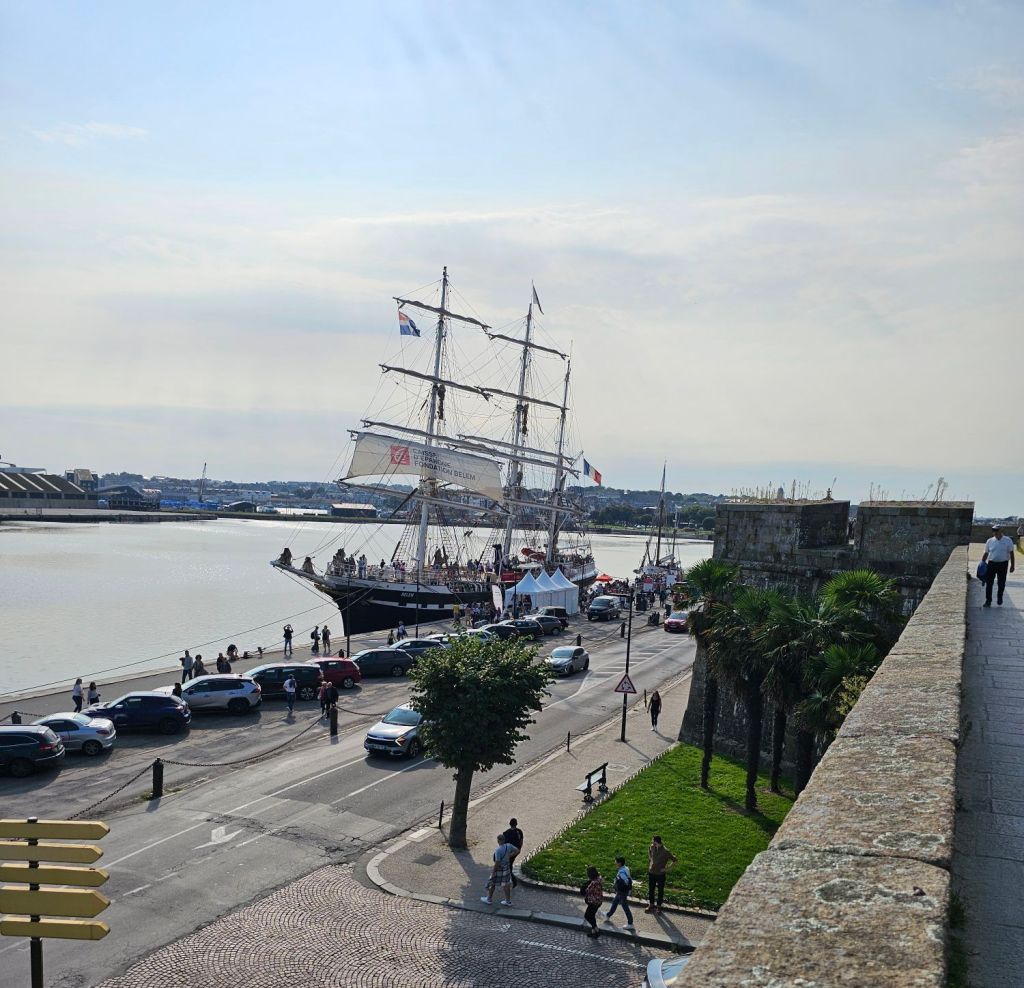
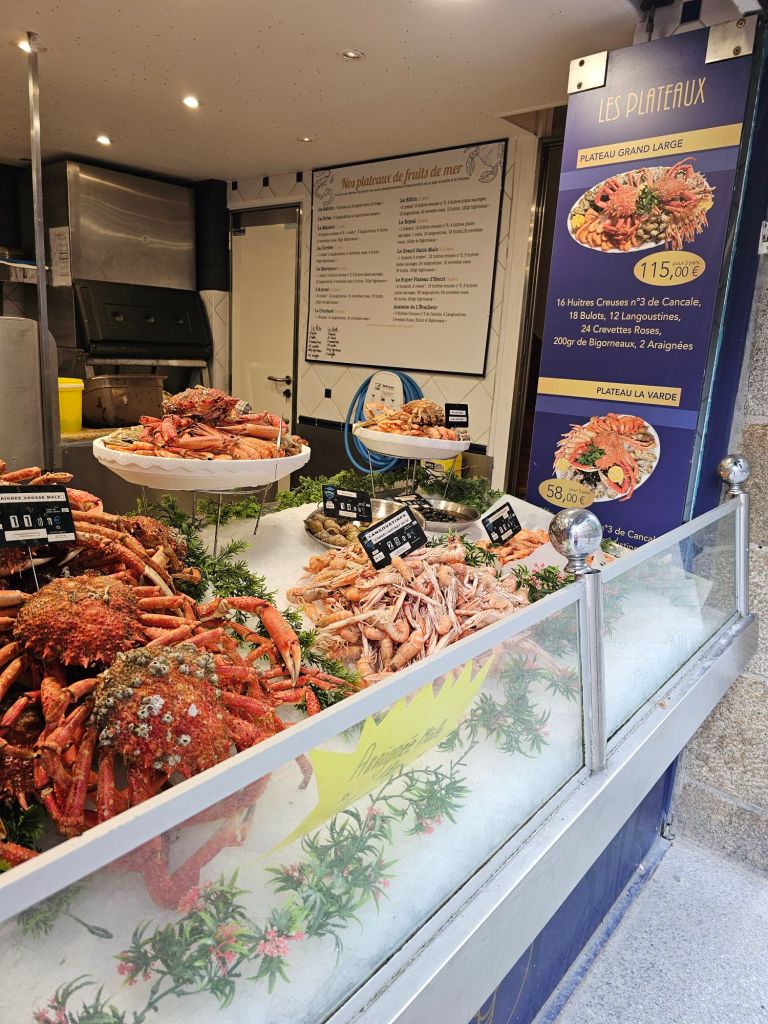
We hired this 64kw MG4 from Rennes. LFP battery so no cobalt and very long lived. 440km range. It’s a good car, not perfect but they’re very good value for money. Fast, handles well, fits in our garage!Dinan is a lovely town, we usually stop here on the way to St Malo.DinanDinanI liked this pastry shop. “Kouign Amann” is Breton for butter cake. Its a Breton specialty. You pronounce “kouign” as “queen”Hence the name “Steeve Mc Kouign”Walking along the plage in St MaloWe went out for dinner in the old town, the oysters were magnificent. David, Lucy, Pauline and myself at the Ostaleri Bistrot, St Malo.One of the gates to the walled city, St Malo.The ramparts. We liked this ship in the harbour. There were a lot of yachts out the next morning, including some classics.Nice day, walking along the walls of the old town.Our old friend the Belem was in town as part of the patriomoine.I was very impressed with this seafood restaurant although we didn’t actually go there.
We dropped Lucy and David off in St Malo, they’re catching the Brittany Ferries boat to Southport. It was very nice to have them staying and to be able to show them around Josselin and some of the surrounding area. Thanks for your visit you two! Great to see you again.
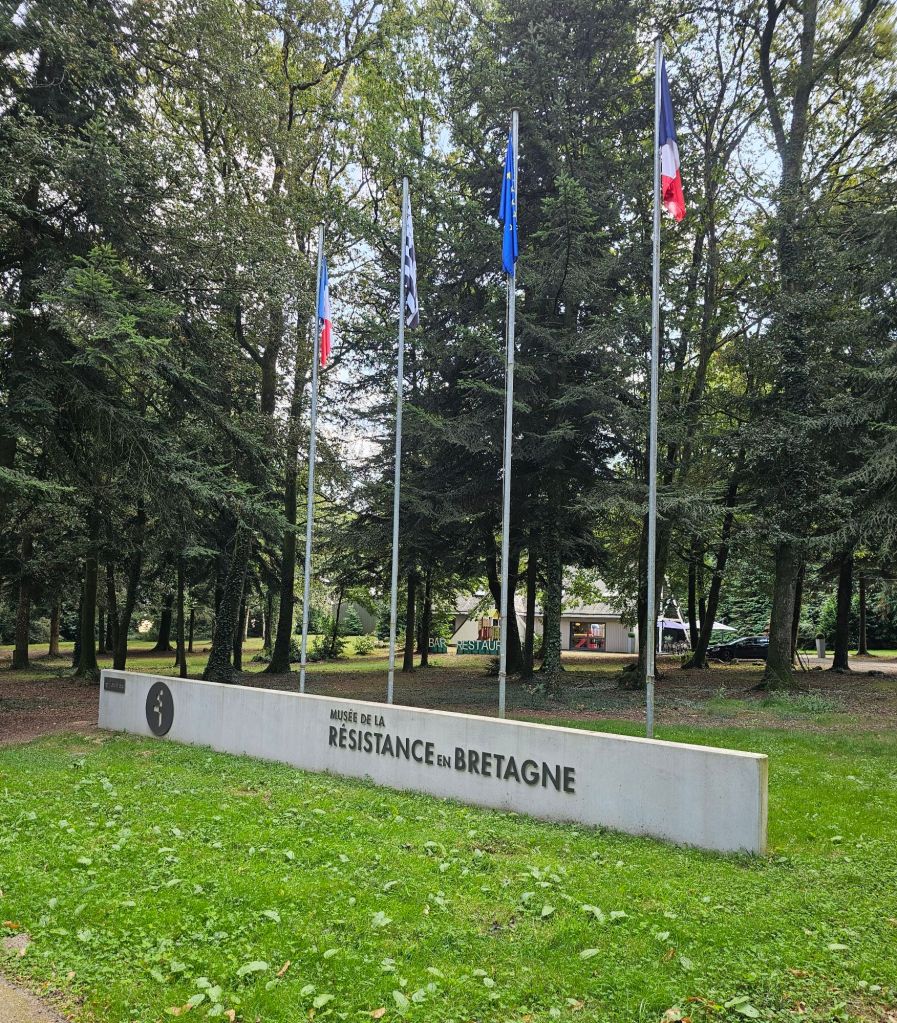
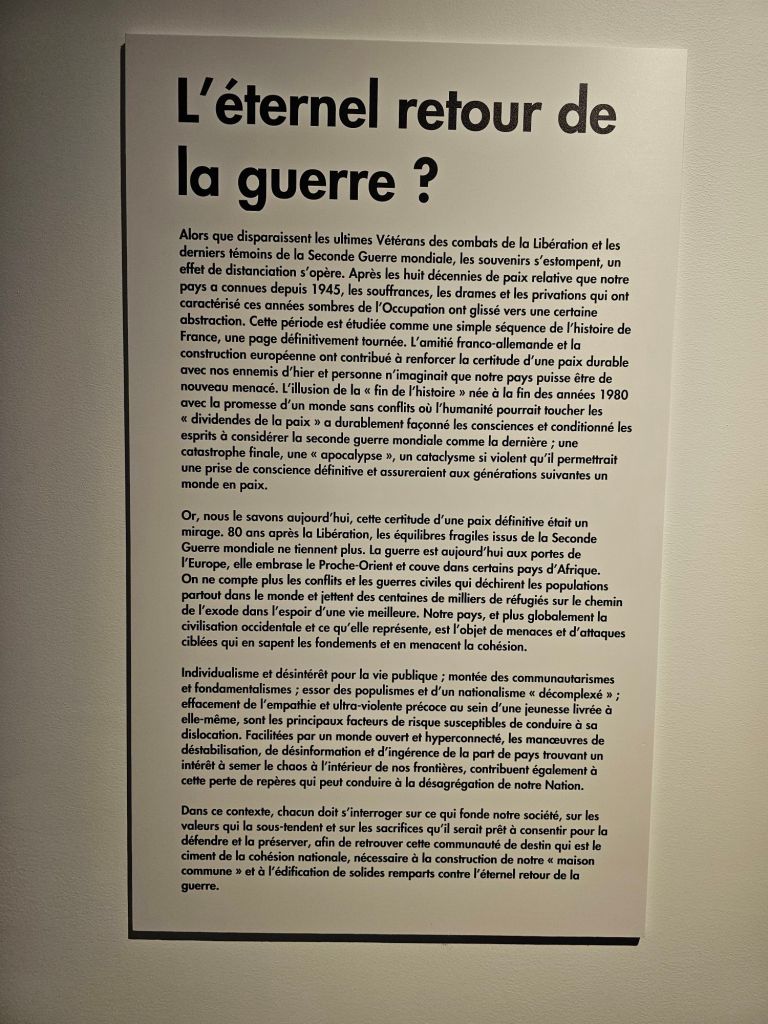
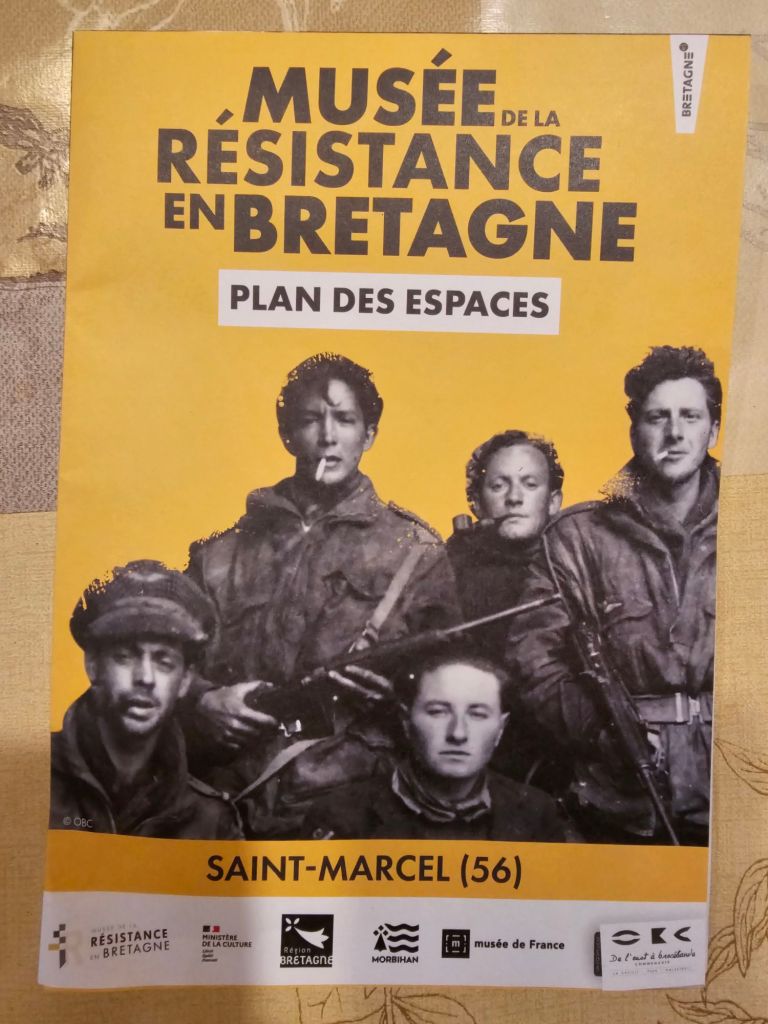
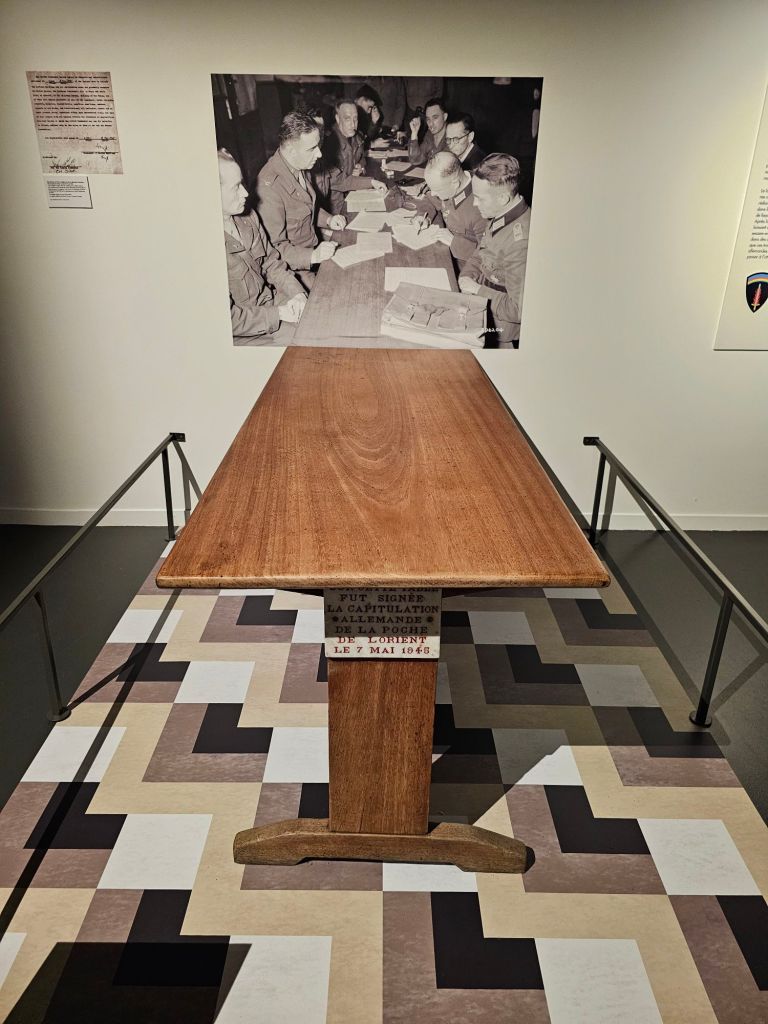
We’ve been to this museum several times since we started coming to Josselin, but they’ve totally renewed it in 2021 and our visitors were keen to see it so we went there one afternoon. I was particularly struck by this exhibit titled “the eternal return of war” which I’ve translated below.
“The eternal return of war?
As the last veterans of the Liberation battles and the last witnesses of the Second World War disappear, memories fade, a distancing effect occurs. After the eight decades of relative peace that our country has known since 1945, the suffering, dramas and deprivations that characterized these dark years of the Occupation have slipped into a certain abstraction. This period is studied as a simple sequence in the history of France, a page definitively turned. Franco-German friendship and European construction have contributed to reinforcing the certainty of a lasting peace with our enemies of yesterday and no one imagined that our country could be threatened again. The illusion of the “end of history” born at the end of the 1980s with the promise of a world without conflicts where humanity could touch the “peace dividends” has lastingly shaped consciences and conditioned minds to consider the Second World War as the last; a final catastrophe, an “apocalypse”, a cataclysm so violent that it would allow a definitive awareness and would assure the following generations a world at peace.
However, we know today that this certainty of a definitive peace was a mirage. 80 years after the Liberation, the fragile balances resulting from the Second World War no longer hold. War is today at the gates of Europe, it is burning in the Middle East and smoldering in certain African countries. We have lost count of the conflicts and civil wars that are tearing populations apart all over the world and throwing hundreds of thousands of refugees on the path of exodus in the hope of a better life. Our country, and more generally Western civilization and what it represents, is the object of threats and targeted attacks that undermine its foundations and threaten its cohesion.
Individualism and disinterest in public life; rise of communitarianism and fundamentalism; rise of populism and an “uninhibited” nationalism; erasure of empathy and early ultra-violence among a youth left to its own devices, are the main risk factors likely to lead to its dislocation. Facilitated by an open and hyperconnected world, the maneuvers of destabilization, disinformation and interference on the part of countries finding an interest in sowing chaos within our borders, also contribute to this loss of bearings that can lead to the disintegration of our Nation.
In this context, everyone must question what our society is based on, the values that underpin it and the sacrifices they would be prepared to make to defend and preserve it, in order to rediscover this community of destiny which is the cement of national cohesion, necessary for the construction of our “common home” and the building of solid ramparts against the eternal return of war.”
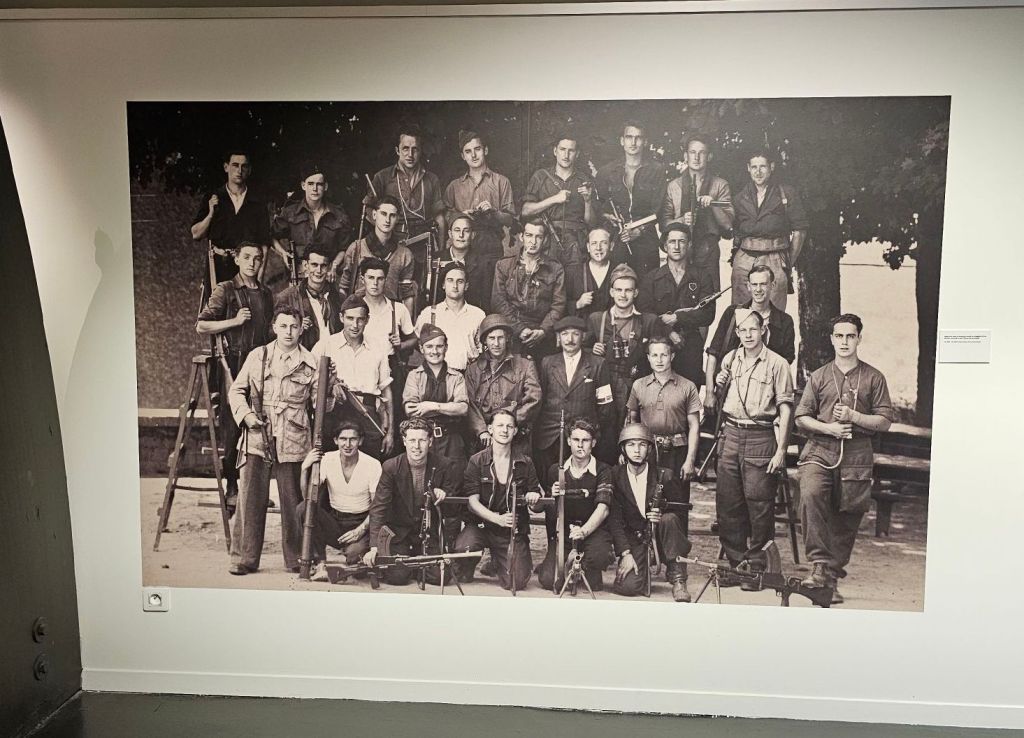
The signing of the declaration of defeat of the germans in Brittany, and the very table it was signed on.A group of IFF who took part in the battle of Saint-Marcel (the location of the museum) in 1944.
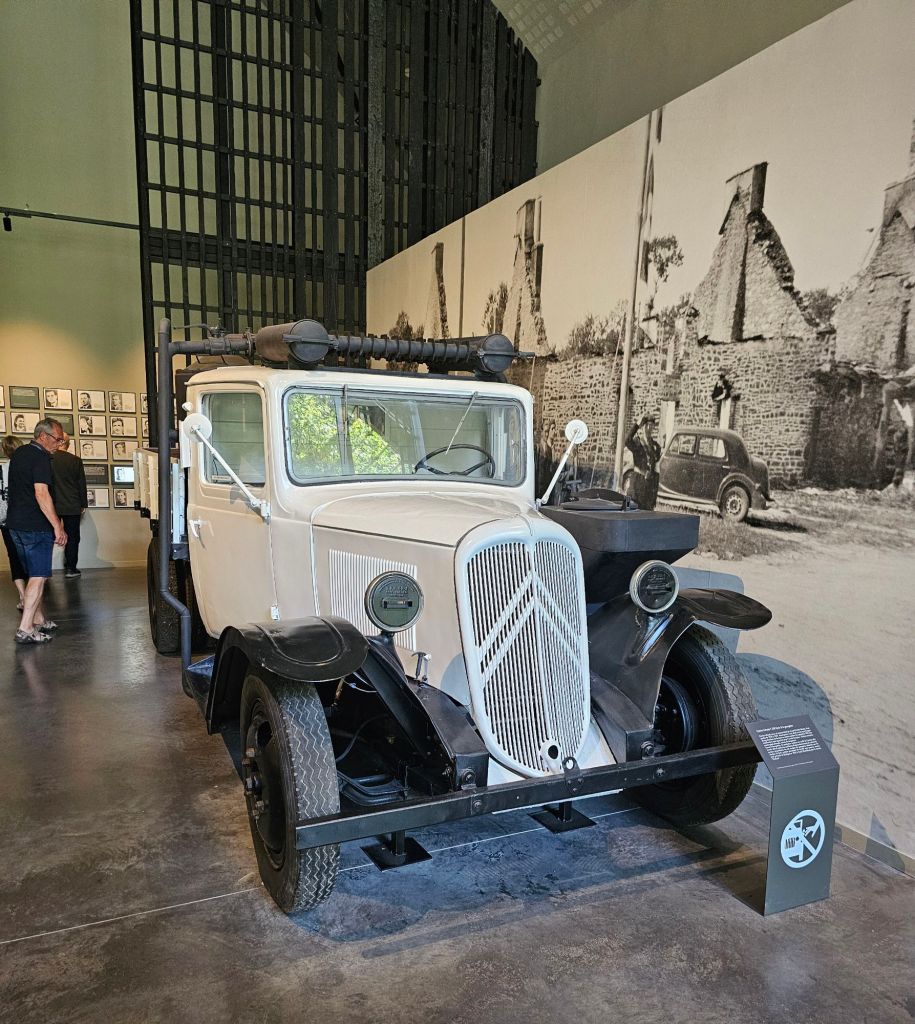
The museum has a lot of displays, interviews with surviving members of the local resistance, German and US vehicles and a history of the war as it affected Brittany, it’s rather somber but very well done. Well worth a visit.
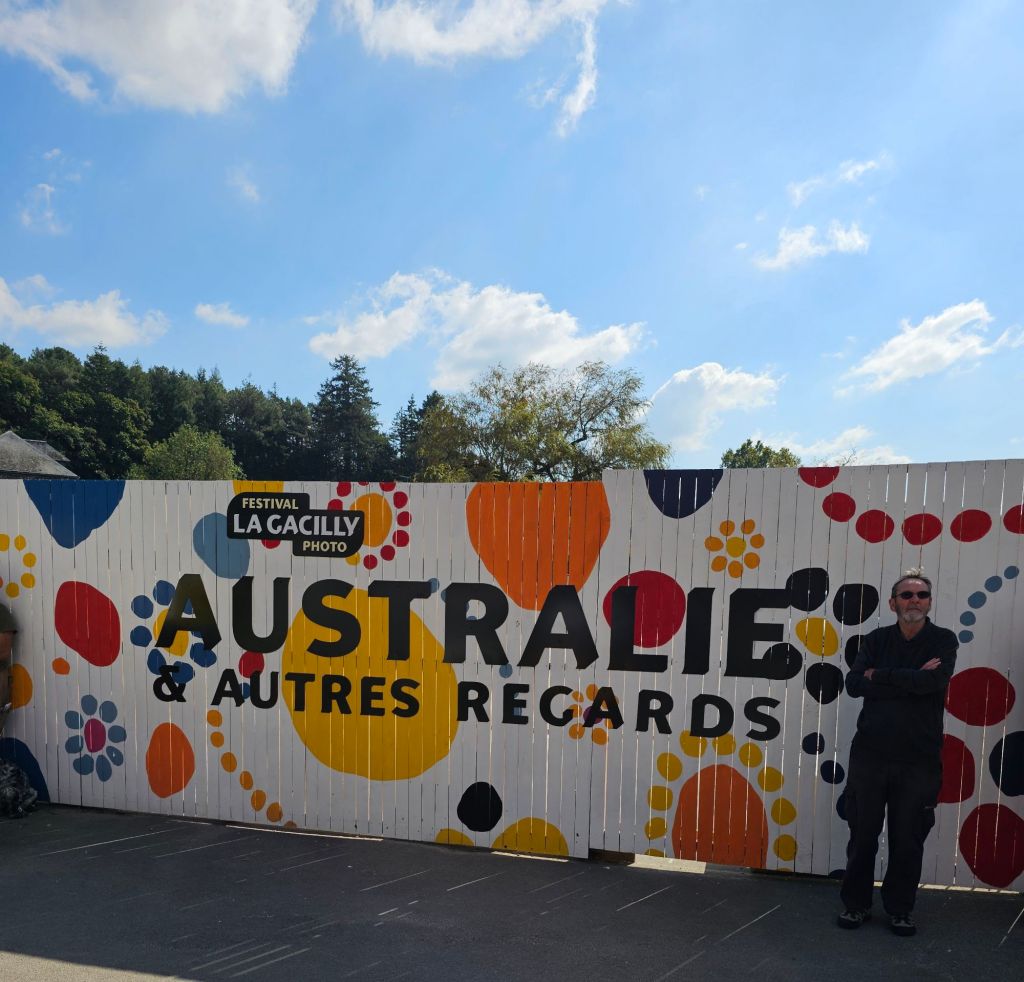
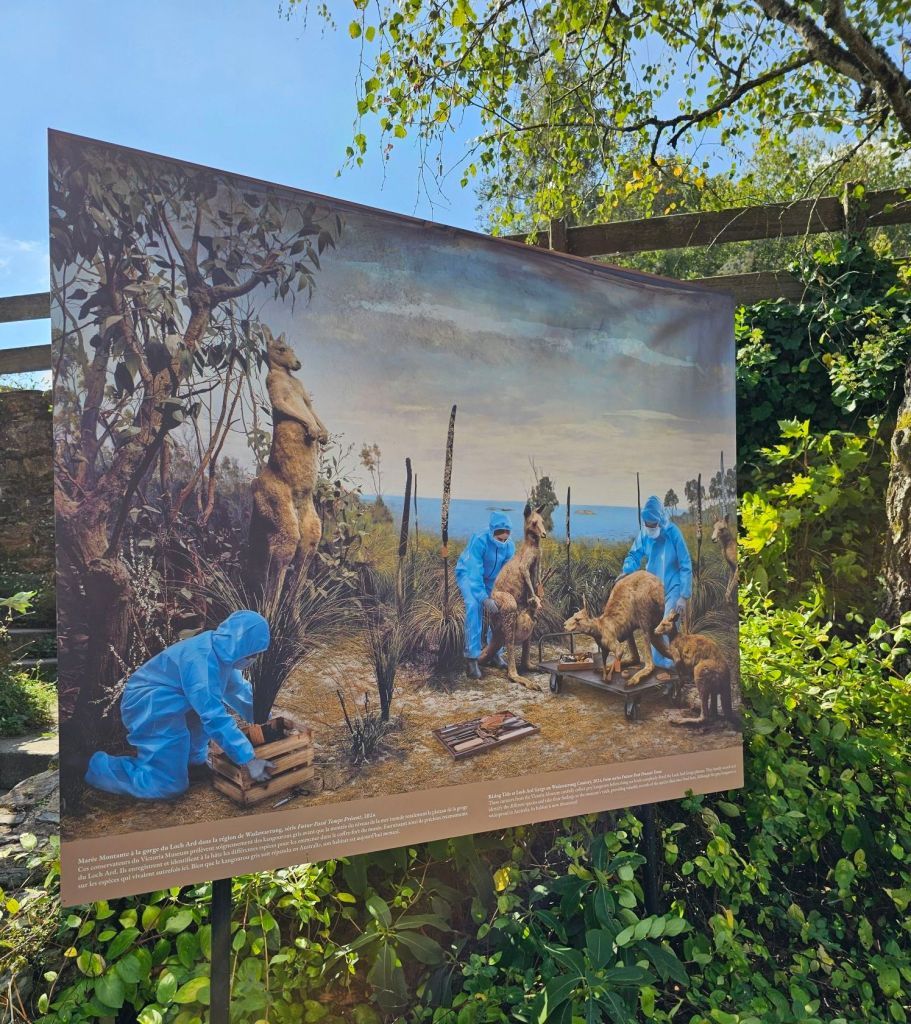
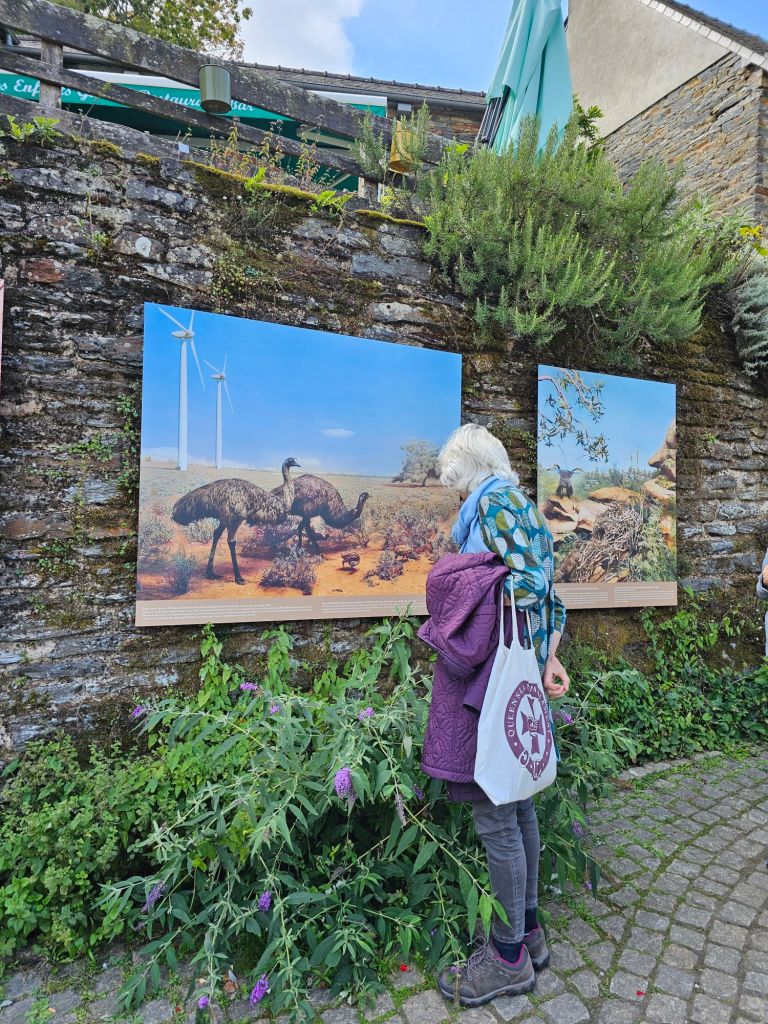
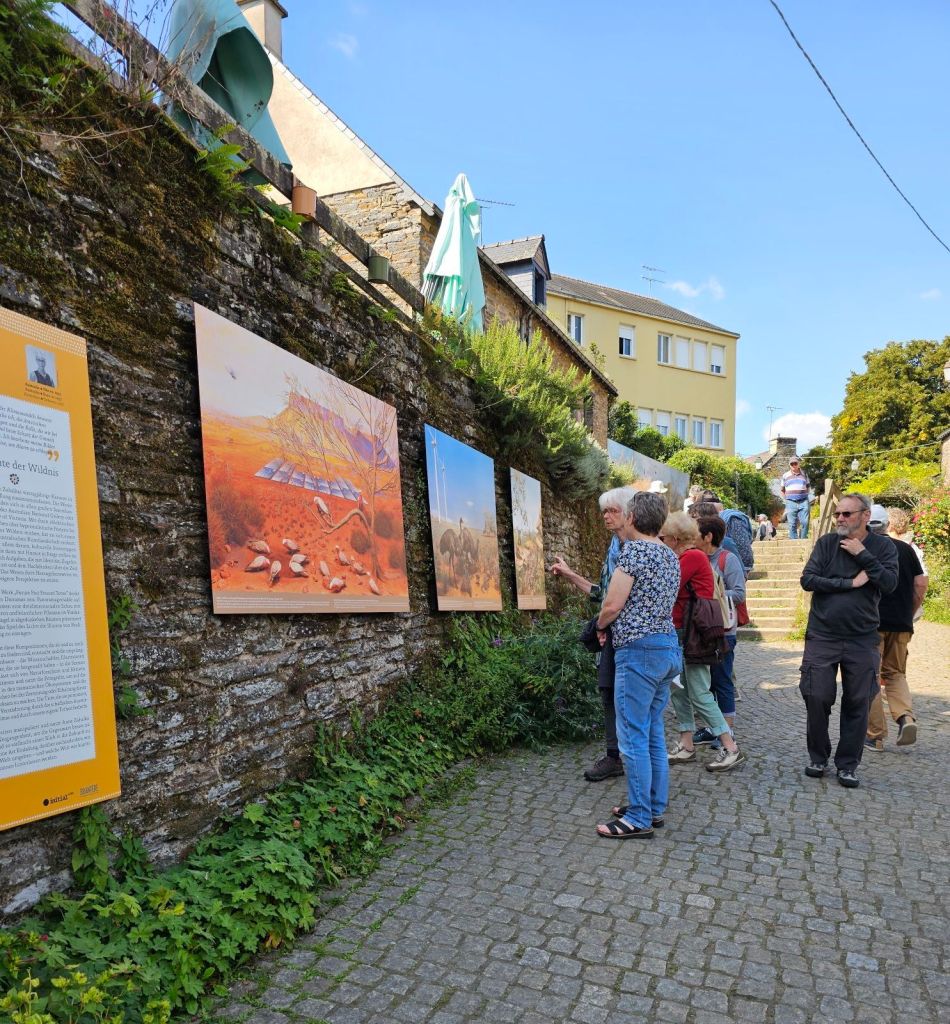
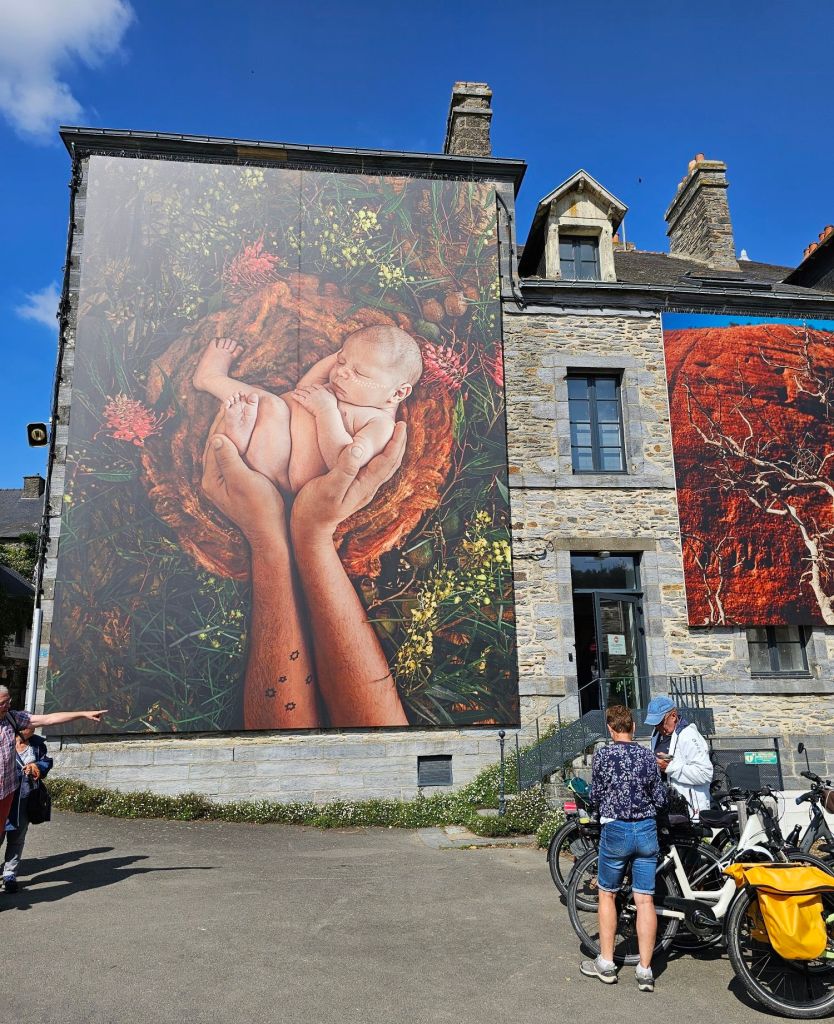
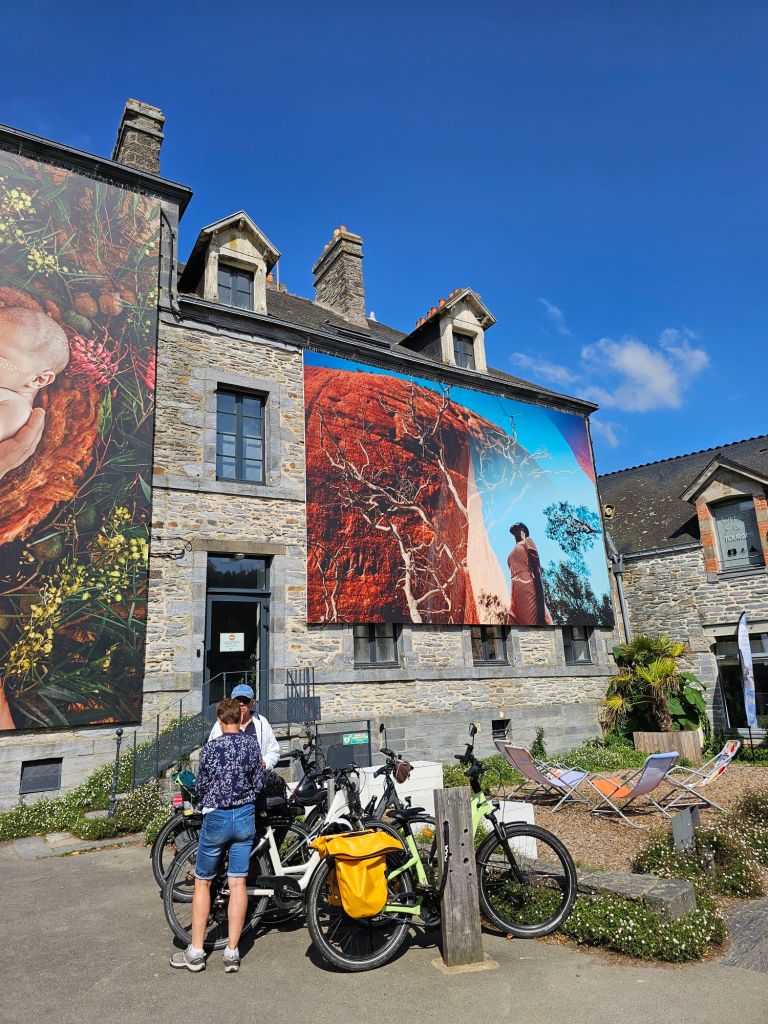
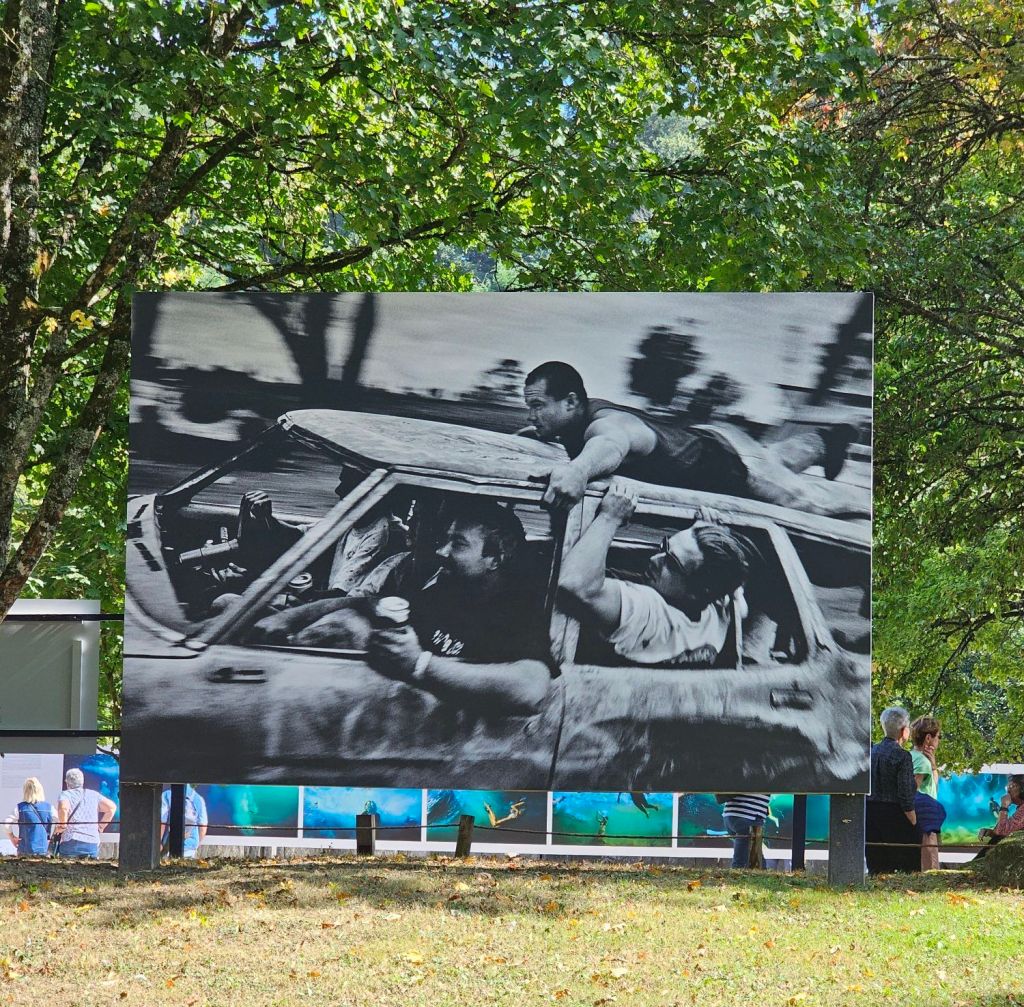
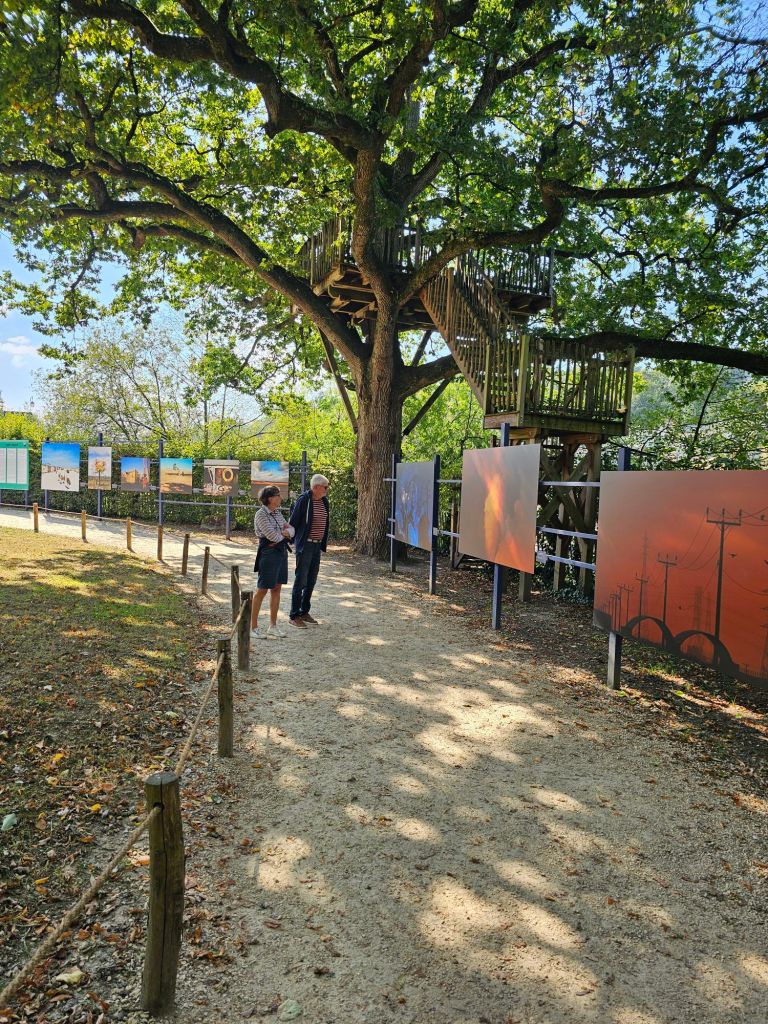
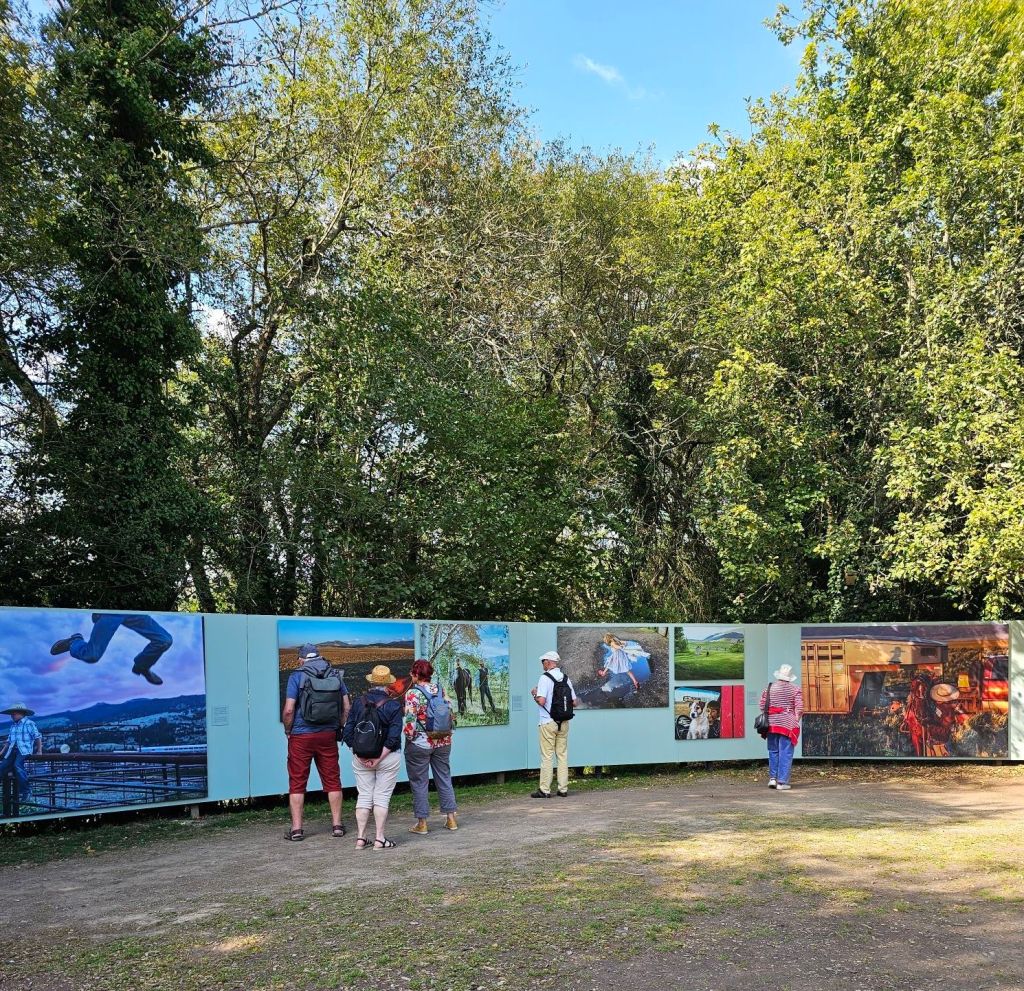
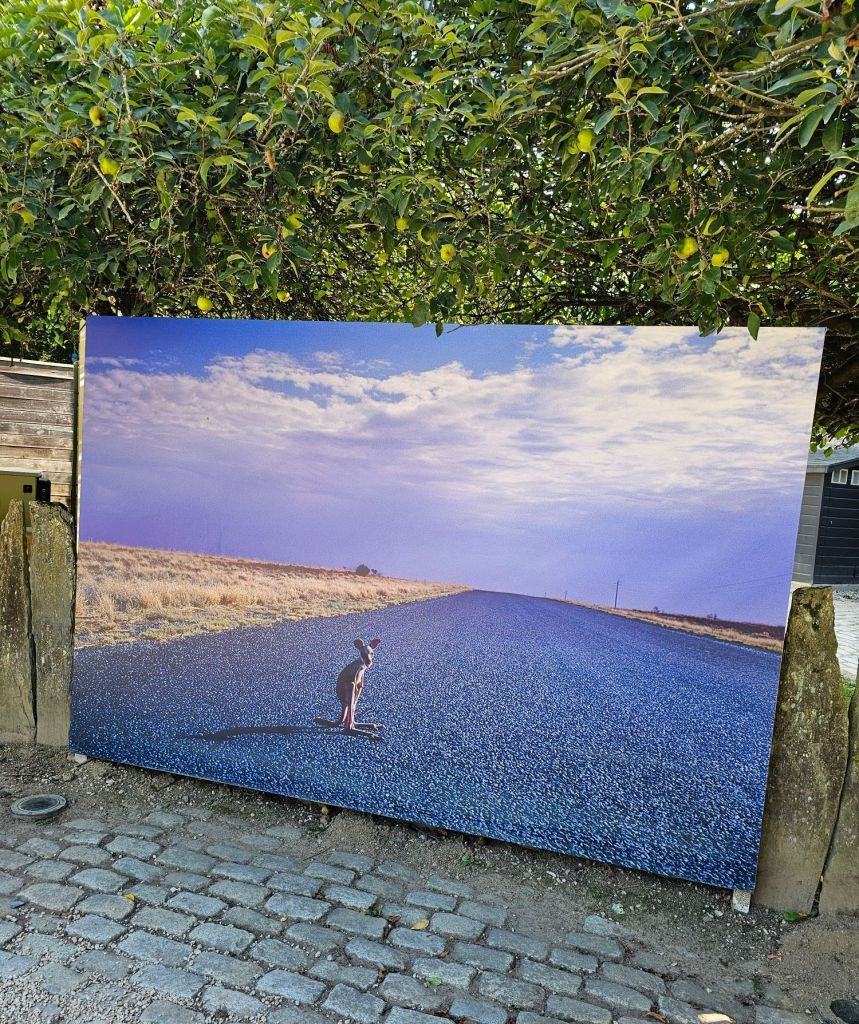
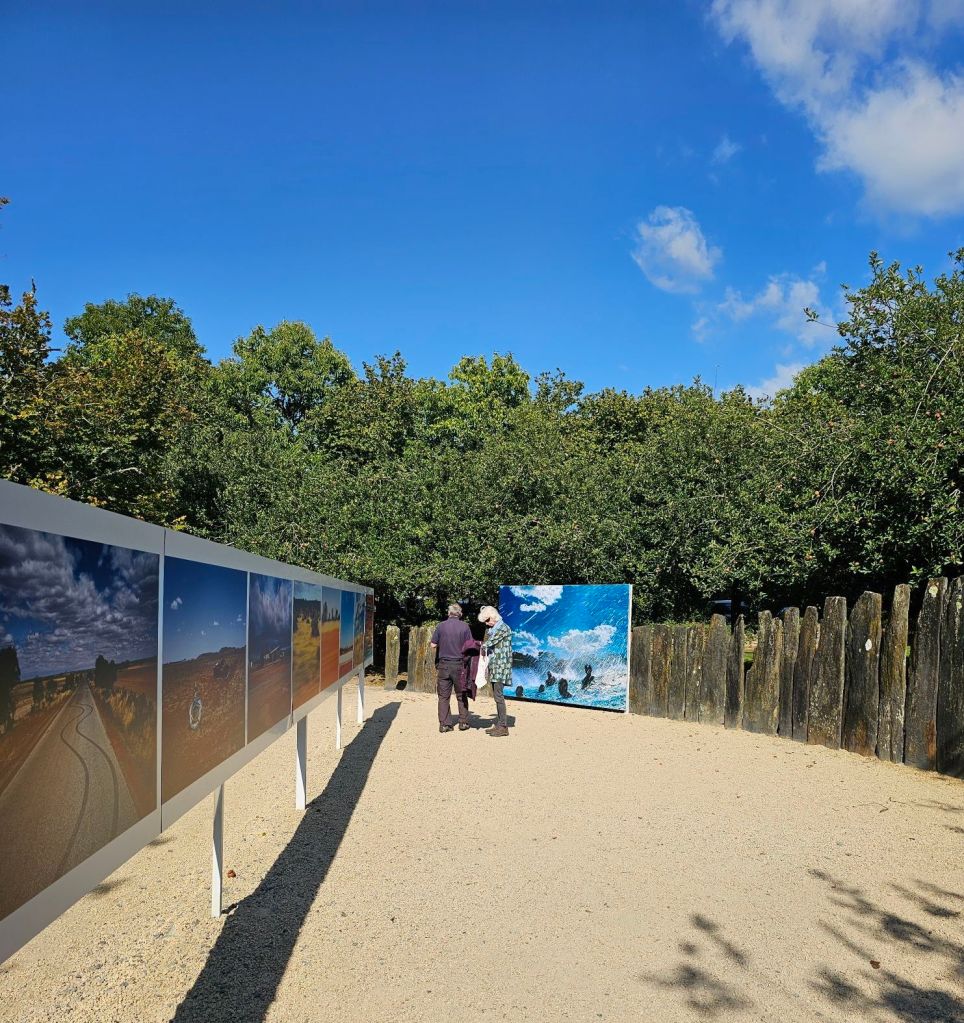
La Gacilly is a charming little village 45 kms from Josselin. The “Festival Photo de La Gacilly” is an annual event usually taking place between the months of June and October, during which some streets and the botanic gardens are decorated with photographs from professionals from all over the world.
This year the main theme was Australian artists although there were also a couple of US artists and some from PNG.
We took a drive there this afternoon with our friends Lucy and David from Oxford who are staying with us for a few days. Very enjoyable afternoon although we ran out of time and did not see all of the exhibits by any means. It’s a lovely little town even without the exhibits and the townspeople are very friendly.
David looking very dapper there.These people are preparing to rescue these kangaroos from a flood.The photos are real but they’re digitally enhanced/altered.Poor old koalas, reminds me of a Simpsons episode.The height of aussie culture 😀This was from a beauty pagent in Queensland relatively recently.The display extends into the botanical gardens.I particularly liked this shot.David and Lucy plotting their escape probably.
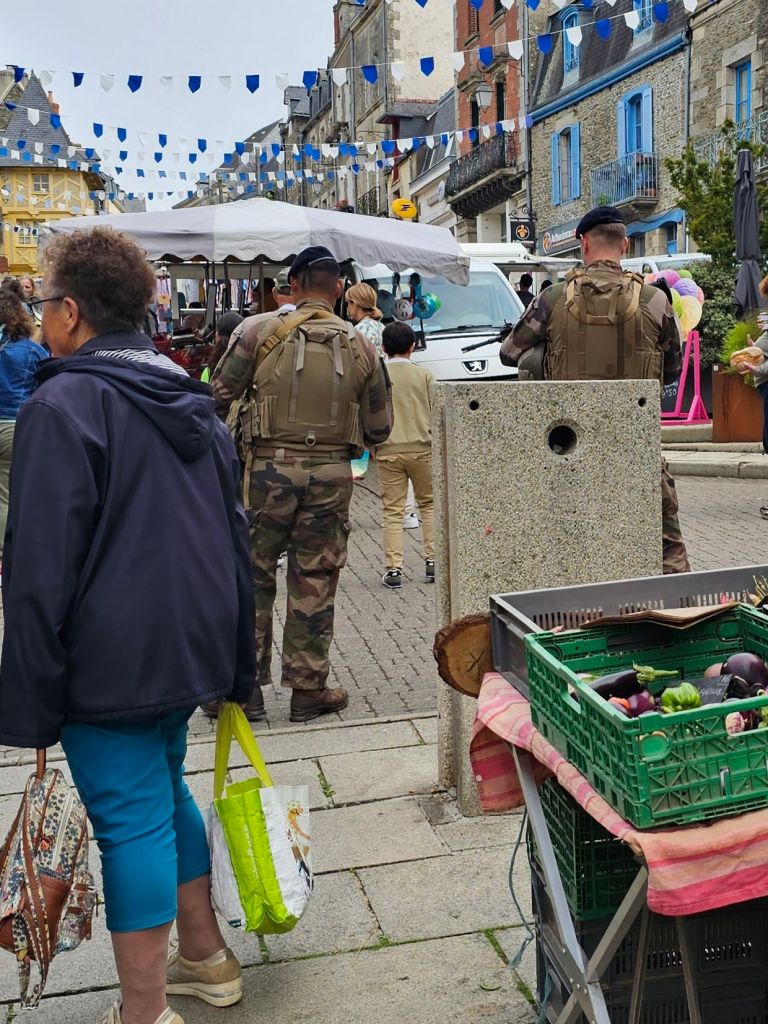
I wandered up to the market as per usual and was somewhat taken aback to see half a dozen or so armed soldiers guarding the place. It’s because of the pardon this weekend presumably but I can’t say I felt any safer having armed soldiers hanging about. The stall holders I talked to felt the same I think. They have had some unfortunate incidents in France so I guess it’s fair enough.
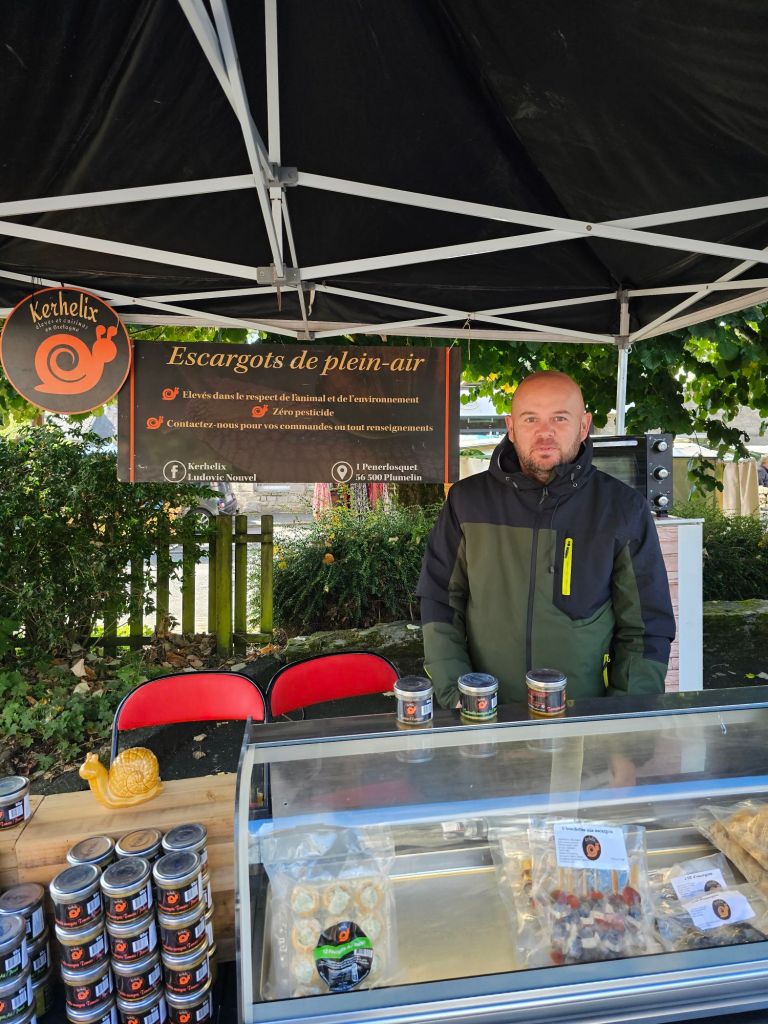
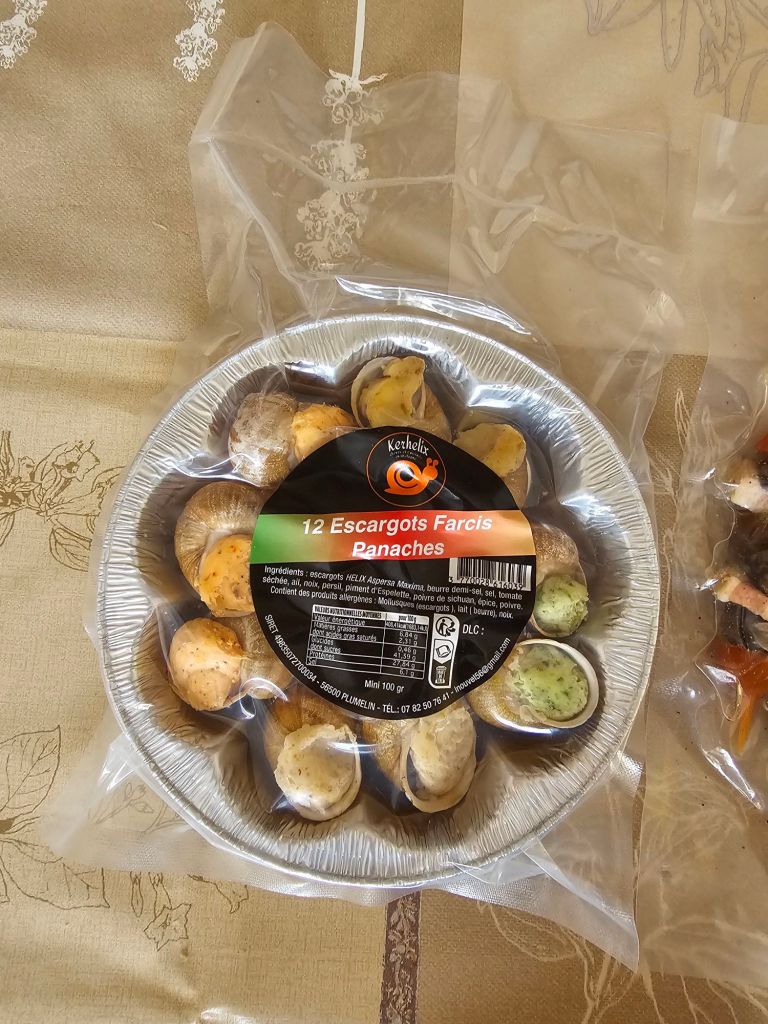
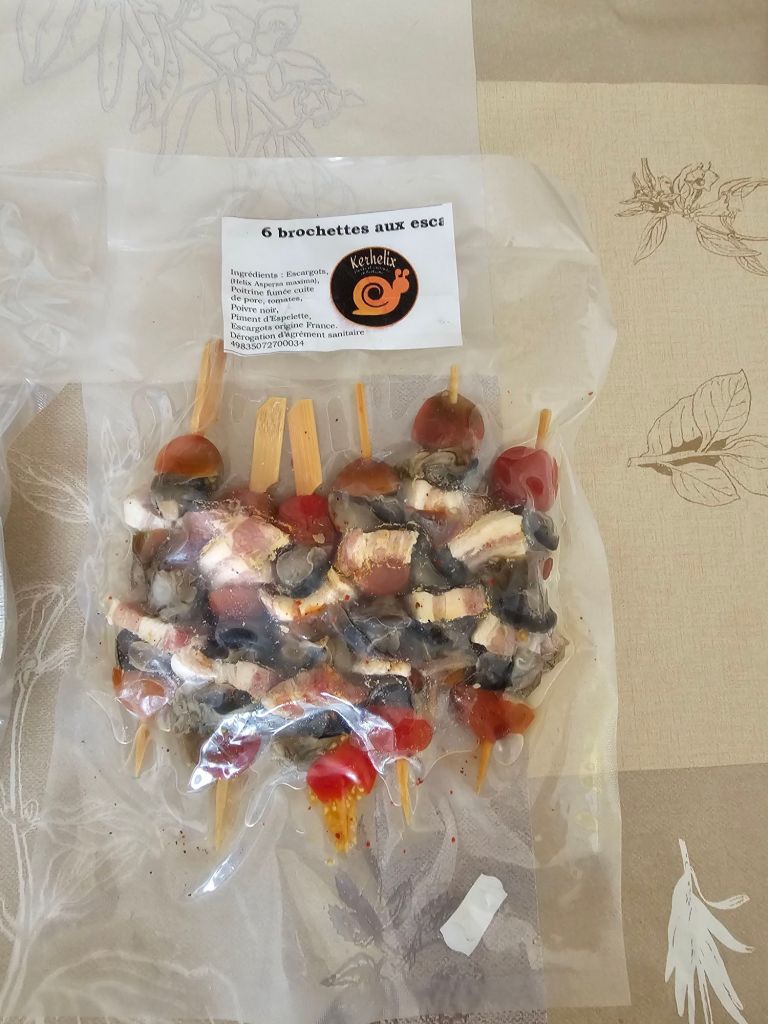
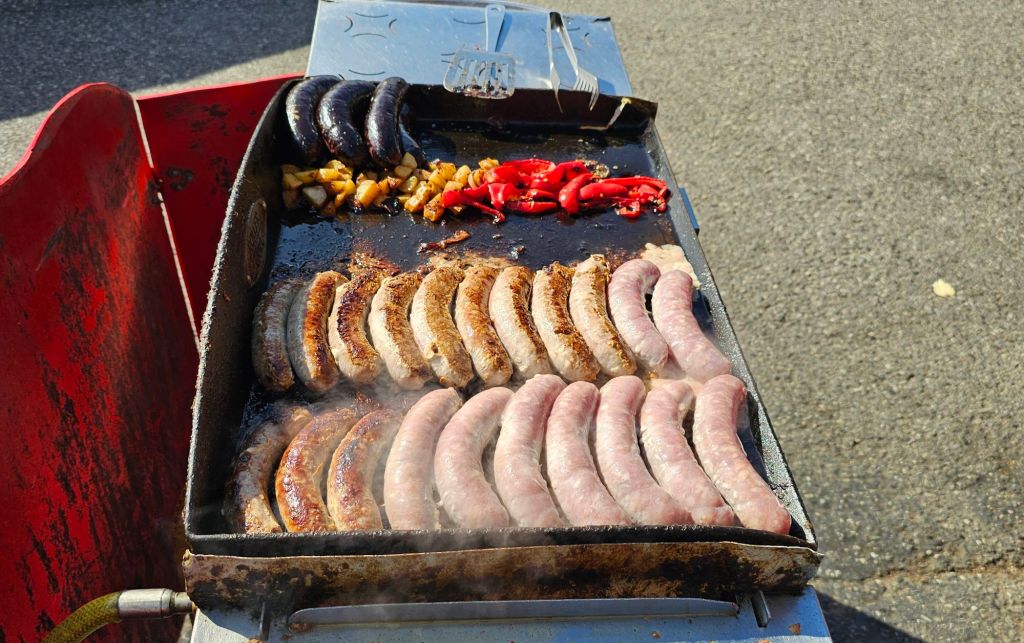
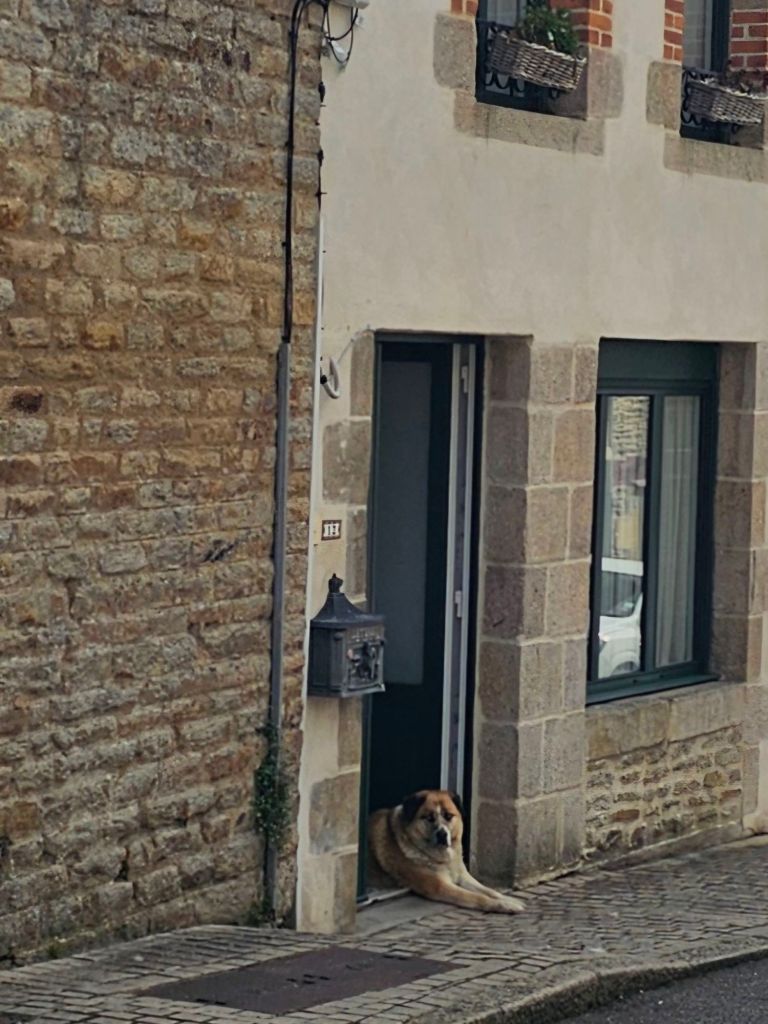
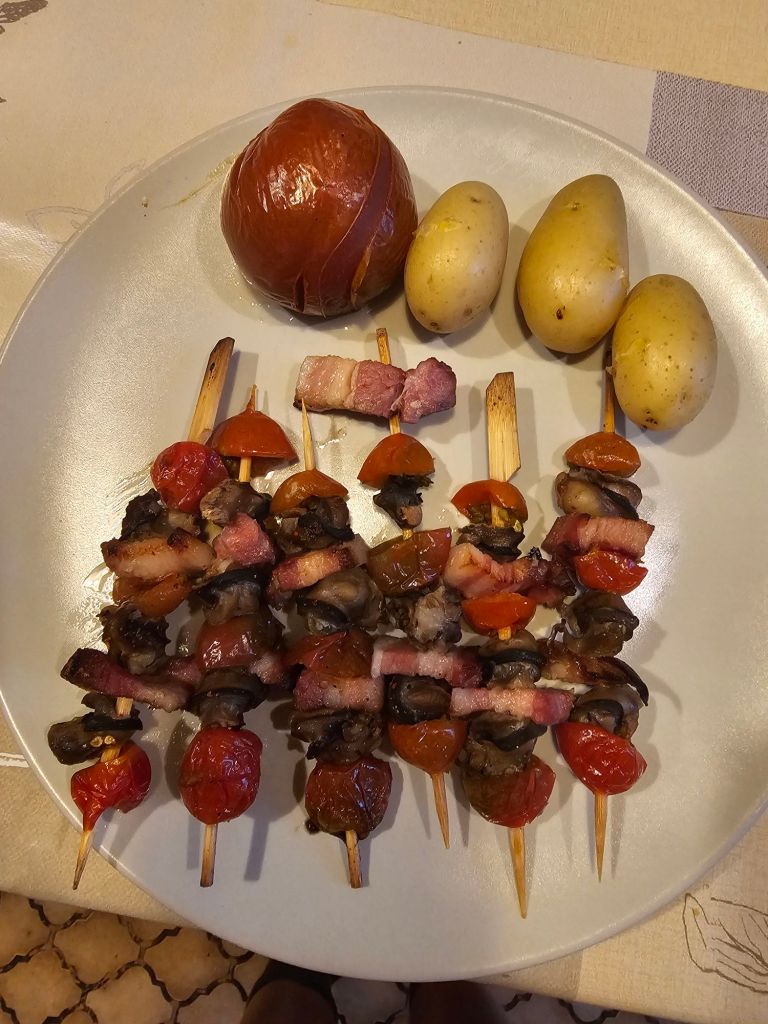
I didn’t take any overt photos of them in case they got upset!This free range snails stall was new.So I bought some.These are snail and pork kebabs.I bought a bunch of veges and a sausage gallette from the gallette man. I am very keen on his gallettes I must admit.This dog was enjoying the sun and watching people walk by.
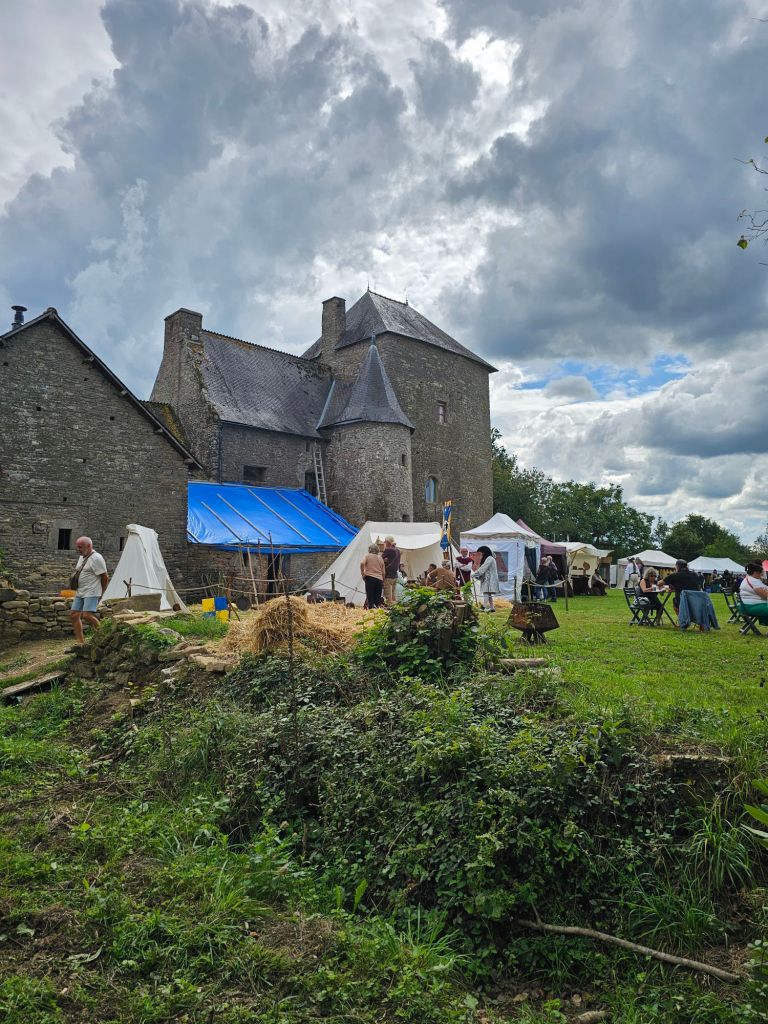
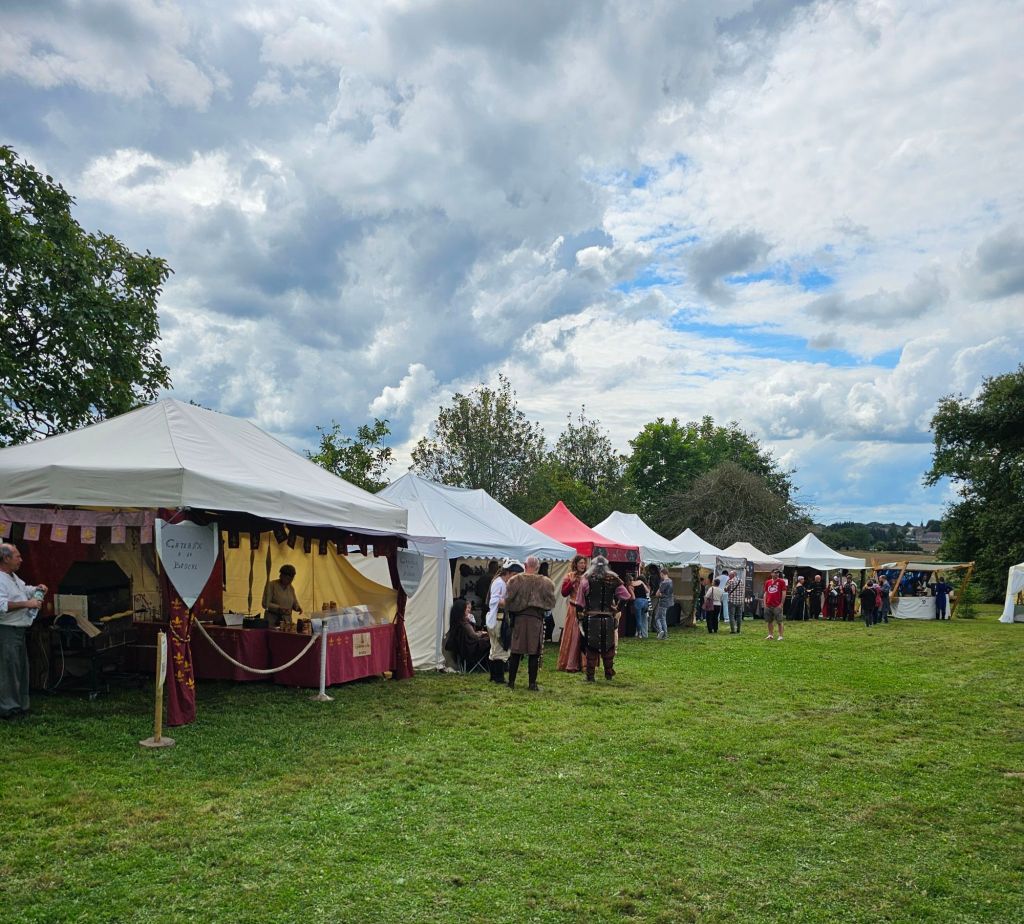
Un marché médiéval fantastique au manoir d’Even à Guégon.
I bumped into our friend Françoise at the market and she kindly invited me to come with them to this médiéval market at Guégon in the afternoon.
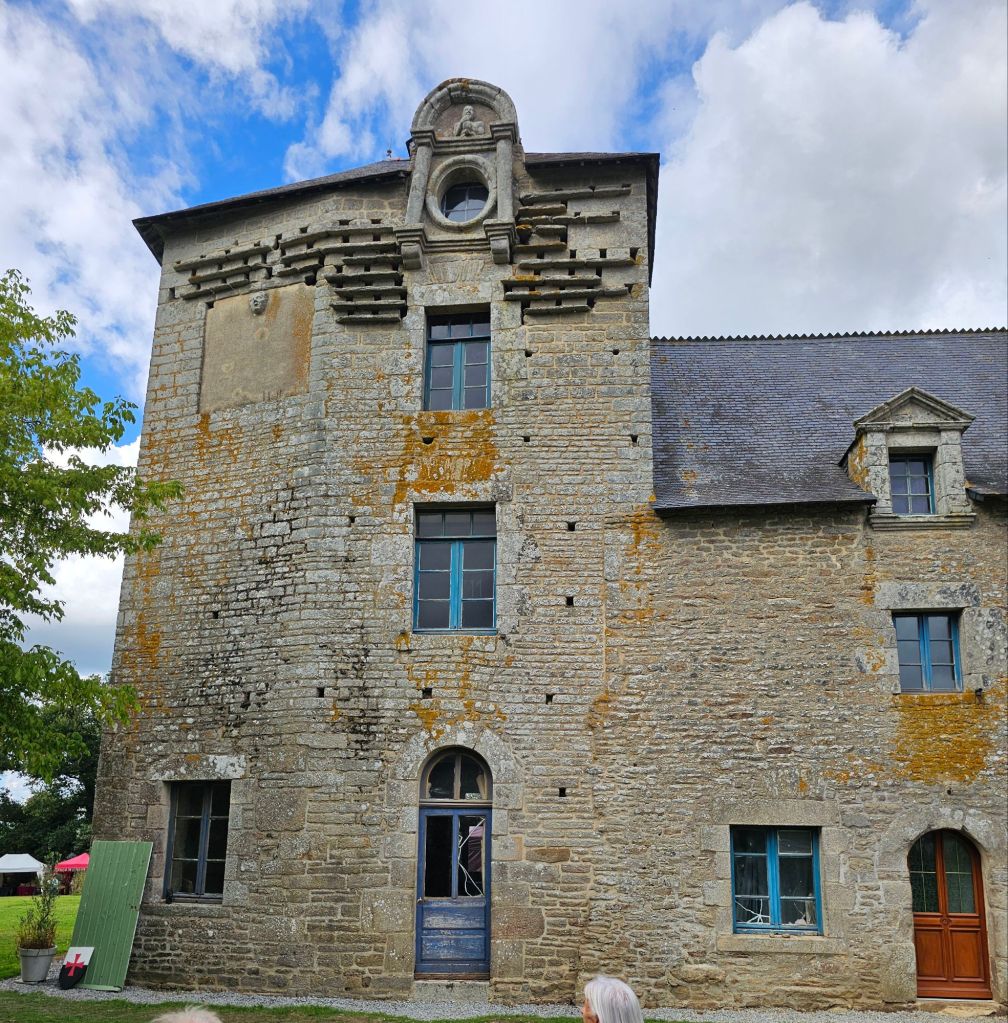
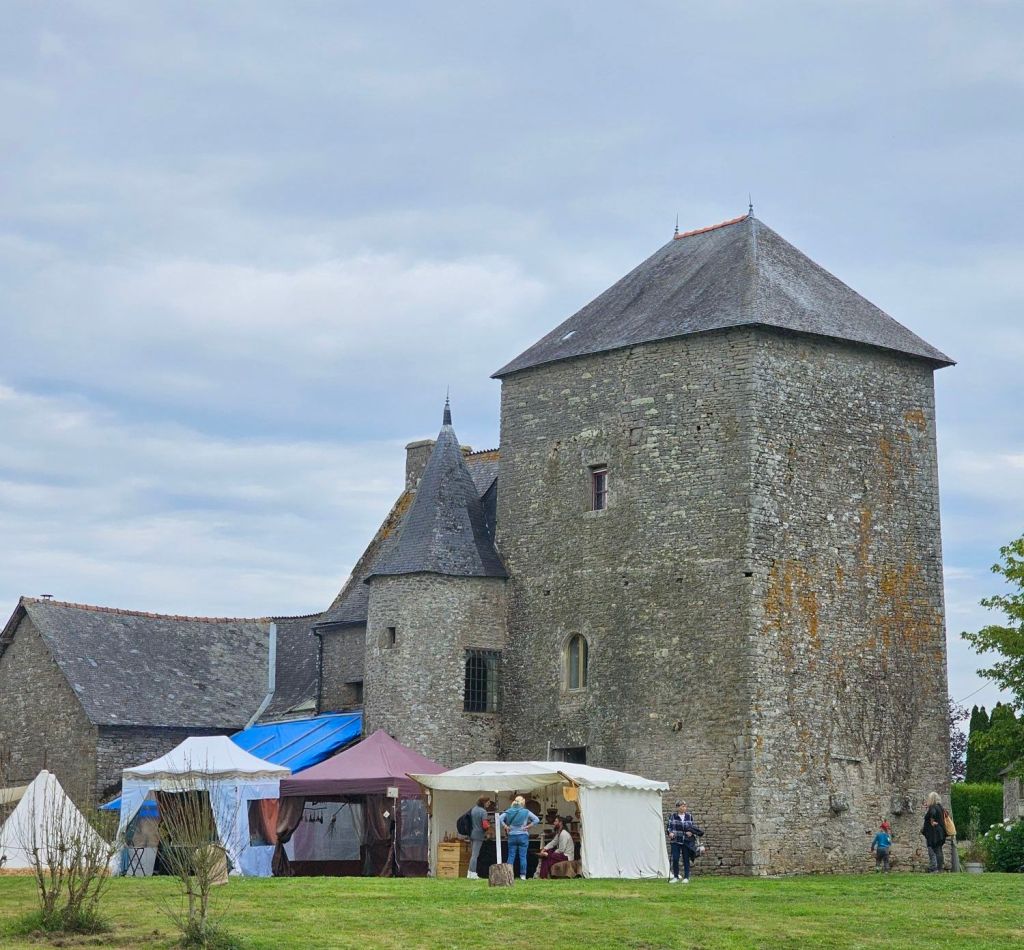
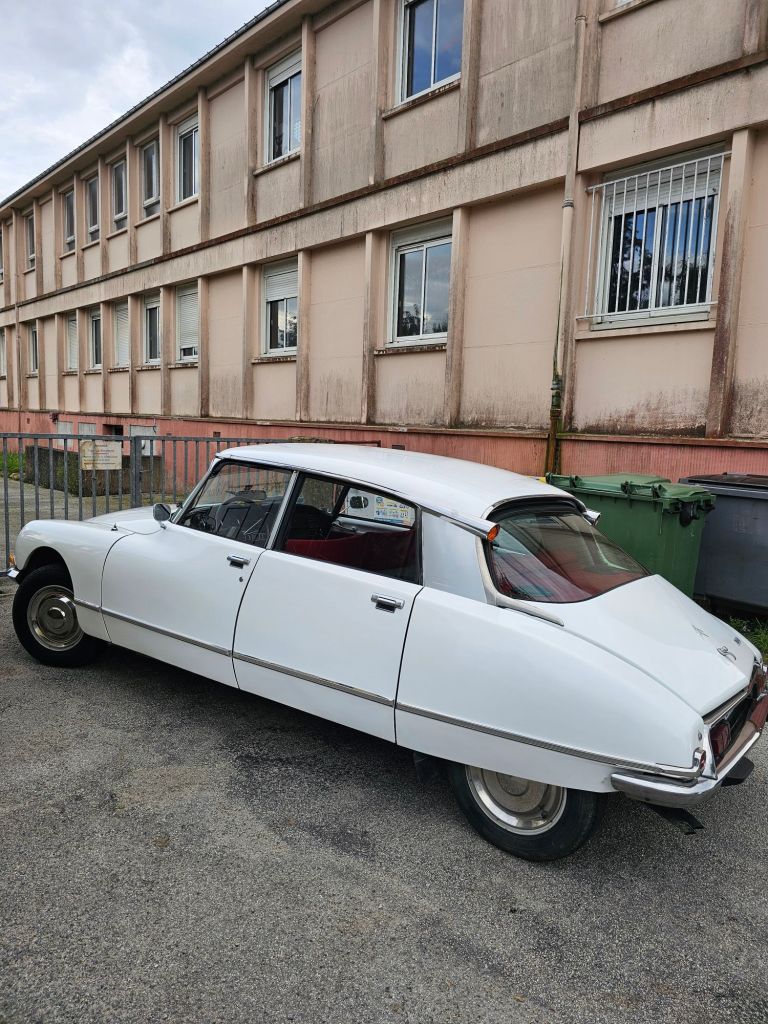
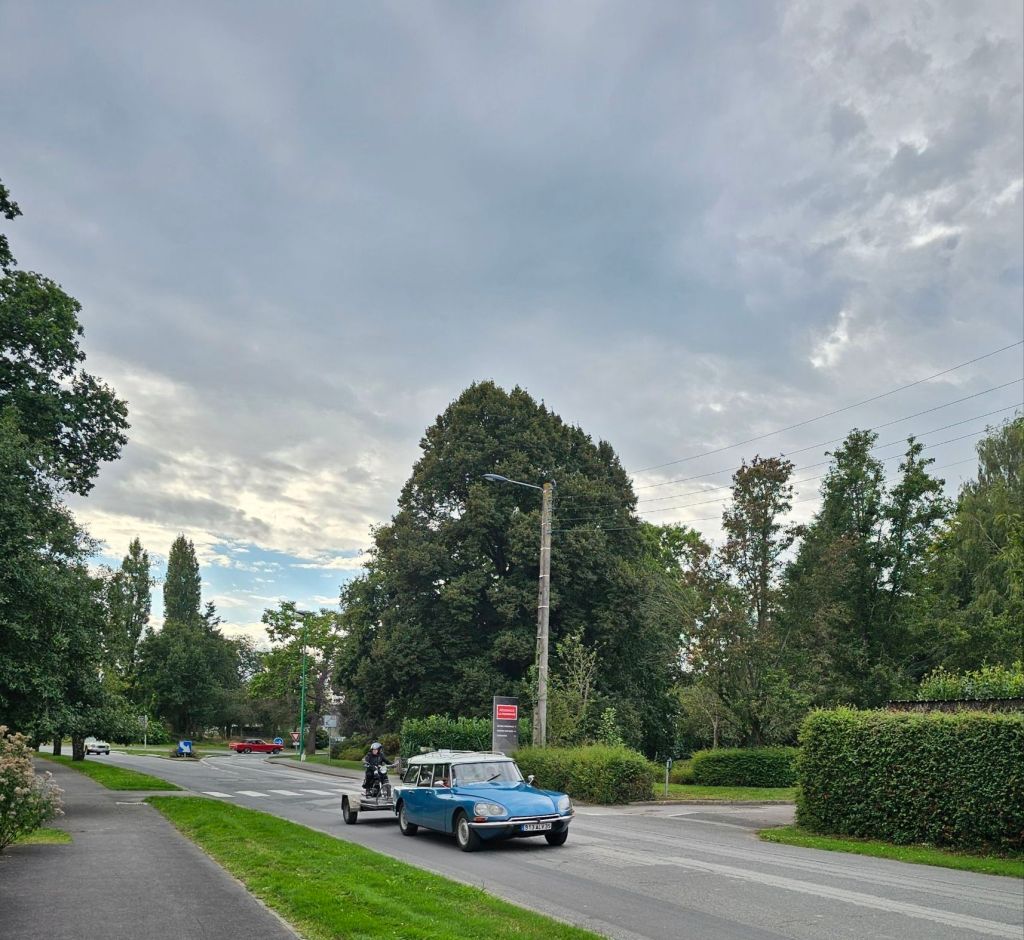
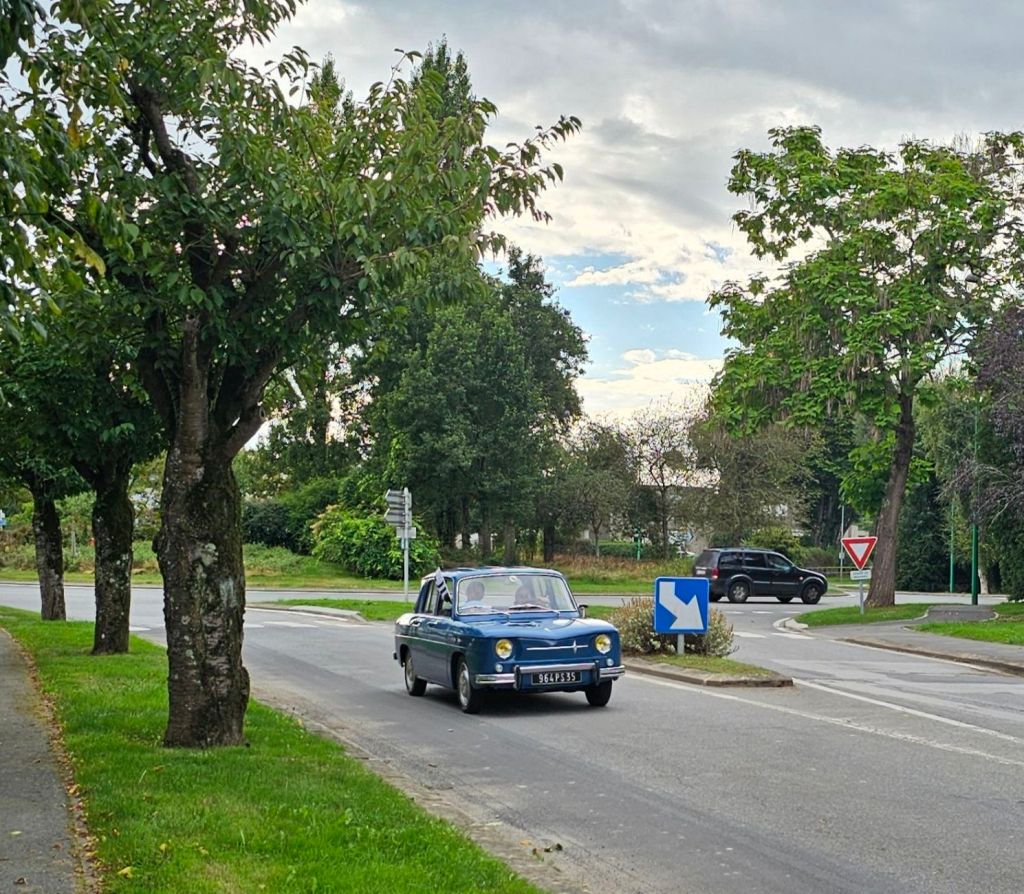
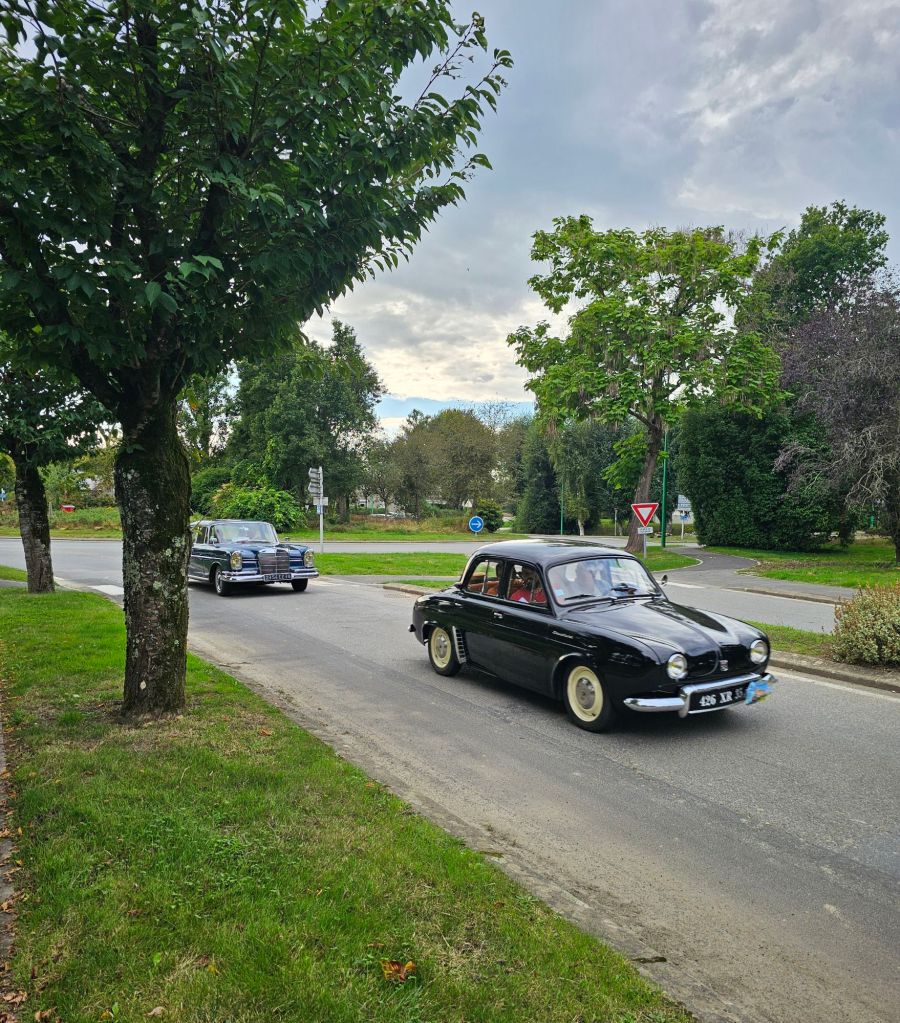
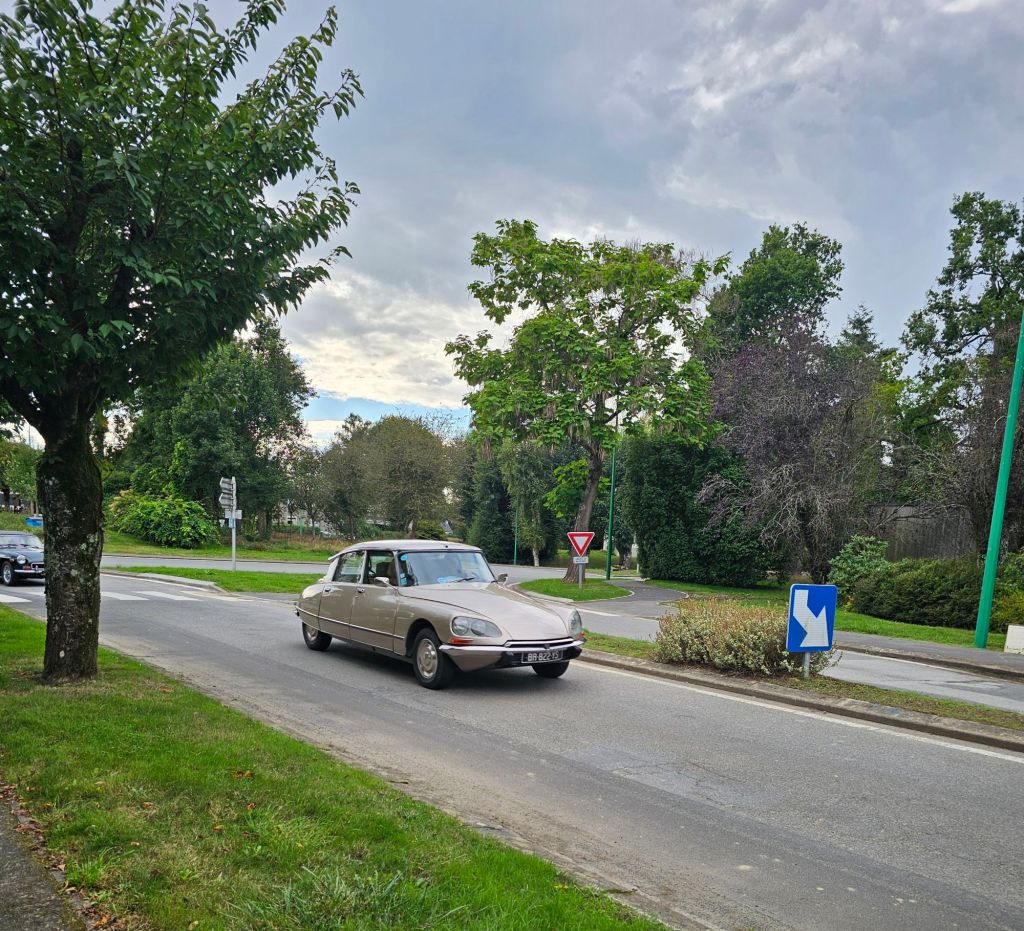
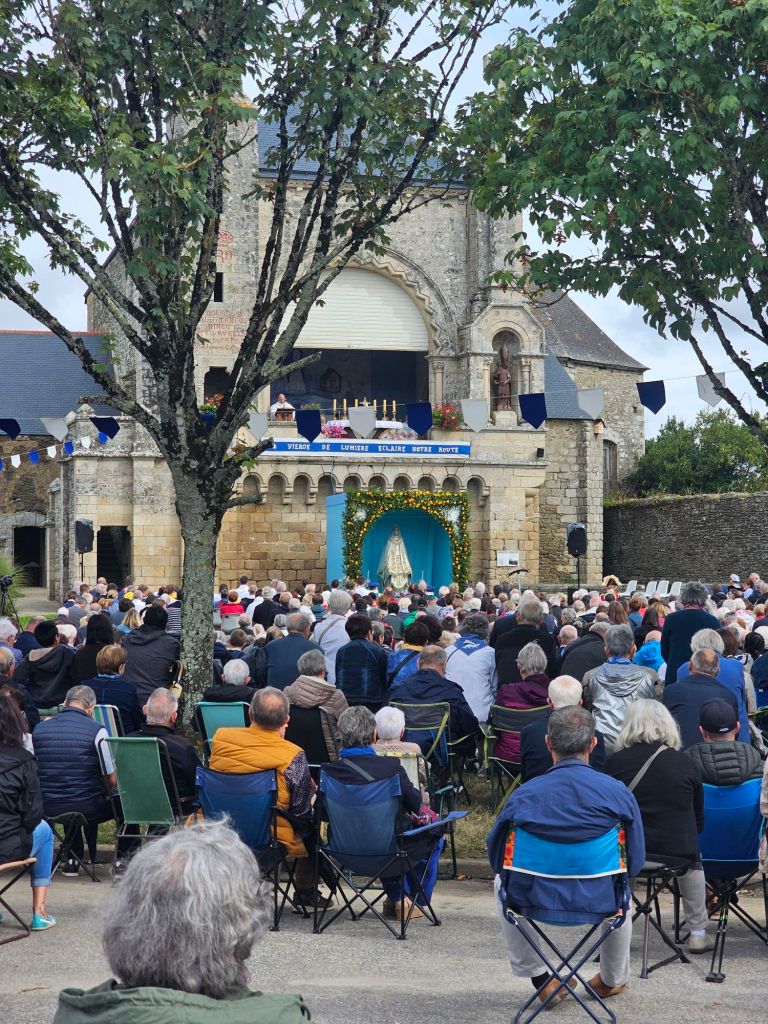
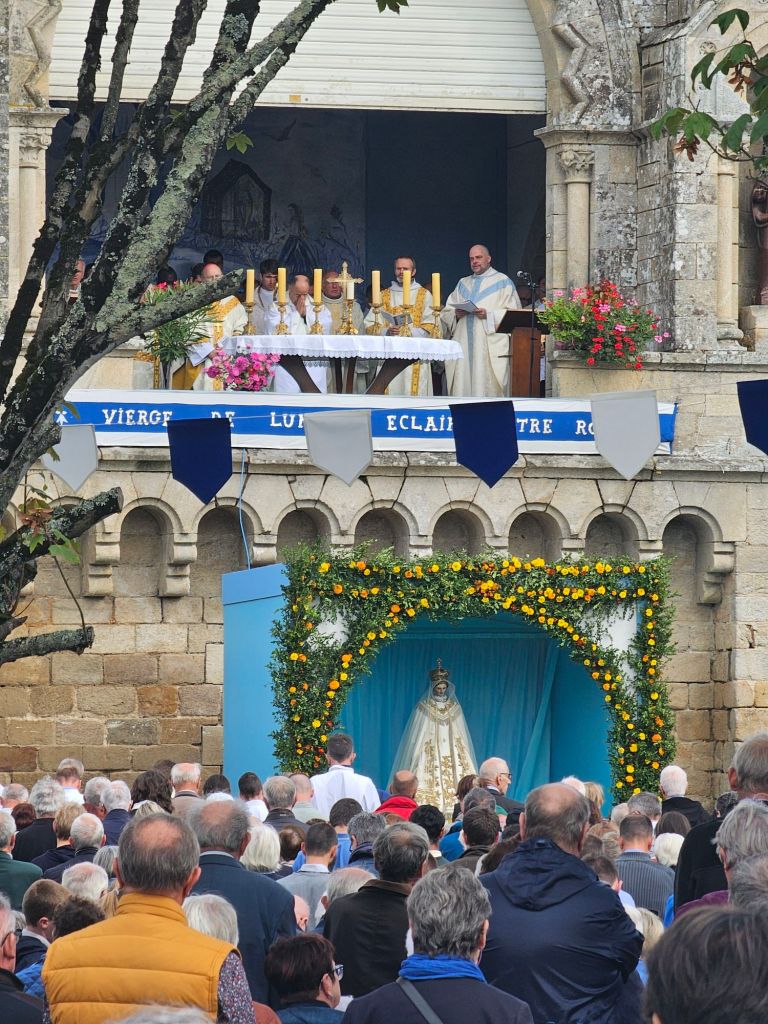
A manoir is like a very small castle for minor nobles. This one is rather nice.Note the ledges at the top there on the left.The ledges have holes behind them. They are for pigeons. Back in the day minor nobles kept pigeons, as a hobby but also for eating.Quite a good turnout.Gâteau à la broche is cake made on a spit. The theory is that Napoleon’s troops bought the recipe back with them from Russia. Here’s the recipe: “120 eggs, 3kg sugar, 3kg flour, 3kg butter, 2 litres of rum and half a litre of pastis. Cover the cone with baking paper and allow an hour for it to heat up sufficiently. Pour the mix over it whilst turning the spit constantly and allow 5 hours for it to cook”From this side you can see the tower.It was a good afternoon out, thanks Jean-Pierre and Françoise!We drove back through some tiny villages in the countryside, all of which had very impressive churches. Considering the population size, it must have taken a lot of resources. I popped up to the supermarket for some supplies and on the way back stumbled onto this classic car group touring Brittany. I liked this DS.DS wagon towing a bike on a trailer, followed by a guy on a Triumph motorcycle. Austin-Healey bug-eyed Sprite!Renault R8Renault Dauphine followed by an old Merc.Another DS.Peugeot 504 coupé. I cooked up the snail kebabs, I quite liked them but they were a bit chewy.Sunday morning they had open air mass for the pardon.Mary getting a front row seat there!
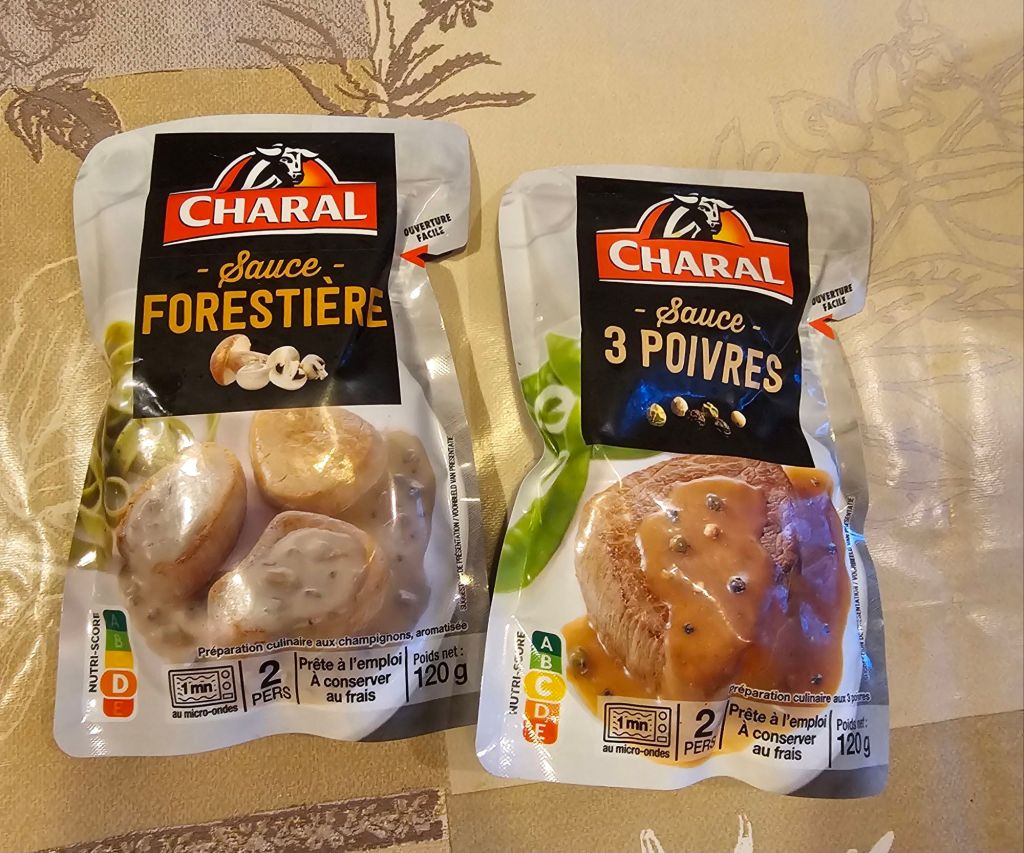
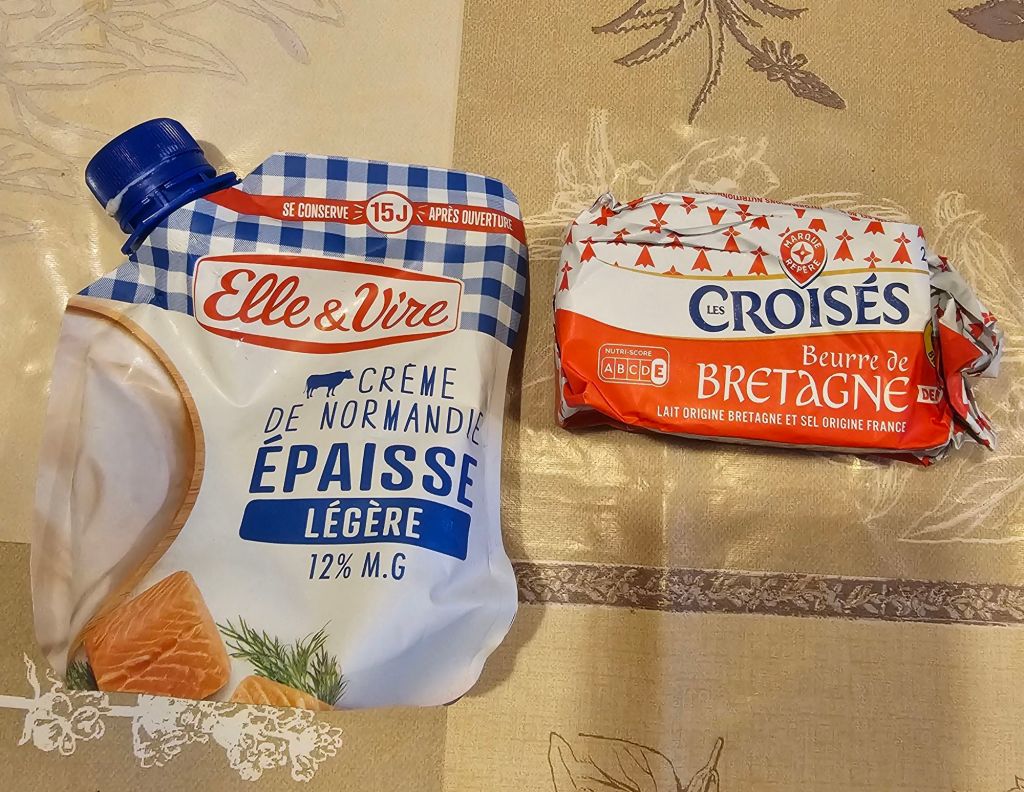
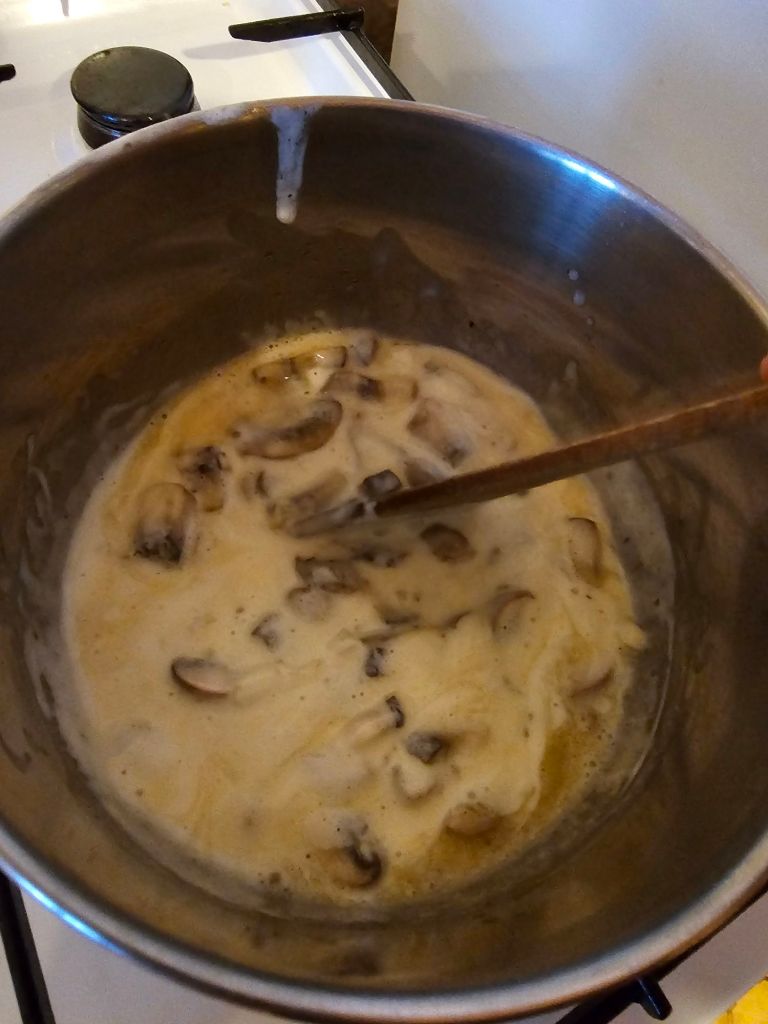
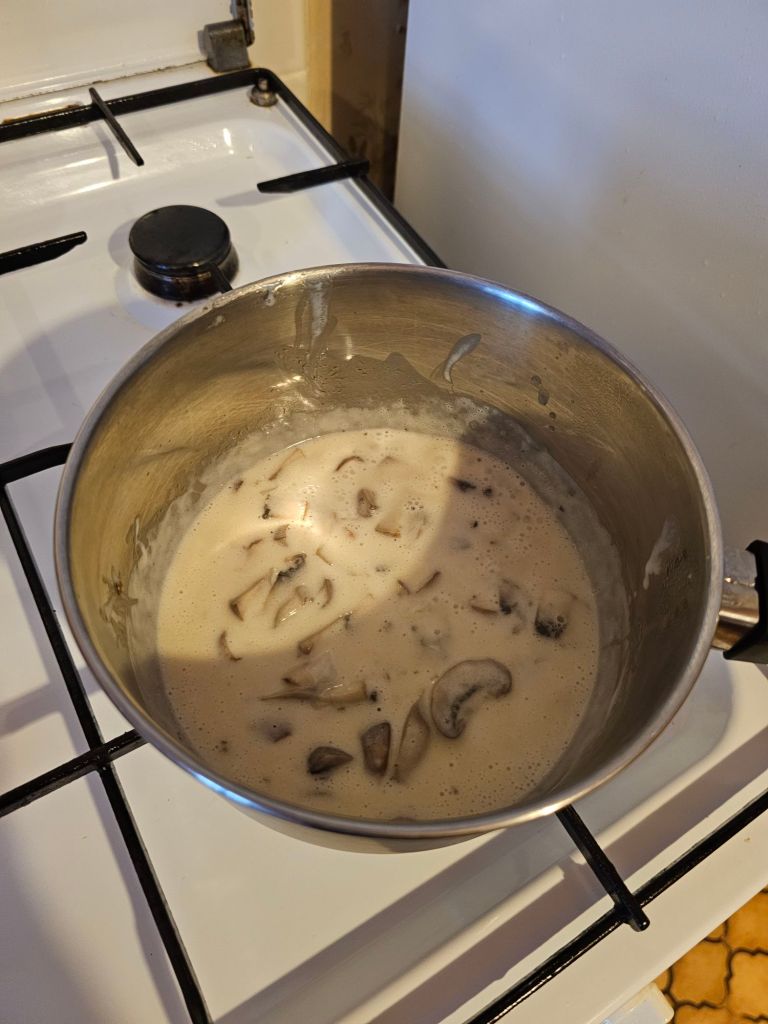
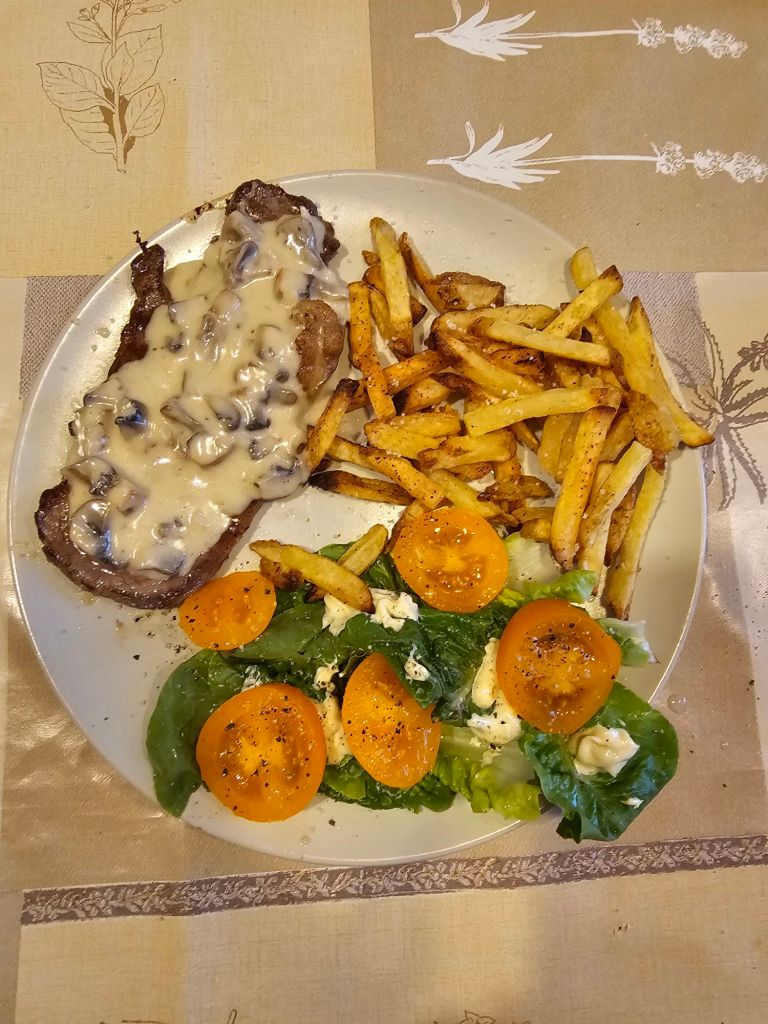
I’ve always liked these sauces you can get here, mushroom and three peppers in the case of these two.However I figured it was probably cheating to buy them in so I got some butter and cream. Fried up some mushrooms and garlic in the butter and add some cream.Cook it down a bit.Et voilà! I wouldn’t eat this all the time obviously but it was very tasty if I say so myself.








































 Lepod's Blog