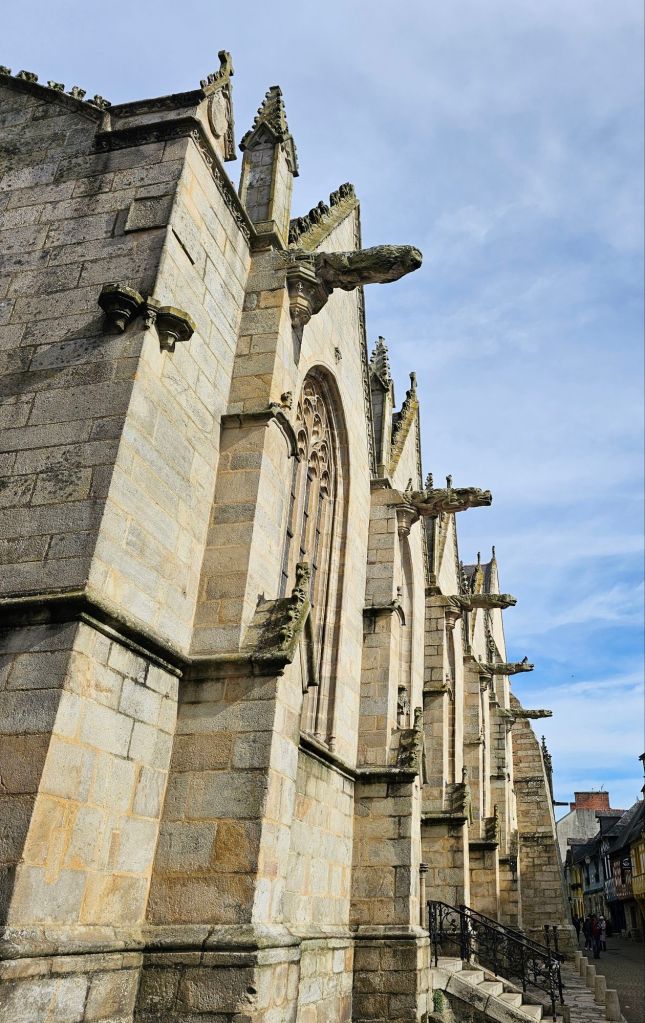
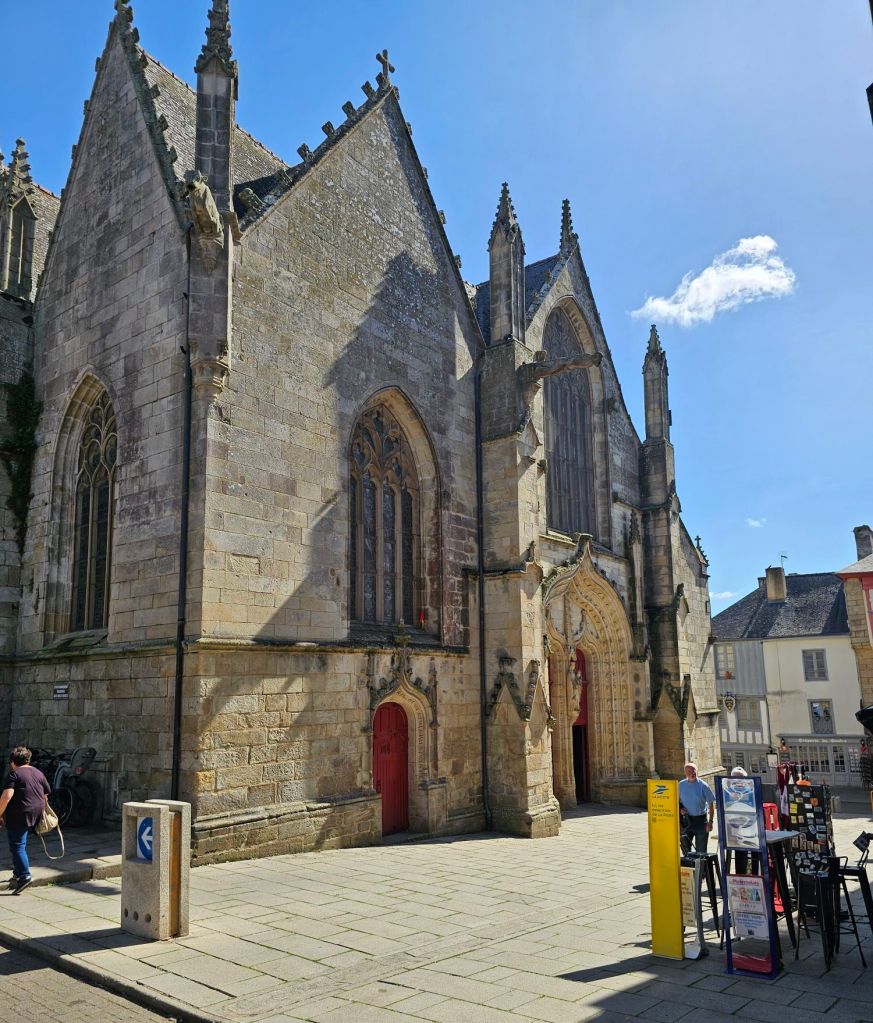
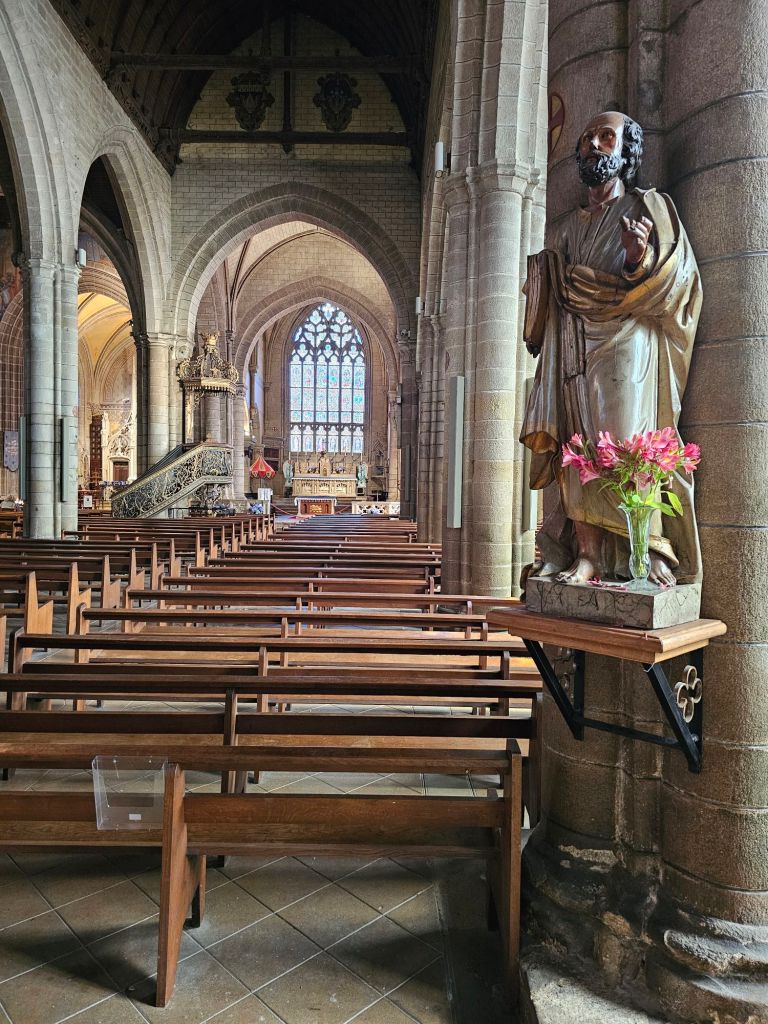
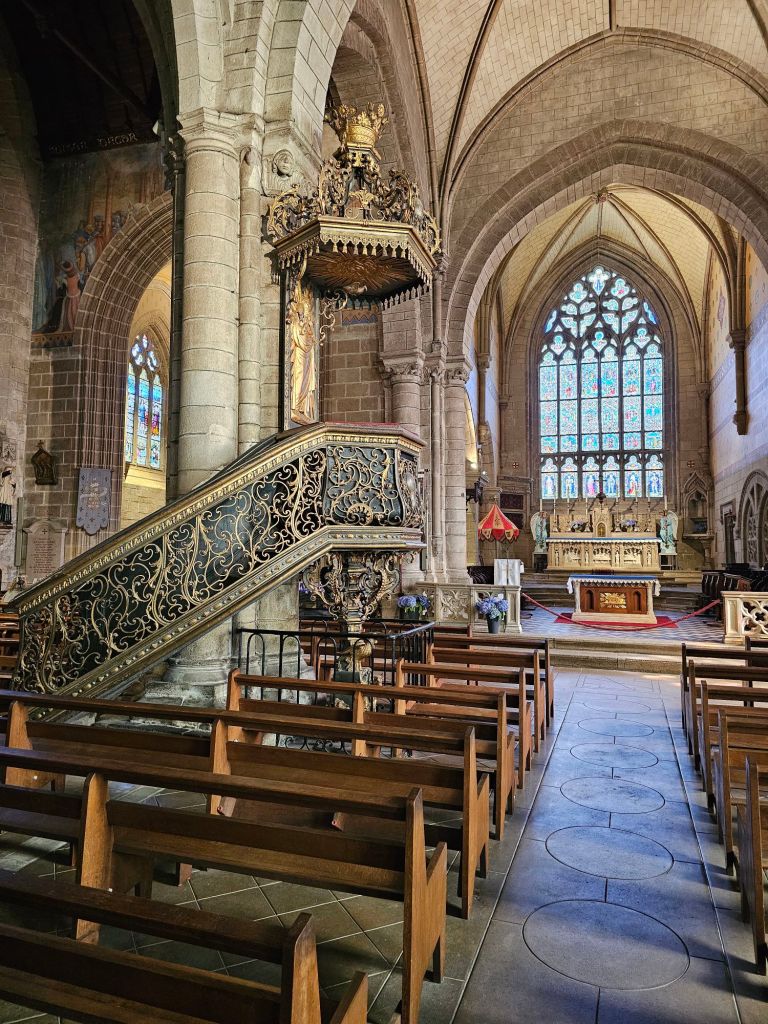
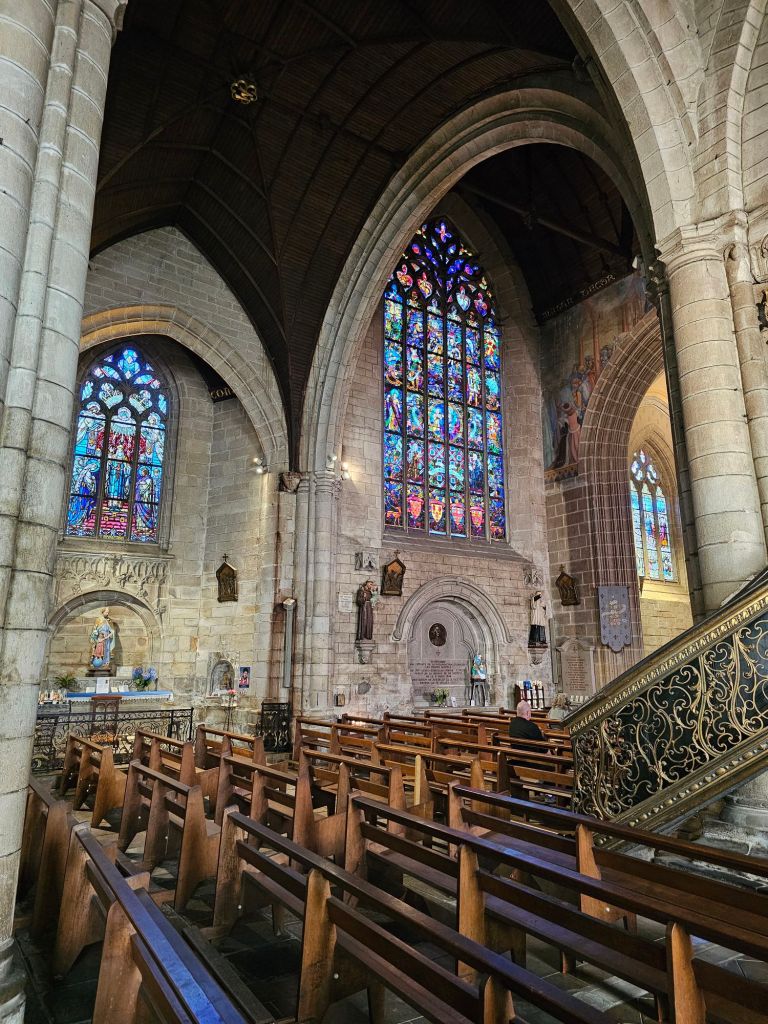
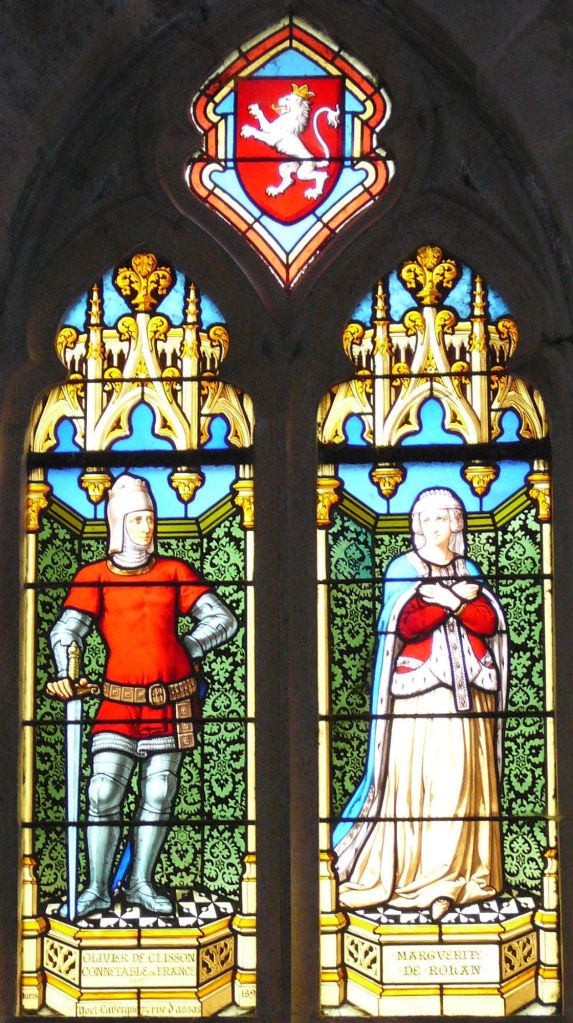
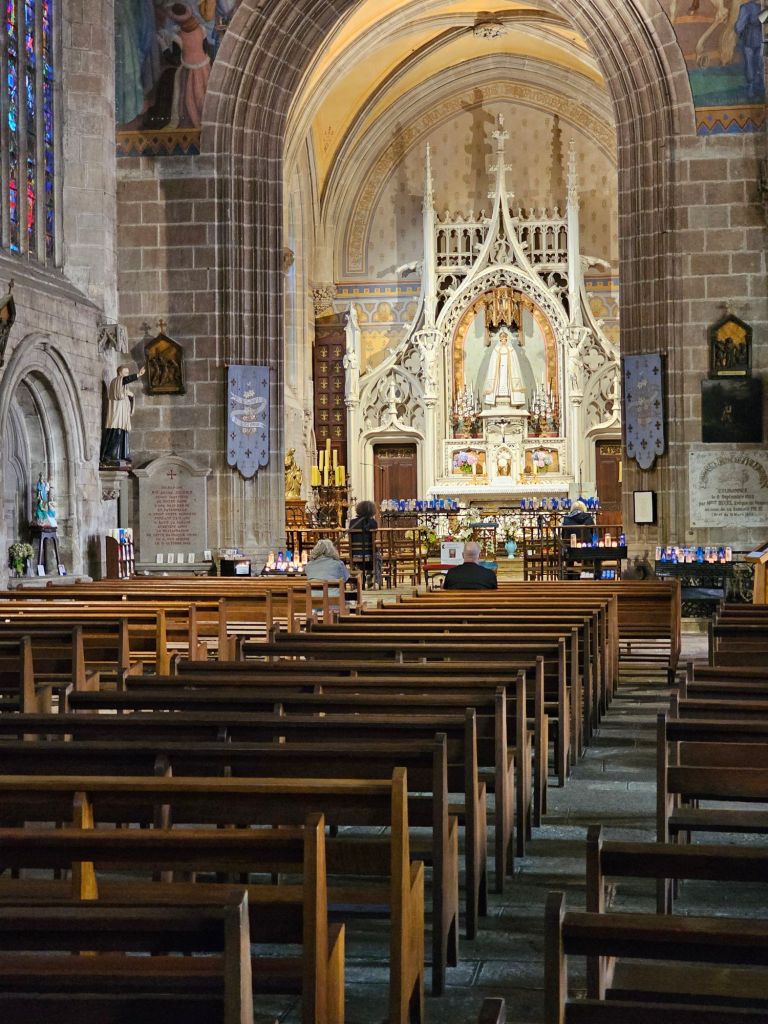
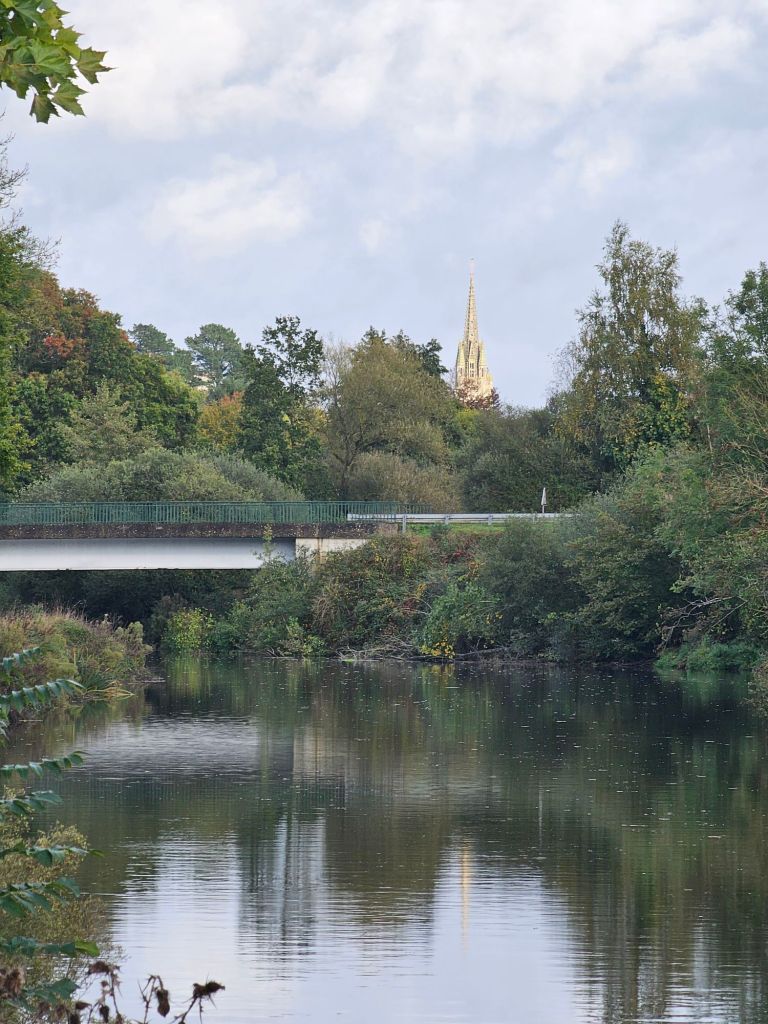
I’ve covered quite a few of the churches we have visited but it occurred to me I should write a post about the one in Josselin. It has an interesting history.
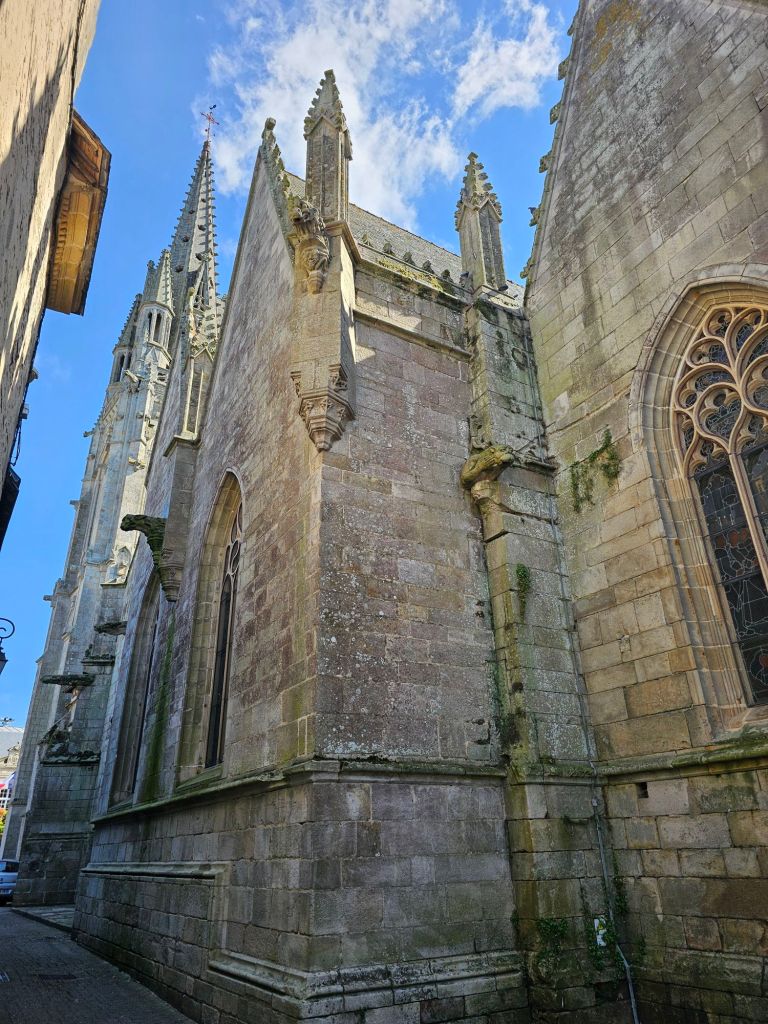
“In 808, the town of Josselin, in Bro Sant Maloù, did not yet exist. A ploughman was cultivating his land, at the place where the church of Notre-Dame du Roncier is currently located. Suddenly he saw, in a bramble bush, a statue of the Virgin Mary. A very Christian man, he took it and carried it home. But the next morning the statue had disappeared, and it was found in the bramble bush, where it had been the day before. Very surprised, the farmer took the statue back and brought it home again, but the next morning it had disappeared again. It was found again in the bramble bush, hence the name Notre-Dame du Roncier that was soon given to it. And this happened again for several days. The farmer then gathered his family for fervent prayer. And his daughter, blind from birth, was healed.
The peasant then decided to build a small chapel where the statue wanted to remain. Obviously, all this became known very quickly, and other people ran to pray. The bishop of Saint-Malo, the local bishop, authorized the worship. Very quickly, many people came to settle near the Chapel. A monastery was built. The city of Josselin was born.
Soon a Knight Guethenoc de Porhoët came to establish his castle not far from the chapel. He gave the name of his son, Josselin, to the nascent city. Immediate consequence: pilgrimages multiplied. Thanks to the construction of several monasteries and a Romanesque church which was later rebuilt in the Gothic style, the city of Josselin grew. The healings obtained, the preaching of Saint Vincent-Ferrier, the passage of pilgrims from Tro-Breiz and those from Santiago de Compostela broadened the influence of the sanctuary and the castle of Josselin.”
 Lepod's Blog
Leave a comment